Slide Text
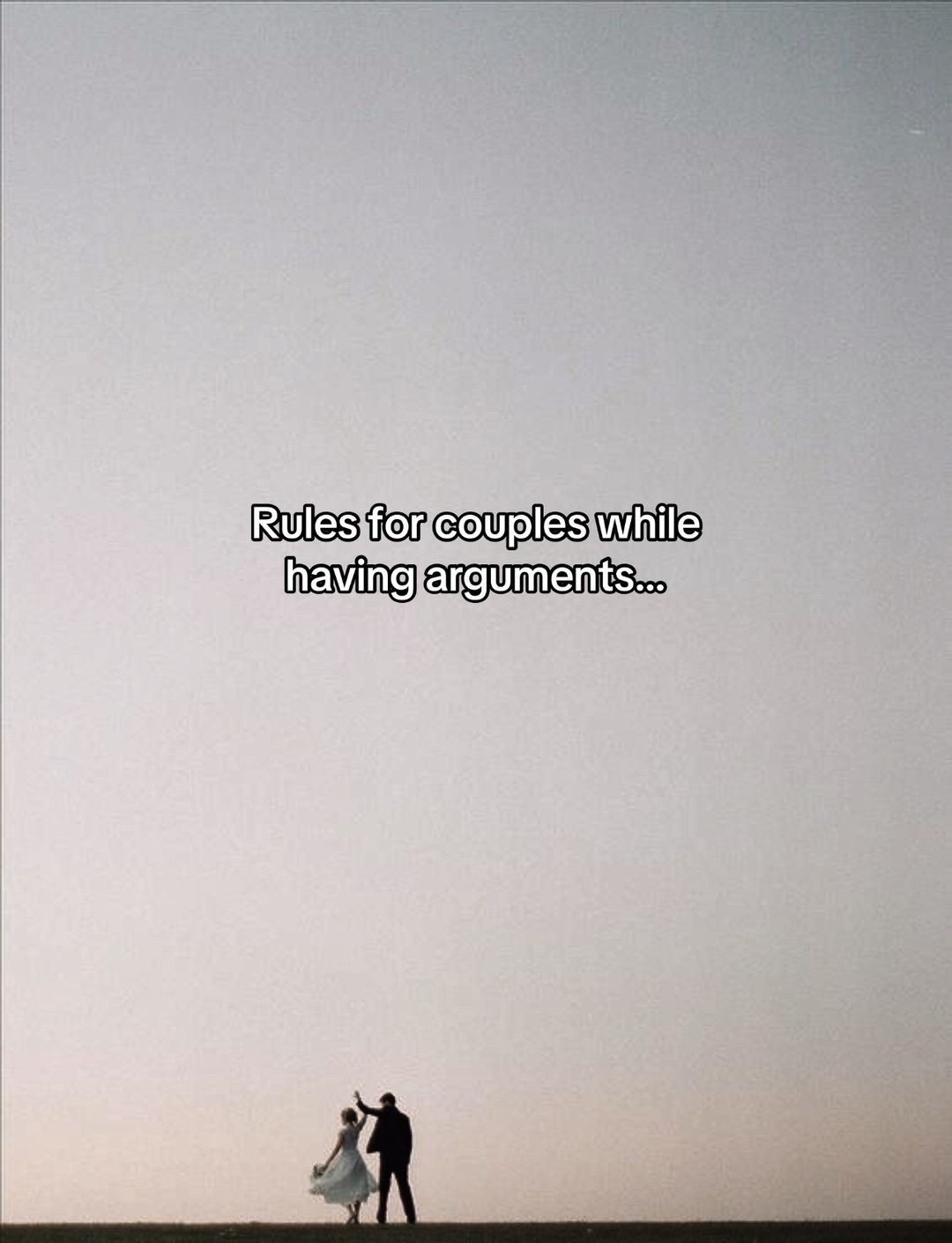
Rules for couples while having arguments...
Visual
A couple dancing in a vast, empty landscape under a soft, muted sky.
All Slides
@fightmindsetf carousel breakdown
fightmindsetf
Rules for couples while having arguments… #rules #couples #arguments #relationshipsadvice
Effectiveness score
9/10
Views
2.8M
Likes
312.1K
Saves
120.9K
Engagement
18.5%
Hook
Rules for couples while having arguments...
Goal
build-community
Offer
information
CTA
none
Caption
Rules for couples while having arguments… #rules #couples #arguments #relationshipsadvice
Strategic Summary
The carousel leverages **anaphora** (the deliberate repetition of "Be mad at me") to create a rhythmic, hypnotic reading flow that validates the user's right to establish boundaries during conflict. The massive bookmark rate (7.2x norm) indicates the audience treats this as a "relationship manual" or reference guide, while the high share rate implies users are sending it to partners as a low-conflict way to communicate expectations.
The Winning Formula
Hypnotic repetition (anaphora) + gentle stoicism + aesthetic softness + actionable relationship boundaries.
What's working
- •The 'Be mad at me' repetition acts as a psychological anchor, making each rule easier to absorb and creating a compelling cadence that keeps users swiping to the next beat.
- •Slide 1 immediately addresses the fear of conflict ('Rules for arguments') without being aggressive, validating the reader instantly.
- •The visual style (muted, grainy beach aesthetic) softens the conflict topic, making the rules feel 'deep' and 'emotional' rather than controlling.
- •The high bookmark rate is driven by the list format which serves as a timeless code of conduct; users save it to remind themselves or their partner of these rules during a fight.
What's not working
- •Slide 5 and 6 focus on 'good things' and 'forgiveness', which are abstract concepts compared to the concrete actions in 1-4; this drop in specificity likely slows dwell time slightly.
- •Slide 6 visual (couple standing far apart) reinforces distance, which visually contradicts the message of 'remembering times I forgiven you' (a concept that usually implies closeness or repair).
Viral lesson
Repetition of a phrase (anaphora) at the start of every point in a listicle significantly increases dwell time and memorability by creating a rhythmic expectation.
Can a small creator replicate this? High replicability; any advice niche (parenting, mental health, career) can use this "Be X, but don't Y" repetition structure to teach boundaries or rules, regardless of audience size.
Structural Formula (steal-the-format)
Structure pattern
6-slide listicle, text overlay on moody lifestyle photography, repetitive anaphora opening each point.
Copy formula
Imperative sentence 'Be mad at me' + contrast constraint 'but...' + specific rule.
What to swap (concrete remixes)
- •Swap 'couples' for 'business partners' targeting the entrepreneur/startup crowd.
- •Swap 'mad at me' for 'stressed about me' for the parenting/mental health crowd dealing with burnout.
- •Swap 'insult me' for 'judge me' for self-improvement/therapy audiences.
What NOT to copy
The 'Be mad at me' framing requires a specific type of relationship dynamic (secure, emotionally intelligent) to work; copying this without the emotional maturity behind it may sound controlling.
Aesthetics
melancholic beach photography with centered white text overlays
Color palette
What it conveys: The aesthetic conveys a mood of 'deep thought' and 'calm', which de-escalates the topic of 'arguments' and frames the poster as a mature voice.
Slide-by-slide forensics
1hookwide shotanticipationworks:yesgrab:90/100aesthetic:85/100Rules for couples while having arguments...
Rules for couples while having arguments...
Visual description
Vast, textured greyish-white sky taking up 90% of the frame. At the very bottom, a small silhouette of a couple (man and woman in dress) interacting playfully.
Scene setting
minimalist horizon line
Visible people
Predicted audience reaction
Audience stops scrolling because the topic is universally relevant and the aesthetic feels like a 'real quote' rather than a sales pitch.
Verdict: Perfect hook: high relevance, clear promise of value, and minimal visual distraction.
2step in listwide shotseriousnessworks:yesgrab:85/100aesthetic:80/1001. Be mad at me, but don't insult me. Anger is not a ticket to speak carelessly.
1. Be mad at me, but don't insult me. Anger is not a ticket to speak carelessly.
Visual description
Muted, grainy beach scene. A woman in a long dress stands on the left, a man in trousers stands on the right, both facing the ocean but separated by distance.
Scene setting
overcast beach
Visible people
vs prior slide
Style: Same white sans-serif font with black stroke, centered.
Story: Transitions from title to the first rule, anchoring the repetition pattern.
Predicted audience reaction
Immediate validation for those who feel their partner says hurtful things when angry.
Verdict: Strong opening rule that addresses the most common pain point of arguments: verbal abuse.
3step in listclose upreflectionworks:yesgrab:85/100aesthetic:90/1002. Be mad at me, but tell me why you're mad. Don't assume I know.
2. Be mad at me, but tell me why you're mad. Don't assume I know.
Visual description
Close-up of wet sand/water surface with reflections of the couple's legs/feet. The reflection is slightly distorted by ripples.
Scene setting
wet sandy beach
Visible people
vs prior slide
Style: Visual changes to reflection, text style remains identical.
Story: Moves from behavioral boundary (insults) to communication boundary (mind-reading).
Predicted audience reaction
Resonates with the 'mind-reading' trap common in relationships. The visual of reflections subtly reinforces the idea of introspection.
Verdict: The visual metaphor (reflection) aligns perfectly with the copy (tell me, don't assume).
4step in listwide shotprivacyworks:yesgrab:80/100aesthetic:85/1003. Be mad at me, but don't broadcast it to others.
3. Be mad at me, but don't broadcast it to others.
Visual description
Bright, overexposed sky with a couple standing at the bottom center, holding hands, silhouetted against the light.
Scene setting
beach at sunset/sunrise
Visible people
vs prior slide
Story: Adds a social boundary (privacy) to the emotional rules.
Predicted audience reaction
Affirmation of privacy boundaries; users who hate public shaming in relationships feel seen.
Verdict: Concise and covers a key loyalty aspect of relationships.
5step in listwide shotperspectiveworks:partialgrab:75/100aesthetic:85/1004. Be mad at me, but don't forget the many good things about me.
4. Be mad at me, but don't forget the many good things about me.
Visual description
Aerial or high-angle shot of two people walking on dark, wet sand near the water's edge. The waves are receding.
Scene setting
dark sand beach
Visible people
vs prior slide
Story: Shifts from immediate rules to long-term perspective maintenance.
Predicted audience reaction
Users may feel this is slightly harder to control than the previous rules (emotional regulation vs action), but still valuable.
Verdict: Content is slightly more abstract; asking someone to 'remember good things' when mad is harder to execute visually or practically.
6philosophical payoffwide shotdistanceworks:partialgrab:70/100aesthetic:80/1005. Be mad at me, but also remember the many other times I have forgiven you.
5. Be mad at me, but also remember the many other times I have forgiven you.
Visual description
Greyish sky and ocean horizon. A man stands on the left with back to camera; a woman stands on the right looking away. They are separated.
Scene setting
beach horizon
Visible people
vs prior slide
Story: Final rule about forgiveness and balance of power.
Predicted audience reaction
The final slide may cause a slight pause or rethink; the visual of them standing apart suggests the conflict isn't resolved, which matches the 'forgiveness' theme but feels heavier.
Verdict: The visual of separation contradicts the theme of 'reconnection/forgiveness' slightly; the text is also the longest and most complex cognitively.
Commerce intent
Comment ethnography
Audience likely shares a desire for 'mature' or 'secure' relationship dynamics, using the save function as a proxy for agreement or intent to share with a partner.
Diagnostics
Hook deep-dive
Rules for couples while having arguments...
The user wants to validate their own communication style or finds a solution to a recurring fight pattern.
Engagement read
Comments are unusually low (0.03% vs 0.05%) while Saves are massive (7.2x norm), indicating the content is treated as a resource/manual rather than a conversation starter.
Mechanics
The rhythmic repetition of 'Be mad at me' creates a completion bias where the reader expects the pattern to continue.
Brand & funnel
Buying-journey moment: The audience is in the 'problem-aware' moment, looking for scripts/behaviors to handle relationship conflict.
Ideal Customer Profile
Young adults in committed relationships who value emotional maturity and are seeking guidance on how to navigate conflict without damaging their bond.
Age
18-24
Gender
neutral
Readability
simple
Interests
Pain Points
Aspirations
Emotional Profile
Primary Emotion
validationIntensity
Effectiveness
Emotions Evoked
Emotional Arc
curiosity → recognition → validation → reflection
Why It Lands
It validates the user's feelings (it's okay to be mad) while providing a framework to de-escalate, which reduces anxiety about relationship conflict.
Writing Analysis
Style
listicle
Tone
calm
Hook Type
listicle
Quality
The writing is exceptionally concise. Each point is a complete thought that balances a permission (be mad) with a boundary (don't insult).
Effectiveness
Goal Achievement
The massive bookmark count proves it achieved the goal of becoming a 'go-to' resource for the audience.
Why It Spread
highly shareable 'relationship rules' format
aesthetic visual style that stands out in a feed of chaotic videos
high utility value (people save it to use later)
Content DNA
There is no explicit CTA, which actually helps the content feel more organic and less 'salesy', contributing to the high share/save rate.
Narrative Arc
The carousel builds tension by starting with the permission to be angry and then layering on boundaries, creating a sense of emotional maturity that keeps the viewer swiping to see the next 'rule'.
Psychological Blueprint
Why It Spread
The content hit a massive nerve by addressing a universal pain point—arguing in relationships—with a calm, non-judgmental tone. The high bookmark count (120k+) indicates that people view this as a 'resource' to save for future reference during actual fights. The aesthetic, minimalist visual style makes the advice feel like 'wisdom' rather than just another lecture, encouraging high shareability among couples.
Framework
listicle revelationPrimary Tactic
validationTactics Used
curiosity gap on slide 1 — '...' implies a secret or missing knowledge
pattern interrupt — using calm, aesthetic imagery to discuss high-stress conflict
authority positioning — framing advice as 'rules' to follow
relatability — addressing the universal experience of arguing with a partner
Cognitive Biases
Zeigarnik effect — the list format creates a need for closure by reading to the end
framing effect — presenting conflict as something that can be managed through 'rules' rather than something to be feared
Tribal Markers
Trust Signals
Slide Breakdown (6 analyzed)
Text
Rules for couples while having arguments...
Visual
A couple dancing in a vast, empty landscape under a soft, muted sky.
Visual Elements
Color Palette
Copy Analysis
Power Words
Open Loop: yes, it promises a set of rules for a common problem
Visual Psychology
Attention: centered text
Emotional cue: the vast, calm landscape
Composition: to create a sense of peace and importance
Text
1. Be mad at me, but don't insult me. Anger is not a ticket to speak carelessly.
Visual
A couple standing on a beach, facing each other with distance.
Visual Elements
Color Palette
Copy Analysis
Power Words
Open Loop: yes, the list continues
Visual Psychology
Attention: text
Gaze: the couple looking at each other
Emotional cue: the distance between the couple
Composition: to illustrate the tension of an argument
Text
2. Be mad at me, but tell me why you're mad. Don't assume I know.
Visual
A couple walking on a reflective beach surface.
Visual Elements
Color Palette
Copy Analysis
Power Words
Open Loop: yes
Visual Psychology
Attention: text
Emotional cue: the reflection
Composition: to suggest introspection
Text
3. Be mad at me, but don't broadcast it to others.
Visual
A couple holding hands in a bright, hazy outdoor setting.
Visual Elements
Color Palette
Copy Analysis
Power Words
Open Loop: yes
Visual Psychology
Attention: text
Emotional cue: the bright light
Composition: to emphasize privacy
Text
4. Be mad at me, but don't forget the many good things about me.
Visual
A couple walking along a shoreline with dark sand.
Visual Elements
Color Palette
Copy Analysis
Power Words
Open Loop: yes
Visual Psychology
Attention: text
Emotional cue: the contrast of the sand
Composition: to ground the viewer
Text
5. Be mad at me, but also remember the many other times I have forgiven you.
Visual
A couple standing apart on a beach looking at the ocean.
Visual Elements
Color Palette
Copy Analysis
Power Words
Open Loop: no
Visual Psychology
Attention: text
Gaze: the couple looking out at the ocean
Emotional cue: the vast ocean
Composition: to create a sense of finality and perspective
Comment Intelligence
Sentiment
PositiveResonance
Intent
build-community
Audience Vibe
The comments are reflective and appreciative, with many users tagging their partners to share the advice.
Standout Quotes
“This is exactly what we needed to read today.”
“Saving this for the next time we argue.”
“Simple, but so hard to remember in the moment.”