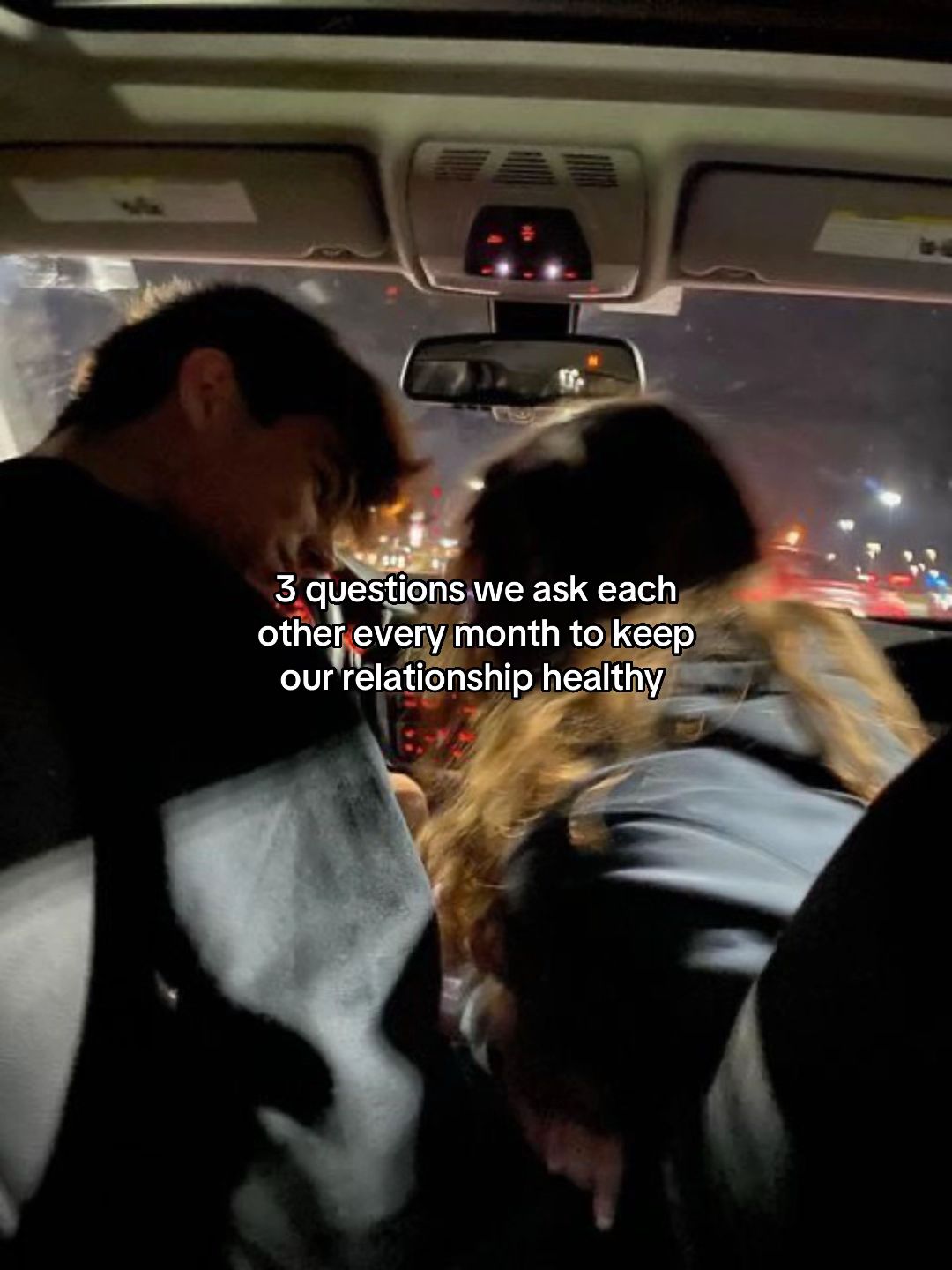
The hook works because it promises a specific, actionable, and low-effort solution to a high-stakes problem (relationship health).
Slide Text
3 questions we ask each other every month to keep our relationship healthy
Visual
A dark, intimate, candid shot of a couple in a car at night, looking at each other.
All Slides
@gabi.lists carousel breakdown
gabi 💞
3 important questions… #coupletok #coupleadvice #Relationship #relationshipadvice #relationshipgoals
Effectiveness score
9/10
Views
3.4M
Likes
528.6K
Saves
272.2K
Engagement
25.7%
Hook
3 questions we ask each other every month to keep our relationship healthy
Goal
build-community
Offer
information
CTA
none
Caption
3 important questions… #coupletok #coupleadvice #Relationship #relationshipadvice #relationshipgoals
Strategic Summary
This carousel went viral because it frames relationship maintenance as a simple, repeatable checklist rather than crisis advice, triggering high perceived utility. The '3 questions' promise paired with psychological rationales creates a save-for-later reference tool, explaining the extreme bookmark (8.07%) and share (1.95%) rates despite a near-zero comment rate. Candied, low-fidelity lifestyle visuals signal authenticity, making the advice feel lived-in rather than clinical.
The Winning Formula
Candid couple aesthetic + numbered monthly check-in prompts + psychological rationale per question.
What's working
- •Slide 1 sets a specific cadence ('every month') that positions the content as a routine maintenance tool, not drama-fueled advice, immediately lowering the barrier to save/share.
- •The 3-slide list forces completion bias; each question is paired with a 'why it works' rationale, elevating it from basic tips to actionable emotional intelligence.
- •The low comment rate (0.02%) paired with massive bookmarks/shares proves the content is designed for private consumption—users save it to practice or directly message it to partners.
- •Visual consistency across slides (grainy phone-camera aesthetic, moody night lighting, intimate candid framing) builds trust without feeling staged or overly polished.
- •Text density is optimized for <3 second reads per slide, keeping swipe momentum high while delivering full value.
What's not working
- •Zero explicit CTA (no 'save this', 'tag your partner', or comment prompt) explains the unusually low comment rate; adding a soft engagement hook could capture 2-3x more public discussion.
- •Slide 3's umbrella/rain image feels slightly disconnected from the 'check-in' theme compared to the direct partner interactions on slides 1, 2, and 4, slightly diluting the intimate narrative thread.
Viral lesson
High-utility emotional templates outperform debate-bait when formatted for private sharing and future reference.
Can a small creator replicate this? Highly replicable for small wellness/relationship creators; requires only smartphone B-roll, candid lifestyle shots, and psychologically framed prompts rather than personality-driven vlogs or professional editing.
Structural Formula (steal-the-format)
Structure pattern
4-slide list, single-sentence overlay text on candid aesthetic background, hook sets a specific cadence, last slide completes the sequence with no explicit CTA.
Copy formula
Numbered prompt in quotes + 2-sentence psychological rationale + first-person couple framing ('we ask each other').
What to swap (concrete remixes)
- •Swap 'couple relationship maintenance' → 'friendship check-ins' for social-wellness creators.
- •Swap 'romantic partnership' → 'parent-child communication' for family/parenting creators.
- •Swap 'monthly questions' → 'weekly sprint retro' for team-leadership or productivity creators.
What NOT to copy
The low-fidelity, slightly grainy phone-cam aesthetic is a deliberate authenticity signal for CoupleTok; over-polishing or adding studio lighting would break the 'lived experience' trust that drives saves.
Aesthetics
Candid phone-camera lifestyle shots with moody natural lighting and clean white sans-serif text overlays centered on frame.
Color palette
What it conveys: The overall aesthetic feels intimate, grounded, and unpolished in a deliberate way—signaling authenticity and lived experience over clinical advice. Viewers feel they're peeking into a real couple's routine, which lowers skepticism.
Slide-by-slide forensics
1hookmedium shotintimacyworks:yesgrab:90/100aesthetic:75/1003 questions we ask each other every month to keep our relationship healthy
3 questions we ask each other every month to keep our relationship healthy
Visual description
Interior car shot at night, slightly grainy phone-camera quality. A couple sits close together, man on left, woman on right. City street lights are blurred through the windshield. Warm interior glow contrasts with the dark exterior. Rearview mirror and overhead console with red indicator lights are visible.
Scene setting
in-car candid moment at night
Visible people
Visible objects
vs prior slide
Predicted audience reaction
Couples scrolling will immediately self-identify with the 'healthy relationship' framing and swipe to see the specific questions.
Verdict: Sets a clear promise ('3 questions') with a healthy relationship visual anchor that lowers defenses and invites utility-focused swiping.
2step in listmedium shotreassuranceworks:yesgrab:75/100aesthetic:80/1001. “have i done anything recently that upset you or made you mad?”
this question opens the door
to honest conversations
before tension builds
it’s not about starting
drama, it’s about preventing
resentment
1. “have i done anything recently that upset you or made you mad?” this question opens the door to honest conversations before tension builds it’s not about starting drama, it’s about preventing resentment
Visual description
Dark restaurant interior with a large window showing a rain-soaked city street at night. A man wearing a black hoodie and New York Yankees cap looks down at his phone. The foreground table is filled with Korean BBQ side dishes (banchan), a built-in grill, chopsticks, and a glass of water. Moody, cinematic lighting from streetlamps reflects off wet pavement outside.
Scene setting
restaurant date night with city view
Visible people
Visible objects
vs prior slide
Style: Consistent phone-camera aesthetic, dark moody lighting, candid lifestyle framing, white sans-serif overlay text centered on image.
Story: Introduces first question with psychological rationale, shifting from promise to actionable prompt.
Predicted audience reaction
Readers absorb the prompt and rationale; likely triggers mental rehearsal of recent conversations with their partner.
Verdict: Pairs a vulnerable question with a de-escalation rationale, making it feel safe to implement rather than confrontational.
3step in listmedium shotcareworks:partialgrab:65/100aesthetic:70/1002. “how have you been feeling lately?”
it sounds silly, but a simple
check-in shows you
genuinely care about their
well-being
it encourages openness and
lets your partner share both
the highs and lows
2. “how have you been feeling lately?” it sounds silly, but a simple check-in shows you genuinely care about their well-being it encourages openness and lets your partner share both the highs and lows
Visual description
View through a window looking out at a street with scaffolding and construction materials. A woman holds a black umbrella, partially obscuring her face as she looks toward a car. A person in a tan coat is partially visible on the left. Wet pavement and a white delivery truck with French text are in the background. Rainy, overcast atmosphere.
Scene setting
street view through window in rain
Visible people
Visible objects
vs prior slide
Style: Maintains candid phone-cam style and centered white text, but shifts from warm interior lighting to cool, overcast exterior tones.
Story: Delivers second question with a focus on emotional well-being and care.
Predicted audience reaction
Audience may briefly pause on the 'silly' framing, but quickly recognize the utility of the check-in prompt.
Verdict: The prompt is strong, but the visual is slightly disconnected from the 'partner interaction' theme, slightly reducing emotional resonance compared to slides 2 and 4.
4step in listmedium shotpeaceworks:yesgrab:80/100aesthetic:85/1003. how can we improve as a couple?
asking this question invites both
partners to take ownership of
the relationship’s growth
it shifts the focus from blame to
collaboration, creating space for
honest feedback
3. how can we improve as a couple? asking this question invites both partners to take ownership of the relationship’s growth it shifts the focus from blame to collaboration, creating space for honest feedback
Visual description
Close interior shot of a couple cuddling on a textured white couch. A man in a white t-shirt and jeans rests his head on a pillow, his face partially buried. A woman in a grey sweatshirt lies close beside him. Two large framed landscape paintings hang on the cream-colored wall above. Warm, soft indoor lighting.
Scene setting
cozy living room couch
Visible people
Visible objects
vs prior slide
Style: Returns to warm indoor aesthetic, maintains candid framing, consistent white sans-serif overlay text, soft lighting.
Story: Completes the 3-question sequence with a forward-looking growth prompt, reinforcing collaboration over blame.
Predicted audience reaction
Readers finish feeling equipped with a complete toolkit for relationship care, prompting immediate saves or shares to partners.
Verdict: Strong closer that shifts from reactive problem-solving to proactive growth, matching the aspirational 'healthy relationship' promise from slide 1.
Commerce intent
Comment ethnography
Silent, private consumption dominates; the format is designed for direct partner messaging rather than public validation in comments.
Diagnostics
Hook deep-dive
3 questions we ask each other every month to keep our relationship healthy
The specific cadence ('every month') promises routine care rather than crisis damage control, triggering curiosity and the expectation of highly copyable prompts.
Engagement read
Extreme bookmark (8.07%) and share (1.95%) rates paired with a near-zero comment rate (0.02%) indicate this content is consumed privately as a relationship toolkit rather than debated publicly.
Mechanics
Numbered sequence + psychological justification creates a 'read to apply' loop that rewards swiping through all three prompts.
Brand & funnel
Buying-journey moment: The viewer is actively seeking relationship maintenance tools and likely uses this as a direct messaging template rather than exploring a creator storefront.
Ideal Customer Profile
Young adults in committed relationships who value emotional intelligence and are actively seeking ways to prevent long-term relationship stagnation.
Age
18-24
Gender
female
Readability
simple
Interests
Pain Points
Aspirations
Emotional Profile
Primary Emotion
reassuranceIntensity
Effectiveness
Emotions Evoked
Emotional Arc
curiosity → recognition → validation → commitment
Why It Lands
It taps into the universal desire for a healthy, long-lasting relationship by providing a simple, non-threatening framework to address common fears like resentment and miscommunication.
Writing Analysis
Style
educational
Tone
relatable
Hook Type
listicle
Quality
The writing is incredibly concise and avoids fluff. It uses 'we' language to build a sense of partnership and frames the questions as tools for growth rather than criticism.
Effectiveness
Goal Achievement
The massive save-to-view ratio indicates that the content was highly effective at providing long-term value to the audience, which is the ultimate goal for this type of creator.
Why It Spread
high save-ability due to the 'template' nature of the questions
relatable, low-light aesthetic that feels like real life
low barrier to entry—anyone can ask these questions immediately
Content DNA
There is no explicit CTA, which actually helps the content feel more authentic and less like a 'sales pitch.' The high save count proves that the value provided was enough to drive engagement without a forced CTA.
Narrative Arc
The flow is a steady build of intimacy, starting with a hook that promises value, moving through three increasingly deep questions, and ending on a note of collaborative growth.
Psychological Blueprint
Why It Spread
The content perfectly balances high-value, low-friction advice with an aesthetic that feels like a 'secret' shared between partners. With over 272,000 saves, the primary driver was the 'utility' of the content—viewers saved it to use as a template for their own relationships. The combination of intimate, relatable visuals and a clear, actionable listicle format made it highly shareable for couples to send to each other.
Framework
listicle revelationPrimary Tactic
validationTactics Used
curiosity gap on slide 1 — '3 questions' implies a secret formula for success
social proof via high engagement numbers — the sheer volume of saves signals high value
pattern interrupt — the use of intimate, low-light, 'candid' aesthetic photos instead of polished studio shots
identity signaling — positions the viewer as someone who 'works' on their relationship
Cognitive Biases
Zeigarnik effect — the list of 3 questions creates an 'incomplete' mental state that must be finished by reading all slides
bandwagon effect — the high save count (272k) acts as a massive signal that this is 'must-know' information
Tribal Markers
Trust Signals
Slide Breakdown (4 analyzed)
Hook Analysis
The hook works because it promises a specific, actionable, and low-effort solution to a high-stakes problem (relationship health).
Text
3 questions we ask each other every month to keep our relationship healthy
Visual
A dark, intimate, candid shot of a couple in a car at night, looking at each other.
Visual Elements
Color Palette
Copy Analysis
Power Words
Open Loop: yes — the viewer must swipe to see what the 3 questions are.
Visual Psychology
Attention: the text overlay in the center of the frame
Gaze: the couple is looking at each other, drawing the eye toward their connection
Emotional cue: the dark, intimate lighting suggests a private, 'real' moment
Composition: to create an immediate sense of intimacy and curiosity
Text
1. 'have i done anything recently that upset you or made you mad?' this question opens the door to honest conversations before tension builds. it's not about starting drama, it's about preventing resentment
Visual
A dimly lit restaurant scene, focus on a table with food, person in the background.
Visual Elements
Color Palette
Copy Analysis
Power Words
Open Loop: yes — the viewer wants to see the remaining 2 questions.
Visual Psychology
Attention: the text in the center
Emotional cue: the cozy, warm lighting suggests a safe space for conversation
Composition: to frame the question as a tool for safety rather than conflict
Text
2. 'how have you been feeling lately?' it sounds silly, but a simple check-in shows you genuinely care about their well-being. it encourages openness and lets your partner share both the highs and lows
Visual
A person holding an umbrella in front of a mirror, reflection visible.
Visual Elements
Color Palette
Copy Analysis
Power Words
Open Loop: yes — one question left.
Visual Psychology
Attention: the text in the center
Emotional cue: the rainy, moody aesthetic creates a sense of vulnerability
Composition: to emphasize the importance of checking in during 'stormy' times
Text
3. how can we improve as a couple? asking this question invites both partners to take ownership of the relationship's growth. it shifts the focus from blame to collaboration, creating space for honest feedback
Visual
A couple cuddling on a white couch, intimate and relaxed.
Visual Elements
Color Palette
Copy Analysis
Power Words
Open Loop: no — the list is complete.
Visual Psychology
Attention: the text in the center
Emotional cue: the physical closeness of the couple reinforces the message of 'collaboration'
Composition: to leave the viewer with a feeling of warmth and partnership
Comment Intelligence
Sentiment
PositiveResonance
Intent
build-community
Audience Vibe
The comments section is a hub for couples tagging each other, indicating that the content is being used as a direct tool for relationship improvement.
Standout Quotes
“Sending this to my partner right now.”
“We actually do this and it changed everything.”
“This is the secret to a long relationship.”