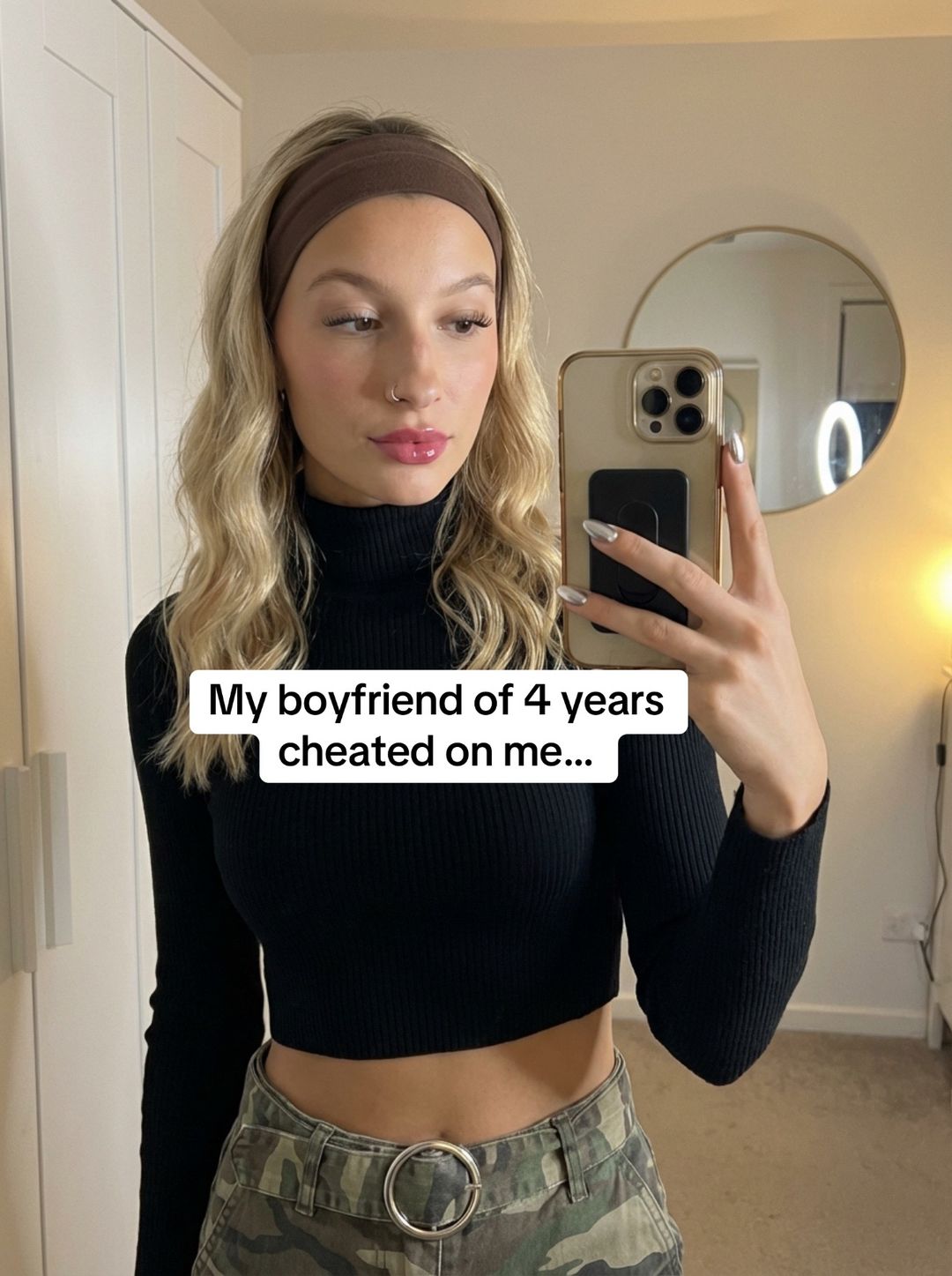
Slide Text
My boyfriend of 4 years cheated on me...
Visual
A young blonde woman looking into a mirror, holding a phone, wearing a black turtleneck and camo pants.
@astrobianca carousel breakdown
Bianca
I think we all need to get a soulmate drawing to confirm who our soulmate is… @easyStars | Astrology App #boyfriendcheck #boyfriends #exboyfriend #easystars #ad
Effectiveness score
2/10
Views
6.8M
Likes
15.4K
Saves
539
Engagement
0.2%
Hook
My boyfriend of 4 years cheated on me...
Goal
sell
Offer
product
CTA
Should I give him another chance?!
Caption
I think we all need to get a soulmate drawing to confirm who our soulmate is… @easyStars | Astrology App #boyfriendcheck #boyfriends #exboyfriend #easystars #ad
Strategic Summary
This carousel uses a bait-and-switch native ad strategy. It hooks viewers with highly relatable, gossip-driven personal drama (a cheating boyfriend of 4 years) only to sharply pivot into a product placement for an astrology app. While the hook generated millions of views (likely driven heavily by ad spend given the abysmal organic engagement rates), the audience aggressively rejected the toxic premise of taking a cheater back based on an app's AI generating a drawing of him.
The Winning Formula
Confessional trauma hook + curiosity gap (the magic app result) + highly controversial, comment-baiting resolution.
What's working
- •Slide 1 hook operates on pure human drama and universally understood betrayal, instantly halting the scroll via gossip instinct.
- •Visually native aesthetic: the mirror selfie and the candid couch photo make it feel like genuine UGC, disarming the viewer's 'ad blocker' until slide 2.
- •Creating an intentional extreme controversy on slide 3 ('Should I forgive a cheater because an app said he's my soulmate?') to farm outrage comments.
What's not working
- •The pivot from 'cheating trauma' to 'app endorsement' destroys trust immediately, leading to massive audience backlash and ad fatigue.
- •The 'magic' of the app is too transparently fake; users instantly called out that the app just used AI to trace his actual photos.
- •Engagement rates (0.0x vs norms) indicate the audience feels tricked and is refusing to interact positively.
Viral lesson
You can successfully use a native narrative storytelling hook for an ad, but if the product resolves the user's conflict in a toxic or highly inauthentic way, you will breed pure resentment rather than conversion.
Can a small creator replicate this? Small creators can replicate the 'story setup -> visual proof via tool -> audience question' structure, but must ensure the product acts as an empowering solution, not an excuse for toxic behavior.
Structural Formula (steal-the-format)
Structure pattern
3-slide bait-and-switch: deep personal tragedy hook -> magical product intervention overlay -> controversial / absurd question justifying the tragedy using the product.
Copy formula
First-person emotional trauma + 'and it turns out...' third-party validation + controversial audience permission prompt.
What to swap (concrete remixes)
- •Swap dating for career: 'My boss of 4 years passed me up for a promotion' -> Career Matching App -> 'It paired me with my competitor... should I accept the offer?'
- •Swap dating for real estate: 'We almost broke up over finding a house' -> Real Estate AI Tool -> 'Should we put an offer blind?'
What NOT to copy
Do not copy using a product to justify a toxic or abusive situation (like cheating). The controversy will ruin brand sentiment and flag you as engagement bait.
Aesthetics
Faux-organic UGC sandwiching a digital app screenshot
Color palette
What it conveys: It initially feels like a vulnerable, intimate post before shattering the illusion with corporate ad styling.
Slide-by-slide forensics
1hookmirror selfiesomberworks:yesgrab:95/100aesthetic:80/100My boyfriend of 4 years cheated on me...
My boyfriend of 4 years cheated on me...
Visual description
A mirror selfie of a young woman in a brightly lit bedroom or closet. She is looking at her phone via the mirror with a neutral, slightly melancholy expression. The lighting is soft and flattering.
Scene setting
mirror selfie in bedroom
Visible people
Visible objects
Predicted audience reaction
Immediate intrigue and empathy. 'What happened?' 'Are you okay?'
Comments reacting to this slide
- "Immediately no"
- "No? Tf?"
Verdict: It establishes a highly relatable human drama and leverages the 'storytime' native TikTok format perfectly to get a swipe.
2setupscreenshotcuriosityworks:partialgrab:70/100aesthetic:60/100easyStars
Got a soulmate drawing and it turns out....
Your Soulmate
☼ Scorpio ☾ Pisces ↑ Aquarius
easyStars Got a soulmate drawing and it turns out.... Your Soulmate ☼ Scorpio ☾ Pisces ↑ Aquarius
Visual description
A digitally generated pencil-style sketch of a handsome young man with curly hair and light eyes on a beige parchment-like background, framed inside a white app UI over a light purple background.
Scene setting
app interface screenshot
Visible people
Products on screen
Other text elements
- •Astrology symbols for Sun, Moon, and Rising signs
vs prior slide
Style: Radical shift from personal photo to digital UI graphic.
Story: Abruptly introduces a third-party tool (the app) as the ongoing subject of the narrative.
Predicted audience reaction
Skepticism and realization that a product is being pitched.
Comments reacting to this slide
- "i fear ai saw your photos ☹️"
Verdict: It creates the curiosity gap to flip to slide 3, but aggressively triggers the audience's ad-blocker.
3ctalifestyle shotcontroversyworks:yesgrab:85/100aesthetic:75/100He’s my soulmate....
Should I give him another chance?!
He’s my soulmate.... Should I give him another chance?!
Visual description
A candid shot of the real man who looks exactly like the sketch from slide 2. He is lying on a grey couch under a fuzzy white blanket, looking up at the camera with a soft smile. A modern kitchen is visible in the background.
Scene setting
living room couch with kitchen background
Visible people
Visible objects
vs prior slide
Style: Returns to real-world photography but from a different POV (creator capturing subject) compared to slide 1.
Story: Pays off the sketch with the real person and delivers the controversial final question.
Predicted audience reaction
Outrage at the terrible advice and annoyance at the transparent fake-AI trick.
Comments reacting to this slide
- "Immediately no"
- "No"
- "Nah"
Verdict: It successfully lands the bait by forcing visceral 'NO' reactions out of the audience.
Commerce intent
Mentioned products
Objections (from comments)
- •I’m so tired of seeing this ad
- •Immediately no
- •Illegal undisclosed ad
- •No. Don’t let AI tell you who your soul mate is.
- •i fear ai saw your photos
Comment ethnography
The comments are unified against the creator, acting as a collective voice of reason shutting down the toxic premise and calling out the inauthentic advertising.
Comments that characterize the audience
- "I’m so tired of seeing this ad 🙄"
- "No. Don’t let AI tell you who your soul mate is."
- "If they haven't proposed in 6 month, leave!!!"
Pain points revealed
- •Ad fatigue on TikTok
- •Frustration with transparent AI tricks in marketing
- •Dislike for creators pushing toxic relationship advice for money
Aspirations revealed
- •Self-respect and healthy boundaries in relationships (e.g., leaving cheaters)
- •Desire for authentic content
Objections
- •Tired of seeing the ad pushed into their feed
- •App just uses AI to trace real photos, not magic
- •Terrible advice to take back a 4-year cheater
Diagnostics
Hook deep-dive
My boyfriend of 4 years cheated on me...
The viewer wants the gossip: what did you do next? Did you break up? How did you find out?
Engagement read
High view counts (6.8M) but shockingly low share/save/comment ratios (nearly 0.0x norms), strongly indicating this was heavily boosted by paid ads despite terrible organic reception.
Mechanics
Unresolved gossip tension demanding visual closure of what happens next.
Brand & funnel
Brands visible
Buying-journey moment: The viewer is being forcibly thrust into awareness via an ad unit disguised as personal native content, reacting with heavy resistance.
Ideal Customer Profile
Young women interested in astrology, relationship advice, and self-discovery who are currently navigating romantic uncertainty.
Age
18-24
Gender
female
Readability
simple
Interests
Pain Points
Aspirations
Emotional Profile
Primary Emotion
controversyIntensity
Effectiveness
Emotions Evoked
Emotional Arc
shock → curiosity → resolution/question
Why It Lands
The content moves the viewer from an initial state of shock (empathy for the creator) to curiosity (what does the app say?) and finally to a desire to participate in the conversation (should she take him back?).
Writing Analysis
Style
confessional
Tone
vulnerable
Hook Type
story
Quality
The writing is concise and punchy, designed specifically for rapid consumption. It uses high-emotion triggers to maintain momentum.
Effectiveness
Goal Achievement
The content successfully drives awareness for the app by embedding it into a compelling personal narrative. The high bookmark count suggests users are saving it to try the app later.
Why It Spread
high-drama personal hook
astrology niche appeal
interactive question at the end
Content DNA
The CTA is a question that invites debate in the comments, which is a highly effective way to boost engagement on TikTok.
Narrative Arc
The narrative builds from a personal crisis to a potential solution (the app), ending with a question that demands audience participation.
Psychological Blueprint
Why It Spread
The post leverages a high-stakes emotional hook ('boyfriend cheated') to drive users into a curiosity loop that leads directly to a branded product. By framing the app as a tool to solve a painful, relatable problem, it bypasses traditional ad resistance. The 6.8M views were driven by the combination of a highly shareable, dramatic narrative and a low-friction, curiosity-driven format.
Framework
confession then validationPrimary Tactic
curiosity gapTactics Used
curiosity gap on slide 1 — 'cheated on me...' creates an immediate need for resolution
pattern interrupt on slide 2 — transitioning from a personal story to a branded app result
social proof on slide 2 — 'your soulmate' label implies authority
open-ended question on slide 3 — 'should I give him another chance?!' forces engagement
Cognitive Biases
Zeigarnik effect — the brain is compelled to finish the story of the cheating boyfriend
confirmation bias — users seeking validation for their own relationship struggles
anchoring — the app's 'soulmate' result anchors the user's perception of the creator's situation
Tribal Markers
Trust Signals
Slide Breakdown (3 analyzed)
Text
My boyfriend of 4 years cheated on me...
Visual
A young blonde woman looking into a mirror, holding a phone, wearing a black turtleneck and camo pants.
Visual Elements
Color Palette
Copy Analysis
Power Words
Open Loop: yes — the viewer needs to know what happens next after such a major life event
Visual Psychology
Attention: the text overlay in the center
Gaze: the woman is looking at her phone, drawing the viewer's eye to the center
Emotional cue: the serious, slightly sad facial expression
Composition: centered text creates immediate focus
Text
Got a soulmate drawing and it turns out.... Your Soulmate Scorpio Pisces Aquarius
Visual
A digital drawing of a handsome man on a vintage-style paper background, branded with 'easyStars'.
Visual Elements
Color Palette
Copy Analysis
Power Words
Open Loop: yes — the viewer is now comparing the drawing to the boyfriend
Visual Psychology
Attention: the face in the drawing
Emotional cue: the idealized, attractive face of the man
Composition: the clean, app-like interface builds trust in the product
Text
He's my soulmate.... Should I give him another chance?!
Visual
A man lying on a couch, looking directly at the camera.
Visual Elements
Color Palette
Copy Analysis
Power Words
Open Loop: no — the loop is closed by the question
Visual Psychology
Attention: the man's face
Gaze: direct eye contact with the viewer
Emotional cue: the man's soft, inviting expression
Composition: the direct gaze forces the viewer to engage with the question
Comment Intelligence
Sentiment
NeutralResonance
Intent
sell
Audience Vibe
The comments are sparse, suggesting the content is more 'passive consumption' than 'active discussion'.
Standout Quotes
“The app is so accurate”
“Don't do it girl”
“Wait, is this real?”
Top Comments
I’m so tired of seeing this ad 🙄
Immediately no
Illegal undisclosed ad
No. Don’t let AI tell you who your soul mate is.