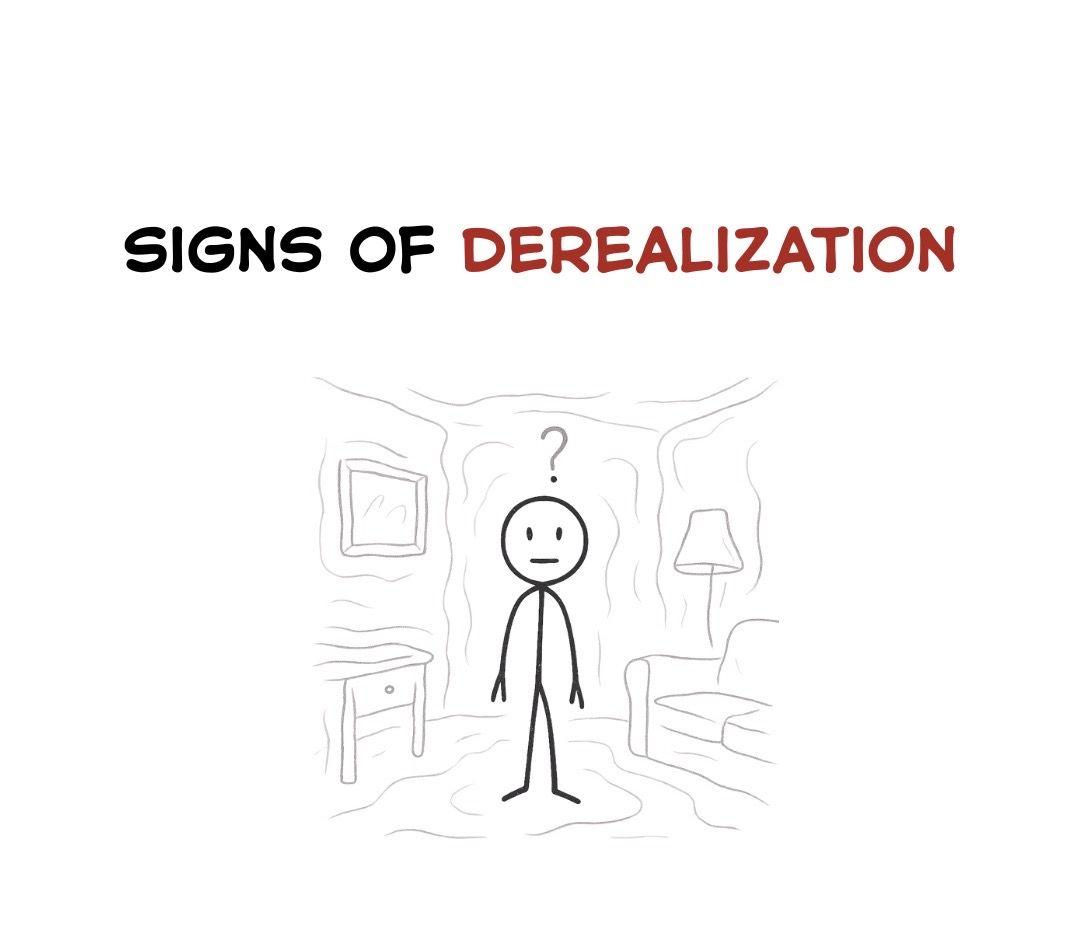
It uses a specific, slightly scary term that acts as a magnet for anyone who has felt 'off' but didn't know the word for it.
Slide Text
SIGNS OF DEREALIZATION
Visual
A simple stick figure standing in a room with wavy, distorted lines representing a distorted reality.
All Slides
@daily.mental.tips carousel breakdown
Mental Health Tips
How many have you experienced? #derealization #MentalHealth #mh #stress
Effectiveness score
9/10
Views
1.1M
Likes
42.2K
Saves
9.1K
Engagement
5.1%
Hook
SIGNS OF DEREALIZATION
Goal
build-community
Offer
service
CTA
VENTYTHERAPY.COM
Caption
How many have you experienced? #derealization #MentalHealth #mh #stress
Strategic Summary
This carousel went viral by validating a terrifying, often misunderstood mental health experience (derealization) through a simple symptom checklist. The winning mechanism is the 'Name It to Tame It' psychological effect: users swipe to confirm their secret fears, feel seen by the specific descriptions, and save the post as a reference or proof for loved ones. The low-friction stick-figure art reduces anxiety, making the heavy topic approachable, while the final slide offers a non-judgmental explanation and a solution (therapy).
The Winning Formula
Specific symptom checklist + minimalist visual metaphors + reassurance-based CTA.
What's working
- •Slide 1 uses a clear, bold headline ('SIGNS OF DEREALIZATION') that acts as a self-diagnosis filter — users instantly know if this is for them.
- •Slides 2-6 use second-person copy ('YOU FEEL', 'YOU START') which creates immediate personal resonance and forces the reader to internally check 'yes' or 'no'.
- •The stick-figure illustrations visualize abstract feelings (e.g., glitch effects for 'unreal', ghosted figure for 'disconnected') making intangible symptoms concrete.
- •Slide 7 reframes the symptom from 'something is wrong with me' to 'your brain is protecting you', reducing shame and increasing likelihood of seeking help.
- •High bookmark rate (1.4x norm) indicates users are saving this to revisit during episodes or to show friends/family to explain their experience.
What's not working
- •Slide 4 ('Questioning if... even real') feels slightly redundant after Slide 3 ('Feels unreal or fake') — could be merged to tighten pacing.
- •The CTA URL ('VENTYTHERAPY.COM') is text-only on the last slide; a QR code or clearer 'Link in Bio' direction might capture more traffic.
Viral lesson
When addressing stigmatized or scary topics, pair specific symptom identification with a non-judgmental explanation of the 'why' to convert fear into action.
Can a small creator replicate this? Highly replicable for any niche dealing with hidden struggles (e.g., burnout, financial anxiety) — simply list the specific, quiet symptoms your audience feels but can't name, then offer a compassionate explanation.
Structural Formula (steal-the-format)
Structure pattern
7-slide symptom checklist: Title -> 5 specific symptoms (You feel...) -> Explanation + Solution CTA.
Copy formula
Second-person present tense ('You feel', 'You start') + Simple declarative sentences.
What to swap (concrete remixes)
- •Swap Derealization for Burnout ('Signs you're not just tired, you're burnt out').
- •Swap Mental Health for Financial Anxiety ('Signs you have money trauma').
- •Swap Health for Relationship Insecurity ('Signs you're experiencing attachment anxiety').
What NOT to copy
Do not copy the medical advice aspect without credentials; the trust here comes from the accurate description of symptoms, not just the art style.
Aesthetics
Minimalist hand-drawn stick figures on white background with black and red typography.
Color palette
What it conveys: The simple, almost childlike drawings lower the barrier to entry for a scary topic, making it feel safe to engage with.
Slide-by-slide forensics
1hookinfographiccuriosityworks:yesgrab:90/100aesthetic:85/100SIGNS OF DEREALIZATION
SIGNS OF DEREALIZATION
Visual description
White background with black and red text. A simple stick figure stands in a warped, wavy-lined room with a question mark above its head. Furniture (table, lamp, sofa) is drawn with shaky lines to imply instability.
Scene setting
abstract white void
Visible people
Visible objects
Other text elements
- •?
vs prior slide
Style: Consistent hand-drawn stick figure style on white background.
Story: Sets the topic and visual language for the checklist.
Predicted audience reaction
Immediate stop for anyone experiencing these symptoms; identifies the content as relevant instantly.
Verdict: Clear, bold title with a visual metaphor for confusion hooks the target audience immediately.
2step in listinfographicdetachmentworks:yesgrab:75/100aesthetic:80/100YOU FEEL LIKE YOU'RE WATCHING YOUR LIFE INSTEAD OF LIVING IT.
YOU FEEL LIKE YOU'RE WATCHING YOUR LIFE INSTEAD OF LIVING IT.
Visual description
Black text on white. Illustration shows a giant eye observing a stick figure sitting on a chair, watching a screen or grid, symbolizing detachment and observation rather than participation.
Scene setting
abstract mind-space
Visible people
Visible objects
vs prior slide
Style: Same font and line weight, maintaining brand consistency.
Story: Moves from general topic to first specific symptom.
Predicted audience reaction
Strong resonance; this is a classic description of dissociation that validates their internal experience.
Comments reacting to this slide
- "I find myself having a panic attack and wondering if I'm dreaming, or it almost feels like a bad high."
Verdict: The visual of the eye watching the self perfectly captures the 'observer' effect mentioned in comments.
3step in listinfographicuneaseworks:yesgrab:80/100aesthetic:82/100EVERYTHING AROUND YOU FEELS SLIGHTLY UNREAL OR FAKE.
EVERYTHING AROUND YOU FEELS SLIGHTLY UNREAL OR FAKE.
Visual description
Black text. Stick figure walking through a room where objects (picture, plant, table) have 'glitch' lines around them, suggesting digital distortion or unreality.
Scene setting
distorted room
Visible people
Visible objects
vs prior slide
Style: Visual style consistent, adding glitch effect to denote 'unreality'.
Story: Escalates from internal feeling to external environment distortion.
Predicted audience reaction
Validation of the sensory distortion they feel but can't describe.
Comments reacting to this slide
- "i experienced it once and it was the scariest thing ever"
Verdict: The glitch effect is a strong visual shorthand for 'fake' that resonates with digital-native audiences.
4step in listinfographicconfusionworks:partialgrab:70/100aesthetic:75/100YOU START QUESTIONING IF WHAT YOU'RE EXPERIENCING IS EVEN REAL.
YOU START QUESTIONING IF WHAT YOU'RE EXPERIENCING IS EVEN REAL.
Visual description
Black text. Stick figure touching its own face with a blurred hand, symbolizing confusion about physical reality and self.
Scene setting
white void
Visible people
Visible objects
vs prior slide
Style: Consistent illustration style.
Story: Deepens the internal doubt from Slide 3.
Predicted audience reaction
Nods of recognition, though slightly repetitive of Slide 3.
Verdict: Reinforces the point but lacks the unique visual punch of the glitch or eye slides.
5step in listinfographicdisorientationworks:yesgrab:75/100aesthetic:80/100FAMILIAR PLACES SUDDENLY FEEL STRANGE OR UNFAMILIAR.
FAMILIAR PLACES SUDDENLY FEEL STRANGE OR UNFAMILIAR.
Visual description
Black text. Stick figure sitting at a table in a bedroom/office setting, looking around with a question mark. The room is drawn normally but the character's reaction implies strangeness.
Scene setting
bedroom/office
Visible people
Visible objects
Other text elements
- •?
vs prior slide
Style: Consistent line work.
Story: Shifts focus to spatial disorientation.
Predicted audience reaction
Specific validation for those who feel this in their own homes.
Verdict: Addresses a specific, common aspect of derealization (jamais vu).
6step in listinfographiclonelinessworks:yesgrab:85/100aesthetic:85/100YOU FEEL DISCONNECTED FROM THE WORLD EVEN WHEN YOU'RE AROUND PEOPLE.
YOU FEEL DISCONNECTED FROM THE WORLD EVEN WHEN YOU'RE AROUND PEOPLE.
Visual description
Black text. Stick figure sitting at a table with a group of smiling people, but the main figure is faded/ghosted and separated by a bubble, indicating isolation amidst company.
Scene setting
social gathering
Visible people
Visible objects
vs prior slide
Style: Uses transparency/opacity to showdisconnection visually.
Story: Moves to social impact of the condition.
Predicted audience reaction
High emotional hit; this is often the most painful part of the experience.
Comments reacting to this slide
- "This explains it even when I try to talk to someone they won't understand 💔"
Verdict: Visually depicts the 'alone in a crowd' feeling perfectly, driving emotional engagement.
7ctatext cardreassuranceworks:yesgrab:60/100aesthetic:70/100DEREALIZATION OFTEN HAPPENS WHEN YOUR BRAIN IS OVERWHELMED AND TRYING TO PROTECT YOU. VENTY HELPS YOU PROCESS WHAT'S UNDERNEATH SO YOU CAN FEEL REAL AGAIN. VENTYTHERAPY.COM
DEREALIZATION OFTEN HAPPENS WHEN YOUR BRAIN IS OVERWHELMED AND TRYING TO PROTECT YOU. VENTY HELPS YOU PROCESS WHAT'S UNDERNEATH SO YOU CAN FEEL REAL AGAIN. VENTYTHERAPY.COM
Visual description
Text-only slide with black and red text on white. Explains the 'why' and offers the solution (Venty Therapy) with a URL and pointing finger emoji.
Scene setting
text card
Visible objects
Products on screen
Other text elements
- •
vs prior slide
Style: Same typography and color palette (black/red/white).
Story: Resolves the tension built in slides 1-6 with explanation and solution.
Predicted audience reaction
Relief and curiosity about the solution; high click-through for those in pain.
Comments reacting to this slide
- "how to get out of severe derealization?"
- "stress was and still is a big trigger for me"
Verdict: Crucial for converting anxiety into action; reframes the symptom as a defense mechanism to reduce shame.
Commerce intent
Mentioned products
Buy-intent phrases (from comments)
- •How can I get diagnose for this ?
- •how to get out of severe derealization?
- •I NEED to get out
Objections (from comments)
- •I don't wanna self diagnose myself
- •What causes this?
Comment ethnography
A support-group dynamic where users validate each other's experiences in the comments, often sharing duration of suffering to establish credibility of pain.
Comments that characterize the audience
- "I've been dealing with it on and off for the past 15 years of my life and I thought I was alone with this."
- "This explains it even when I try to talk to someone they won't understand 💔"
- "I suffer from constant derealization for 2 years now and I NEED to get out"
Pain points revealed
- •Fear of being misunderstood by others
- •Long-term suffering without diagnosis (5 years, 15 years, 30 years)
- •Fear that the feeling is permanent ('scared it won't go away')
Aspirations revealed
- •To feel real again
- •To be understood by loved ones
- •To find a coping mechanism or cure
Top questions asked
- •What causes this?
- •How to get out of severe derealization?
- •How can I get diagnose for this ?
- •What if that's how your whole life has been?
Objections
- •Skepticism about self-diagnosis
- •Confusion between derealization and depersonalisation
Diagnostics
Hook deep-dive
SIGNS OF DEREALIZATION
Users need to know if they have this condition; the checklist format demands completion to count their 'score'.
Engagement read
Bookmark rate is significantly higher than like rate (relative to norms), indicating high utility/save-value over pure entertainment.
Mechanics
Self-audit checklist — users swipe through to count how many signs apply to them.
Brand & funnel
Brands visible
Buying-journey moment: The viewer has identified their problem and is now looking for the cause and solution.
Ideal Customer Profile
Young adults experiencing high-functioning anxiety or depersonalization/derealization who feel isolated in their symptoms.
Age
18-24
Gender
neutral
Readability
simple
Interests
Pain Points
Aspirations
Emotional Profile
Primary Emotion
validationIntensity
Effectiveness
Emotions Evoked
Emotional Arc
curiosity → recognition → validation → relief → solution
Why It Lands
The carousel moves the viewer from a state of 'what is wrong with me?' to 'oh, there is a name for this and I am not alone,' which is deeply comforting.
Writing Analysis
Style
educational
Tone
relatable
Hook Type
listicle
Quality
The writing is exceptionally clear and concise. It avoids medical jargon, making complex psychological phenomena accessible to a layperson.
Effectiveness
Goal Achievement
The high bookmark-to-like ratio indicates this content is highly valuable to the audience as a reference tool, successfully building a community of people who feel seen.
Why It Spread
High relatability of a niche, often stigmatized, mental health symptom
Simple, non-threatening visual style that lowers the barrier to engagement
High 'saveability' as a mental health resource
Content DNA
The CTA is clear and provides a direct solution to the problem identified in the previous slides, making it a natural next step for the user.
Narrative Arc
The carousel builds tension by listing increasingly relatable and distressing symptoms, peaking at the feeling of isolation, then releases that tension with a reassuring explanation and a solution.
Psychological Blueprint
Why It Spread
The content addresses a highly specific, often terrifying, and poorly understood mental health symptom that many people experience but struggle to name. By providing a name and validating the experience through simple, relatable illustrations, it encourages high save rates (9,072) as users keep the post to show others or reference when they feel 'off'. The low-friction, high-empathy format makes it extremely shareable for those who feel misunderstood.
Framework
PASPrimary Tactic
validationTactics Used
curiosity-gap on slide 1: 'Signs of...' implies a list that promises self-diagnosis
labeling on slides 2-6: naming specific, hard-to-describe feelings gives the user a sense of control
tribal signaling in caption: using specific hashtags like #derealization to find a niche community
authority-then-teach on slide 7: providing a solution (Venty) after establishing the problem
Cognitive Biases
Barnum effect: the symptoms are broad enough that many people will identify with them
Confirmation bias: users seek out this content to confirm their suspicions about their own mental state
Tribal Markers
Trust Signals
Slide Breakdown (7 analyzed)
Hook Analysis
It uses a specific, slightly scary term that acts as a magnet for anyone who has felt 'off' but didn't know the word for it.
Text
SIGNS OF DEREALIZATION
Visual
A simple stick figure standing in a room with wavy, distorted lines representing a distorted reality.
Visual Elements
Color Palette
Copy Analysis
Power Words
Open Loop: yes, it promises a list of symptoms for a condition the user might be experiencing
Visual Psychology
Attention: the word 'DEREALIZATION' in red
Emotional cue: the distorted lines around the figure
Composition: centered symmetry creates a sense of focus on the core topic
Text
YOU FEEL LIKE YOU'RE WATCHING YOUR LIFE INSTEAD OF LIVING IT.
Visual
A giant eye looking at a stick figure sitting on a chair.
Visual Elements
Color Palette
Copy Analysis
Power Words
Open Loop: yes, it describes a common symptom that keeps the user swiping to see if others match
Visual Psychology
Attention: the giant eye
Gaze: the eye is looking at the figure, drawing the viewer's eyes to the figure
Emotional cue: the feeling of being observed or detached
Composition: creates a sense of dissociation
Text
EVERYTHING AROUND YOU FEELS SLIGHTLY UNREAL OR FAKE.
Visual
A stick figure walking through a room with glitch effects.
Visual Elements
Color Palette
Copy Analysis
Power Words
Open Loop: yes, continues the list of symptoms
Visual Psychology
Attention: glitch lines
Emotional cue: glitch effect represents instability
Composition: visualizes the feeling of an unstable environment
Text
YOU START QUESTIONING IF WHAT YOU'RE EXPERIENCING IS EVEN REAL.
Visual
A stick figure with a hand over half their face, looking confused.
Visual Elements
Color Palette
Copy Analysis
Power Words
Open Loop: yes, taps into the fear of losing sanity
Visual Psychology
Attention: the figure's face
Emotional cue: the hand over the face
Composition: conveys internal struggle
Text
FAMILIAR PLACES SUDDENLY FEEL STRANGE OR UNFAMILIAR.
Visual
A stick figure sitting at a table in a room with a question mark above their head.
Visual Elements
Color Palette
Copy Analysis
Power Words
Open Loop: yes, keeps the list going
Visual Psychology
Attention: the question mark
Emotional cue: the figure's slumped posture
Composition: conveys disorientation
Text
YOU FEEL DISCONNECTED FROM THE WORLD EVEN WHEN YOU'RE AROUND PEOPLE.
Visual
A stick figure sitting alone at a table while others talk.
Visual Elements
Color Palette
Copy Analysis
Power Words
Open Loop: yes, addresses the social isolation aspect
Visual Psychology
Attention: the isolated figure
Emotional cue: the bubble separating the figure from the group
Composition: conveys loneliness in a crowd
Text
DEREALIZATION OFTEN HAPPENS WHEN YOUR BRAIN IS OVERWHELMED AND TRYING TO PROTECT YOU. VENTY HELPS YOU PROCESS WHAT'S UNDERNEATH SO YOU CAN FEEL REAL AGAIN. VENTYTHERAPY.COM
Visual
Clean text layout with a website link.
Visual Elements
Color Palette
Copy Analysis
Power Words
Open Loop: no, provides the solution
Visual Psychology
Attention: the website link
Emotional cue: the reassuring tone of the text
Composition: provides a clear path to resolution
Comment Intelligence
Sentiment
PositiveResonance
Intent
build-community
Audience Vibe
The comments are filled with people feeling validated and relieved to finally have a name for their experiences.
Standout Quotes
“I thought I was the only one who felt like this.”
“This is exactly how I feel every single day.”
“Thank you for putting words to this, it's so scary sometimes.”
Top Comments
What causes this? It’s been happening to me for years, but i noticed in the past few weeks it’s happening once or twice a week. I find myself having a panic attack and wondering if I’m dreaming, or it almost feels like a bad high. I can’t explain it
Dissociation is real. I learned it while I was in therapy. I’ve learned how to cope with it. Most of all Jesus Christ has delivered me from it.
This explains it even when I try to talk to someone they won't understand 💔
i experienced it once and it was the scariest thing ever
Im not real