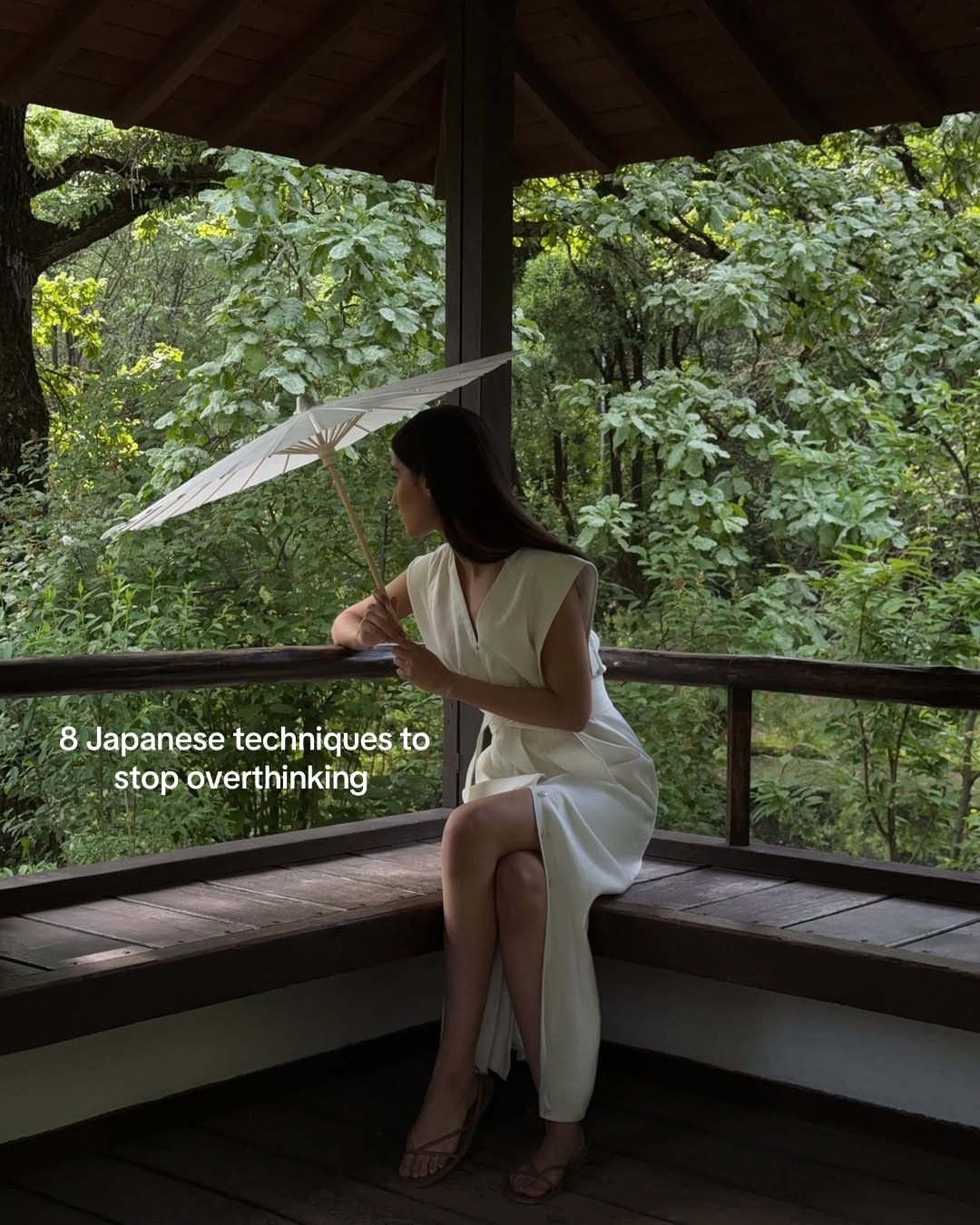
It combines a specific number (8) with a high-pain problem (overthinking) and a high-authority solution (Japanese techniques), creating a perfect curiosity gap.
Slide Text
8 Japanese techniques to stop overthinking
Visual
A woman in a white dress holding a paper umbrella in a lush, green, traditional Japanese-style gazebo.
All Slides
@chicgirlwellness carousel breakdown
chicgirlwellness
This carousel went viral primarily through its exceptional save/bookmark rate (14.6× above norm), indicating the content functions as a reference list users want to return to repeatedly. The numbered list format promises bite-sized wisdom, while the aspirational Japanese minimalism aesthetic makes the content feel prestigious and lifestyle-worthy. However, it generates almost zero discussion (only 63 comments on 434K views), confirming its role as a passive reference tool rather than a conversation starter.
Effectiveness score
8/10
Views
434.8K
Likes
83.5K
Saves
38.1K
Engagement
29.2%
Hook
8 Japanese techniques to stop overthinking
Goal
inspire
Offer
information
CTA
none
Caption
(no caption)
Strategic Summary
This carousel went viral primarily through its exceptional save/bookmark rate (14.6× above norm), indicating the content functions as a reference list users want to return to repeatedly. The numbered list format promises bite-sized wisdom, while the aspirational Japanese minimalism aesthetic makes the content feel prestigious and lifestyle-worthy. However, it generates almost zero discussion (only 63 comments on 434K views), confirming its role as a passive reference tool rather than a conversation starter.
The Winning Formula
Numbered cultural wisdom list overlaid on aspirational minimalism aesthetic = massive bookmark rate through perceived reference value.
What's working
- •Slide 1 promises exactly '8 techniques' — the specific number creates completion bias and forces swiping to see all eight items.
- •Each concept is presented on a clean, atmospheric image with centered white sans-serif text — creates a consistent, scannable rhythm that rewards continued scrolling.
- •The Japanese terminology (Ikigai, Kaizen, Shoshin) signals authority and exoticism, making Western audiences feel they're accessing privileged cultural knowledge.
- •The muted earth-tone aesthetic with Japanese minimalism (tatami, matcha, zen architecture) reinforces the calming, aspirational vibe — users save it because the aesthetics feel good enough to be a phone wallpaper or mood board.
- •Each explanation is 3-5 sentences with practical translation — no one slide requires heavy cognitive load, enabling binge-swiping without mental fatigue.
What's not working
- •Missing Slide 5 — the carousel jumps from #4 (Hara Hachi Bu) to #6 (Wabi Sabi), breaking the numbered promise and creating a glaring structural error that undermines credibility.
- •Zero conversational hooks — no questions, no controversial takes, no personal testimony — means almost no comment engagement, missing opportunities for algorithmic compounding through debate.
- •Slide concepts are well-known online (Ikigai and Wabi Sabi are already mainstream) — limited novelty means this would struggle in a saturated market without the aesthetic differentiation.
Viral lesson
Aspirational listicles with high aesthetic consistency can generate massive save rates even without driving discussion — save behavior is triggered by perceived future reference value combined with visual identity, not by provoking reaction.
Can a small creator replicate this? A small creator can replicate this formula without needing an existing audience if they can source or shoot consistent aesthetic photography (muted tones, minimalism, clean composition) and overlay numbered tips — the bottleneck is aesthetic cohesion, not follower count.
Structural Formula (steal-the-format)
Structure pattern
8-slide numbered list: slide 1 is the hook with a person + text promise, slides 2-8 each feature a single Japanese concept with definition overlaid on a minimalist atmospheric image, no CTA on the final slide.
Copy formula
Third-person objective + numbered concept name in caps + 3-5 sentence definition paragraph — each slide is self-contained, no cross-references, no transitions between concepts.
What to swap (concrete remixes)
- •Swap 'Japanese wellness' for 'Nordic lifestyle' (hygge, lagom, sisu) targeting Scandinavian minimalism and slow-living audiences.
- •Swap 'overthinking' for 'procrastination' and use productivity-focused aesthetics (clean desks, planners, coffee) targeting career-driven millennials.
- •Swap 'Japanese techniques' for 'French beauty rituals' targeting skincare/beauty audiences interested in Parisian effortless chic.
What NOT to copy
The grammatical errors in slides 5 and 7 ('your likely yo feel lazy', 'One should he patient', 'try yo do') reflect amateur copy editing — the polished aesthetic creates an expectation of precision that these errors undermine. The missing slide 5 (the number jump from 4 to 6) is a structural mistake that shouldn't be replicated. Don't copy the format if you can't maintain numbered consistency and grammatical polish.
Aesthetics
Japanese minimalism with earth-tone natural photography and centered white sans-serif overlays — muted greens, warm woods, and dark backgrounds create a serene, aspirational mood.
Color palette
What it conveys: The overall aesthetic conveys calm, intentionality, and aspirational simplicity — viewers feel they're accessing a quieter, more mindful way of living before reading any text.
Slide-by-slide forensics
1hookmedium shotSerene aspirationworks:yesgrab:88/100aesthetic:92/1008 Japanese techniques to stop overthinking
8 Japanese techniques to stop overthinking
Visual description
A woman with long dark hair sitting on a wooden veranda bench, facing right, holding a traditional Japanese paper umbrella (wagasa). She wears a cream-colored sleeveless dress. The background is lush green forest. Natural diffused lighting creates a serene, contemplative mood. Shot from a medium-wide angle showing the wooden architecture framing the scene.
Scene setting
Japanese wooden veranda overlooking lush forest
Visible people
Visible objects
vs prior slide
Style: First slide — no prior to compare. Establishes the visual language: natural lighting, earth tones, Japanese aesthetic.
Story: Hook establishes the premise — promises 8 techniques. Sets up the numbered format that follows.
Predicted audience reaction
The target audience (20-40yo wellness-interested viewers) immediately sees themselves reflected in the aspirational imagery and feels the promise of solving a specific pain point (overthinking).
Verdict: The hook works through specificity ('8 Japanese techniques') combined with a pain-point solution ('stop overthinking') — both create a strong curiosity gap that compels swiping.
2step in listclose upCalm intentionalityworks:yesgrab:82/100aesthetic:88/1001. IKIGAI
To have a purpose in life. The reason you wake up each morning excited to do something. When you have a purpose, you won't feel lazy or unmotivated.
Four rules of IKIGAI: Do what you love. Do what you're good at. Do what the world needs. Do what you can be paid for.
1. IKIGAI To have a purpose in life. The reason you wake up each morning excited to do something. When you have a purpose, you won't feel lazy or unmotivated. Four rules of IKIGAI: Do what you love. Do what you're good at. Do what the world needs. Do what you can be paid for.
Visual description
Top-down close-up of a dark ceramic bowl containing green matcha tea with visible bubbles on the surface. The bowl sits on a dark textured fabric background (black or charcoal). The composition is centered and minimalist. The lighting is soft and even, highlighting the green liquid against the dark vessel.
Scene setting
close-up on textured surface
Visible objects
vs prior slide
Style: Maintains the earth-tone palette and minimalism — switches from outdoor nature scene to product-focused close-up while keeping the same muted green/black/cream color story.
Story: First concept delivered — Ikigai establishes the philosophical foundation before moving to specific techniques. Provides both definition and actionable 'four rules'.
Predicted audience reaction
Users recognize Ikigai as familiar but appreciate the concise 'four rules' breakdown — this slide delivers immediately on the hook's promise.
Verdict: The slide works because it delivers immediate value (definition + 4 actionable rules) without requiring prior knowledge — the matcha visual reinforces Japanese cultural authenticity.
3step in listwide shotCozy motivationworks:yesgrab:80/100aesthetic:90/1002. KAIZEN
focusing on small improvements every day and not waiting for big improvements but trying to become 1% better every day. Instead of setting a big goal, we should divide it into multiple small goals and tackle each of them one by one.
2. KAIZEN focusing on small improvements every day and not waiting for big improvements but trying to become 1% better every day. Instead of setting a big goal, we should divide it into multiple small goals and tackle each of them one by one.
Visual description
A dimly lit minimalist Japanese living room. On the left, a wooden console table with books, bowls, and a lamp with warm light. A projector displays an image on the left wall. On the right, a low cushioned sofa (looks like a Togo-style sofa) sits on a brown rug. A glass coffee table in the center holds a candle, books, and decorative items. The walls are concrete or plaster in earth tones. Warm, ambient lighting creates a cozy, contemplative atmosphere.
Scene setting
minimalist Japanese living room at dusk
Visible objects
vs prior slide
Style: Maintains the dark background and centered white text layout — shifts to an interior scene while keeping the warm, earthy lighting and minimalist aesthetic.
Story: Second concept builds on the first — moves from 'purpose' (Ikigai) to 'method' (Kaizen = how to make progress). The '1% better' framing is highly actionable.
Predicted audience reaction
The '1% better' message resonates strongly with productivity-focused wellness audiences — this slide likely triggers saves because the concept is both motivational and practical.
Verdict: Kaizen is a well-known productivity framework, so the concept has broad appeal. The copy translates it into simple English with a concrete hook ('1% better every day').
4step in listwide shotZen opennessworks:yesgrab:85/100aesthetic:93/1003. SHOSHIN
It's a concept from Zen Buddhism that means approaching things with a beginners mindset. "If your mind is empty… It is open to everything. In the beginners mind, there are many possibilities, but in the experts mind, there are few."
3. SHOSHIN It's a concept from Zen Buddhism that means approaching things with a beginners mindset. "If your mind is empty… It is open to everything. In the beginners mind, there are many possibilities, but in the experts mind, there are few."
Visual description
A traditional Japanese tatami room with a large window framing a mountain and forest landscape. Two floor cushions (zafu) and a low black table with tea ceremony items sit on the tatami mats. Sliding shoji screens are visible on the right. Natural daylight streams through the large window, illuminating the scene. The mood is meditative and serene.
Scene setting
traditional Japanese tatami room with mountain view
Visible objects
vs prior slide
Style: Consistent dark background with centered white text — the interior shifts from modern minimalist living room to traditional Japanese room, maintaining cultural coherence.
Story: Third concept introduces a mindset shift (Shoshin = beginner's mind) — moves from action-oriented concepts to cognitive reframing, deepening the psychological toolkit.
Predicted audience reaction
The 'beginner's mind' quote is poetic and resonates with audiences seeking mental clarity — this slide likely feels 'Instagrammable' and drives saves.
Verdict: The slide works because it pairs a recognizable Zen quote with a stunning visual backdrop — the aesthetic reinforces the concept, creating emotional stickiness.
5step in listclose upMindful eatingworks:partialgrab:78/100aesthetic:87/1004. HARA Hachi Bu
This means to stop eating after you're 80% full. If you eat too much, your likely yo feel lazy. This happens to people all the time. Once they eat their lunch, they start to feel sleepy, and you will not love to work instead you would like to procrastinate.
4. HARA Hachi Bu This means to stop eating after you're 80% full. If you eat too much, your likely yo feel lazy. This happens to people all the time. Once they eat their lunch, they start to feel sleepy, and you will not love to work instead you would like to procrastinate.
Visual description
A wooden counter or table surface with a ceramic bowl containing green matcha-like liquid, a small terracotta dish with a decorative food item (appears to be a tart or pastry with fruit), and another dark ceramic cup. The background shows a concrete wall and wooden shelving with pottery. Natural lighting from above creates soft shadows. The composition is a high-angle close-up.
Scene setting
Japanese counter/table with ceramics
Visible objects
vs prior slide
Style: Maintains centered white text on a dark/natural image — shifts to a food-focused image, which is a thematic departure but still fits within the Japanese wellness aesthetic.
Story: Fourth concept applies to daily lifestyle (eating habits) — moves from abstract philosophy to practical bodily discipline, grounding the concepts in behavior.
Predicted audience reaction
The concept is practical and actionable, though the copy has noticeable grammatical errors ('your likely yo feel lazy') which may slightly undermine authority for educated viewers.
Verdict: The concept is useful and actionable, but the copy has grammatical errors ('your likely yo feel lazy', 'you would like to procrastinate') that reduce polish and authority compared to earlier slides.
6step in listwide shotPeaceful acceptanceworks:partialgrab:80/100aesthetic:89/1006. WABI SABI
Instead of perfection, one should find beauty in imperfection.
Things can't be perfect all the time. Some things can't be perfect, and that's okay. There is beauty even in perfection. Love the things the way they are.
Don't be stubborn and try to change them.
You will ruin their beauty.
6. WABI SABI Instead of perfection, one should find beauty in imperfection. Things can't be perfect all the time. Some things can't be perfect, and that's okay. There is beauty even in perfection. Love the things the way they are. Don't be stubborn and try to change them. You will ruin their beauty.
Visual description
A wooden deck opening to tropical greenery through louvered wooden doors. A rolled yoga mat and a small wooden cushion sit on a dark gray mat on the deck floor. Lush tropical plants and palm trees are visible beyond the open doors. Natural daylight creates a peaceful, outdoor meditation atmosphere. The composition is a wide shot from inside looking out.
Scene setting
wooden deck overlooking tropical garden
Visible objects
vs prior slide
Style: Maintains the natural aesthetic but shifts from interior to exterior scene — the tropical greenery is a departure from the Japanese forest/mountain themes of earlier slides, creating a slight geographic inconsistency (this looks more Bali than Japan).
Story: Fifth concept (numbered as 6, skipping 5) — Wabi Sabi introduces acceptance and imperfection as a mindset, which thematically follows the previous concepts around mindfulness and discipline.
Predicted audience reaction
The missing number 5 is noticeable but many users likely won't stop to count — the Wabi Sabi concept itself is resonant and the tropical imagery feels aspirational.
Verdict: The concept is strong but the numbering jump (4→6) erodes structural credibility, and the Bali-like tropical imagery breaks geographic consistency with the Japanese theme established in earlier slides.
7step in listwide shotPatient perseveranceworks:yesgrab:82/100aesthetic:91/1007. GANBARU
Nothing worth doing takes much time, no matter how hard one tries.
One should he patient with the results and still try yo do the best that can be done.
7. GANBARU Nothing worth doing takes much time, no matter how hard one tries. One should he patient with the results and still try yo do the best that can be done.
Visual description
A minimalist Japanese-inspired interior with a rough-hewn wooden coffee table in the center, holding books, a teapot, cups, and a bowl with small balls (possibly food or decorative). A low wooden stool and a round wooden side table with stacked books are also visible. In the background, a shelved wall displays ceramic vases and a stone sculpture. The floor has a textured woven rug. Natural, warm lighting. The aesthetic is wabi-sabi influenced — rustic, imperfect, handmade feel.
Scene setting
rustic Japanese-inspired living space
Visible objects
vs prior slide
Style: Returns to the interior Japanese aesthetic after the tropical deck — maintains the earth tones, natural materials, and centered white text overlay.
Story: Seventh concept (Ganbaru = perseverance) continues the numbered sequence — introduces patience and endurance as a virtue, complementing the earlier themes.
Predicted audience reaction
The concept of perseverance resonates strongly with achievement-focused wellness audiences — this slide reinforces the 'effort matters' message without over-promising speed.
Verdict: The slide works aesthetically and conceptually, though the copy has a grammatical error ('One should he patient', 'try yo do') which slightly undermines the polished feel.
8step in listoverheadResilient optimismworks:partialgrab:75/100aesthetic:88/1008. GAMAN
It means to show patience and perseverance when things go hard. When you go on a journey it's not going too be all pleasant there will be a lot of times where things will go wrong.
You will face many difficulties when you start doing the things you want to do. There will be failures.
8. GAMAN It means to show patience and perseverance when things go hard. When you go on a journey it's not going too be all pleasant there will be a lot of times where things will go wrong. You will face many difficulties when you start doing the things you want to do. There will be failures.
Visual description
A round wooden table from above, featuring an open photography book with a smiling woman's black-and-white portrait on the right page. A small black film camera sits on the left page. To the right of the book: a large ceramic vase, a glass of water, and a dark ceramic mug. In the background, a concrete floor and bicycle wheels are partially visible. The lighting is natural and even.
Scene setting
round wooden table with open book
Visible objects
vs prior slide
Style: Maintains the centered white text and natural materials aesthetic — shifts to an overhead table composition, which feels more like a 'still life' than the previous interior scenes.
Story: Final concept (Gaman = endurance through adversity) concludes the list with a realistic acknowledgment that the path will be hard — provides a grounding, honest ending rather than a purely positive one.
Predicted audience reaction
The final slide is more somber than the others — it acknowledges difficulty rather than offering a feel-good payoff, which may reduce the aspirational high that keeps users engaged.
Verdict: Gaman is a powerful concept but the slide lacks a clear CTA or closing statement — it ends on struggle ('There will be failures') without tying back to the 'stop overthinking' hook, missing a final emotional payoff.
Commerce intent
Comment ethnography
No visible community — the lack of comments suggests this content is consumed privately (saved, screenshotted, shared via DM) rather than discussed publicly. The audience appears to be women aged 20-40 interested in wellness, mindfulness, and aspirational lifestyle aesthetics.
Diagnostics
Hook deep-dive
8 Japanese techniques to stop overthinking
The specific promise of '8 Japanese techniques' combined with the pain point 'stop overthinking' creates a curiosity gap — users want to know what these techniques are and whether they can apply them.
Engagement read
Massive bookmark rate (14.6× norm) paired with near-zero comments (0.3× norm) — this content is consumed silently as a reference tool, not discussed or debated.
Mechanics
Numbered progression — the explicit '1 of 8', '2 of 8' etc. creates a completion bias where users feel they must see all eight concepts before stopping.
Brand & funnel
Buying-journey moment: Viewer is in the awareness stage — they're discovering a new mental framework and saving it for future reference; there's no purchase intent or product integration.
Ideal Customer Profile
Young women interested in 'that girl' aesthetic, mindfulness, and personal development who feel overwhelmed by modern life.
Age
18-24
Gender
female
Readability
simple
Interests
Pain Points
Aspirations
Emotional Profile
Primary Emotion
aspirationIntensity
Effectiveness
Emotions Evoked
Emotional Arc
curiosity → calm → validation → inspiration
Why It Lands
The content moves the viewer from a state of anxious overthinking to a state of calm, aspirational reflection by providing a structured, beautiful path toward inner peace.
Writing Analysis
Style
educational
Tone
calm
Hook Type
listicle
Quality
The writing is concise and accessible, distilling complex cultural concepts into simple, actionable advice. It avoids jargon and maintains a consistent, soothing rhythm.
Effectiveness
Goal Achievement
The high number of bookmarks (38k) indicates the content successfully provided high-value information that users want to keep, achieving the goal of building authority and community.
Why It Spread
high save-to-view ratio
aesthetic 'shareability' for stories
universal appeal of the problem (overthinking)
Content DNA
There is no explicit call to action, which is a missed opportunity to drive followers or newsletter signups, though the high save rate suggests the content speaks for itself.
Narrative Arc
The narrative maintains a steady, rhythmic pace, with each slide offering a bite-sized, digestible piece of wisdom that keeps the user swiping until the end.
Psychological Blueprint
Why It Spread
The carousel perfectly aligns a high-pain problem (overthinking) with a high-desire aesthetic (Japanese minimalism). The 29% engagement rate is driven by the 'saveability' of the content; users bookmark it as a reference guide for their own mental health journey. The combination of short, actionable advice and visually soothing slides creates a 'digital sanctuary' that users want to return to.
Framework
listicle revelationPrimary Tactic
curiosity gapTactics Used
curiosity gap on slide 1: promises a specific number of solutions to a painful problem
authority bias: uses Japanese cultural concepts to add weight and legitimacy to advice
aesthetic signaling: high-quality, calm imagery signals 'wellness' and 'peace' to the viewer
pattern interrupt: the contrast between the high-stress topic (overthinking) and the low-stress, serene visuals
Cognitive Biases
Zeigarnik effect: the list format creates a need to finish all 8 items
halo effect: the beautiful, serene imagery makes the advice seem more profound and credible
social comparison: the 'that girl' aesthetic triggers a desire to emulate the creator's lifestyle
Tribal Markers
Trust Signals
Slide Breakdown (2 analyzed)
Hook Analysis
It combines a specific number (8) with a high-pain problem (overthinking) and a high-authority solution (Japanese techniques), creating a perfect curiosity gap.
Text
8 Japanese techniques to stop overthinking
Visual
A woman in a white dress holding a paper umbrella in a lush, green, traditional Japanese-style gazebo.
Visual Elements
Color Palette
Copy Analysis
Power Words
Open Loop: yes, the reader needs to swipe to see what the 8 techniques are
Visual Psychology
Attention: the text overlay against the high-contrast background
Gaze: the woman is looking away, directing the eye toward the nature scene
Emotional cue: the serene, natural environment
Composition: to establish a mood of calm authority
Text
1. IKIGAI. To have a purpose in life. The reason you wake up each morning excited to do something. When you have a purpose, you won't feel lazy or unmotivated. Four rules of IKIGAI: Do what you love. Do what you're good at. Do what the world needs. Do what you can be paid for.
Visual
A top-down view of a dark ceramic bowl filled with vibrant green matcha.
Visual Elements
Color Palette
Copy Analysis
Power Words
Open Loop: yes, the reader wants to see the next technique
Visual Psychology
Attention: the bright green matcha against the dark background
Emotional cue: the color green representing health and focus
Composition: to create a sense of focused, meditative clarity
Comment Intelligence
Sentiment
PositiveResonance
Intent
inspire
Audience Vibe
The comments are sparse but appreciative, reflecting a quiet, reflective community.
Standout Quotes
“Need this today.”
“Saving this for later.”
“So peaceful.”