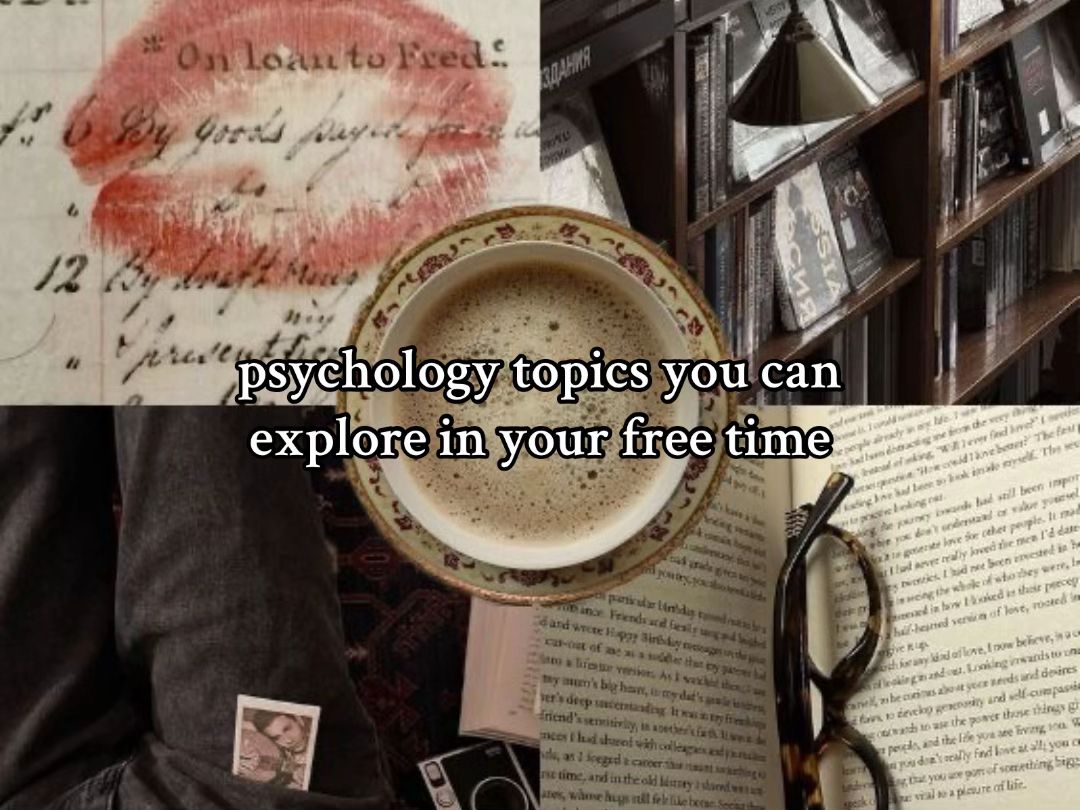
The hook works because it promises a low-effort way to gain 'intellectual' knowledge, which appeals to the target audience's desire for self-improvement.
Slide Text
psychology topics you can explore in your free time
Visual
A collage of dark academia elements: old paper with a lipstick kiss, a bookshelf, a coffee cup, and a book with glasses.
All Slides
@ansiarqv carousel breakdown
anna 𐙚
tg channel | https://t.me/ansiarqvv |#fyp #psychology #mbti #studytok #interesting #study #fypp
Effectiveness score
8/10
Views
352.7K
Likes
54.5K
Saves
33.3K
Engagement
25.6%
Hook
psychology topics you can explore in your free time
Goal
grow-following
Offer
information
CTA
tg channel | https://t.me/ansiarqvv
Caption
tg channel | https://t.me/ansiarqvv |#fyp #psychology #mbti #studytok #interesting #study #fypp
Strategic Summary
This carousel exploits the 'Dark Academia' aesthetic to deliver a high-density educational listicle, triggering an extreme 15.7× save-rate anomaly. The content is optimized for 'reference-hoarding' rather than discussion, resulting in massive bookmark volume but negligible comments. By pairing broad appeal topics (MBTI) with intellectual deep-dives, it positions the creator as a curator of cultural capital, compelling users to save the content for future self-improvement.
The Winning Formula
Curated intellectual topics + 'Dark Academia' mood board aesthetic + dense text overlays = massive save-rate hoarding behavior.
What's working
- •Slide 1 instantly validates the viewer's identity as a 'learner' through the coffee/books/glasses aesthetic, locking in the StudyTok ICP immediately.
- •Slide 2 leverages MBTI, a proven viral magnet on TikTok, to cast a wide net while still maintaining the intellectual tone.
- •Slide 4 includes concrete examples like 'confirmation bias' and 'negativity bias,' converting abstract theory into relatable self-diagnosis, increasing perceived value.
- •The text density on slides 2–5 is high enough that the viewer realistically cannot absorb it in one scroll, directly driving the 9.44% bookmark rate as users hit 'save' to read later.
- •Slide 7 reinforces the 'tastemaker' status with the Patti Smith 'Just Kids' book, signaling that the creator isn't just a teacher, but part of an aspirational lifestyle subculture.
What's not working
- •Slide 6 breaks the visual immersion; the running figures in the museum hallway feel disconnected from the cozy, static 'study' vibe established in the previous slides.
- •The lack of any question or engagement bait in the caption or on the slides results in a 0.5× comment rate; the post is saved 15× more than it is discussed, limiting reply-based algorithmic reach.
- •Slide 3 is too dense and academic (Linguistic Relativity) without a relatable 'so what?' hook; this likely causes a swipe or rapid scroll, weakening the flow before the relatable Biases slide hits.
Viral lesson
When targeting high-intent education niches, you don't always need comments to go viral; optimizing for 'save-ability' by creating dense, reference-quality lists wrapped in a cohesive aesthetic can override the need for conversational engagement.
Can a small creator replicate this? High replicability for education/curation accounts; the creator needs access to moody, textured photography (or high-quality stock) and the ability to summarize complex topics into 3-4 sentence takeaways.
Structural Formula (steal-the-format)
Structure pattern
7-slide listicle: 1 Intro hook, 5 numbered educational topics with definitions/examples, 1 aesthetic sign-off.
Copy formula
Numbered headline + Definition + Application/Example.
What to swap (concrete remixes)
- •Swap psychology topics -> literary theories for booktok audience.
- •Swap psychology topics -> marketing frameworks for creator economy audience.
- •Swap psychology topics -> design principles for UI/UX designers.
What NOT to copy
Do not copy the lack of engagement bait; while the save rate is high, asking a question at the end could 3× the comment volume and accelerate virality.
Aesthetics
Dark Academia moodboard with high-contrast white serif text overlays on moody, textured photography.
Color palette
What it conveys: The overall aesthetic evokes a sense of quiet intellect, nostalgia, and the cozy aspiration of being a well-read, deep thinker.
Slide-by-slide forensics
1hookflat laycozy intellectualismworks:yesgrab:85/100aesthetic:95/100psychology topics you can explore in your free time
psychology topics you can explore in your free time
Visual description
A moody, top-down flat-lay collage featuring a cup of coffee, open books, tortoiseshell glasses, and a handwritten library note with a red wax seal. The lighting is warm and dark.
Scene setting
cozy dark academia study desk
Visible objects
Predicted audience reaction
The target ICP feels immediately seen and validated by the aesthetic, recognizing this as 'their' content before reading the text.
Verdict: The visual identity is incredibly strong and perfectly matches the StudyTok algorithm's preference for lo-fi, moody education.
2step in listwide shotatmosphericworks:yesgrab:75/100aesthetic:70/1001. MBTI
Learning your personality type is a way to understand how you perceive the world and make decisions, as well as your overall character.
To do this, you can take online tests, but also try to learn how to type yourself more accurately by understanding the system.
Read about the different personality types and how they interact with each other. You can even figure out the types of your friends and people around you — it will help you understand them better.
1. MBTI Learning your personality type is a way to understand how you perceive the world and make decisions, as well as your overall character. To do this, you can take online tests, but also try to learn how to type yourself more accurately by understanding the system. Read about the different personality types and how they interact with each other. You can even figure out the types of your friends and people around you — it will help you understand them better.
Visual description
A view down a paved road lined with large, bare trees in a misty, overcast atmosphere. Soft streetlights glow in the fog.
Scene setting
foggy road with trees
Visible objects
vs prior slide
Style: Continues the moody, atmospheric photography style with white serif text and black outline overlay.
Story: Introduces the first specific topic, shifting from general promise to action.
Predicted audience reaction
High interest; MBTI is a massive sub-community on TikTok, ensuring this slide captures a specific audience segment.
Verdict: Capitalizes on a high-volume interest topic but the text is dense, encouraging a save rather than a read-through.
3step in listclose upacademicworks:partialgrab:60/100aesthetic:65/1002. Sapir-Whorf Hypothesis (Linguistic Relativity)
The idea that the language you speak influences the way you think and perceive the world.
2. Sapir-Whorf Hypothesis (Linguistic Relativity) The idea that the language you speak influences the way you think and perceive the world.
Visual description
A messy desk covered in papers and notebooks with a dark ceramic coffee cup. The lighting is natural but slightly dim.
Scene setting
cluttered desk with papers
Visible objects
vs prior slide
Style: Consistent text overlay style; visual shifts back to desk/study theme.
Story: Moves to a more academic/theoretical topic, potentially raising the barrier to entry.
Predicted audience reaction
Lower engagement; the topic is interesting but abstract, and the lack of examples may cause viewers to scroll past quickly.
Verdict: The topic signals 'high intelligence' but lacks the viral stickiness of MBTI or Biases.
4step in listmedium shotrelatable comfortworks:yesgrab:90/100aesthetic:85/1003.Cognitive Biases
These are systematic thinking errors that cause us to perceive reality differently from how it actually is.
They affect our decisions, memory, judgments, and behavior.
For example:
— confirmation bias — we seek information that confirms our existing beliefs;
— negativity bias — negative events are remembered more strongly than positive ones;
— availability heuristic — we judge things that are easier to recall as more likely.
3.Cognitive Biases These are systematic thinking errors that cause us to perceive reality differently from how it actually is. They affect our decisions, memory, judgments, and behavior. For example: — confirmation bias — we seek information that confirms our existing beliefs; — negativity bias — negative events are remembered more strongly than positive ones; — availability heuristic — we judge things that are easier to recall as more likely.
Visual description
A person lying on a bed in a cozy sweater, holding a book to their face. A teddy bear sits in the background.
Scene setting
bedroom reading setup
Visible people
Visible objects
vs prior slide
Style: Maintains text style; visual is warmer and more human-centric.
Story: Introduces concrete, relatable examples that the viewer can apply to themselves immediately.
Predicted audience reaction
High save rate; viewers will identify with 'negativity bias' or 'confirmation bias' and save the slide as a personal reminder.
Verdict: The combination of relatable examples and the 'diagnosing yourself' angle creates peak perceived value.
5step in listmedium shotdiscoveryworks:yesgrab:70/100aesthetic:75/1004. Jungian Archetypes
Archetypes are universal, innate images and motifs that reside in the collective unconscious of every person.
Carl Jung believed they manifest through dreams, myths, fairy tales, and art, reflecting fundamental human experiences and roles.
Understanding archetypes helps to gain deeper insight into yourself, your inner conflicts, and the motives behind your behavior.
4. Jungian Archetypes Archetypes are universal, innate images and motifs that reside in the collective unconscious of every person. Carl Jung believed they manifest through dreams, myths, fairy tales, and art, reflecting fundamental human experiences and roles. Understanding archetypes helps to gain deeper insight into yourself, your inner conflicts, and the motives behind your behavior.
Visual description
A person browsing a bookshelf in a library or bookstore. The spine of a book 'L'AGRICULTURE EN BOURBONNAIS' is visible.
Scene setting
library or bookstore
Visible people
Visible objects
vs prior slide
Style: Continues the consistent typography style.
Story: Deepens the intellectual exploration, moving from behavior to the unconscious.
Predicted audience reaction
Moderate interest; appeals to the mythology/spirituality sub-niche within psychology, but text is dense.
Verdict: The 'Carl Jung' keyword attracts a dedicated audience, reinforcing the creator's authority.
6step in listwide shotdynamicworks:partialgrab:65/100aesthetic:60/1005. Narcissism and Empathy
Narcissism is an excessive focus on oneself, a need for admiration, and a lack of empathy for others.
Empathy is the ability to understand and feel the emotions of other people.
A balance between the two is important for healthy relationships: too much narcissism leads to selfishness, and a lack of empathy leads to alienation.
5. Narcissism and Empathy Narcissism is an excessive focus on oneself, a need for admiration, and a lack of empathy for others. Empathy is the ability to understand and feel the emotions of other people. A balance between the two is important for healthy relationships: too much narcissism leads to selfishness, and a lack of empathy leads to alienation.
Visual description
People running or walking briskly through a large, empty hall with arches, resembling a museum or palace.
Scene setting
museum or palace hall
Visible people
Visible objects
vs prior slide
Style: Text style is consistent, but the visual is much colder and more distant than the previous cozy/reading slides.
Story: Shifts to relationship dynamics, a high-interest topic, but the visual disconnect is jarring.
Predicted audience reaction
Topic interest is high, but the visual change may break the 'aesthetic immersion' and cause a drop in retention.
Verdict: The topic is a viral winner (narcissism), but the image choice feels like a stock photo dump rather than a curated mood.
7ctaflat laygratitudeworks:partialgrab:50/100aesthetic:90/100thanks for watching ⬛
thanks for watching ⬛
Visual description
A flat lay of a leather bag, brown headphones, a striped scarf, and the book 'Just Kids' by Patti Smith.
Scene setting
transit or travel flat-lay
Visible objects
Products on screen
vs prior slide
Style: Returns to the high-quality flat-lay aesthetic seen in slide 1.
Story: Concludes the list with a thank you and subtle sign-off.
Predicted audience reaction
The audience appreciates the book drop as a signal of taste, but the text offers no next step, leading to the end of the loop.
Verdict: The photo is beautiful, but 'thanks for watching' is a wasted opportunity to drive comments or follows.
Commerce intent
Mentioned products
Comment ethnography
The audience operates as a silent collective of learners who validate the content through saving and sharing to private circles rather than public debate.
Pain points revealed
- •desire for self-understanding and identity validation
- •need for intellectual stimulation outside formal education
Aspirations revealed
- •to be perceived as deep
- •to understand their own personality flaws
- •to join a community of 'smart' readers
Diagnostics
Hook deep-dive
psychology topics you can explore in your free time
The combination of the 'study' visual and the promise of exploring 'psychology topics' hooks viewers who identify as learners or curious about themselves, compelling them to swipe to see the list.
Engagement read
The post has a massive 15.7× bookmark rate but a 0.5× comment rate, indicating users are hoarding the content as a reference rather than engaging in discussion.
Mechanics
The promise of self-knowledge compels users to swipe through the list to ensure they haven't missed a 'diagnosis' about themselves.
Brand & funnel
Buying-journey moment: The viewer is in the discovery phase, looking for educational content that aligns with their identity as a student or self-improver.
Ideal Customer Profile
Young adults, primarily students or those interested in self-discovery, who value aesthetic, intellectual, and introspective content.
Age
18-24
Gender
female
Readability
simple
Interests
Pain Points
Aspirations
Emotional Profile
Primary Emotion
CuriosityIntensity
Effectiveness
Emotions Evoked
Emotional Arc
curiosity → intellectual engagement → self-reflection → satisfaction
Why It Lands
The content makes the viewer feel smarter and more 'in tune' with themselves, tapping into the desire for self-actualization through intellectual labels.
Writing Analysis
Style
educational
Tone
aspirational
Hook Type
listicle
Quality
The writing is concise and clear, effectively distilling complex psychological concepts into 2-3 sentences. It avoids jargon while maintaining an intellectual tone.
Effectiveness
Goal Achievement
The extremely high bookmark count (33k) relative to views indicates the content is highly valuable to the target audience, successfully driving interest in the creator's channel.
Why It Spread
aesthetic synergy with the 'dark academia' trend
high-value, 'saveable' information that feels like a cheat sheet
low barrier to entry for complex topics
Content DNA
It is a standard, low-friction CTA. It works because it offers a place for the audience to continue the 'vibe' and content consumption.
Narrative Arc
The flow is consistent, maintaining the same aesthetic and intellectual tone throughout, which keeps the viewer in a specific 'mood' until the end.
Psychological Blueprint
Why It Spread
The content perfectly aligns with the 'dark academia' subculture on TikTok, which highly values intellectualism and aesthetic curation. By combining accessible psychology with a moody, relatable visual style, it triggers a desire for self-improvement and identity formation. The high bookmark-to-like ratio suggests users are saving this as a 'reference guide' for their own intellectual journey, driving the algorithm to push it further.
Framework
listicle revelationPrimary Tactic
identity signalingTactics Used
curiosity gap on slide 1 via vague, intriguing title
identity-signaling via 'dark academia' aesthetic to attract a specific tribe
authority-building by presenting complex psychological concepts in simplified, bite-sized formats
social proof via high bookmark count indicating high perceived value
Cognitive Biases
Barnum effect: the content makes the viewer feel they are learning deep truths about themselves
Zeigarnik effect: the list format creates a need to finish reading to 'complete' the knowledge
Mere exposure effect: the aesthetic repetition builds familiarity and trust
Tribal Markers
Trust Signals
Slide Breakdown (2 analyzed)
Hook Analysis
The hook works because it promises a low-effort way to gain 'intellectual' knowledge, which appeals to the target audience's desire for self-improvement.
Text
psychology topics you can explore in your free time
Visual
A collage of dark academia elements: old paper with a lipstick kiss, a bookshelf, a coffee cup, and a book with glasses.
Visual Elements
Color Palette
Copy Analysis
Power Words
Open Loop: yes, the title promises a list of topics, creating a need to see what they are.
Visual Psychology
Attention: the central coffee cup and the bold text overlay
Emotional cue: the moody, intellectual aesthetic
Composition: to establish a 'dark academia' vibe immediately
Text
1. MBTI Learning your personality type is a way to understand how you perceive the world and make decisions, as well as your overall character. To do this, you can take online tests, but also try to learn how to type yourself more accurately by understanding the system. Read about the different personality types and how they interact with each other. You can even figure out the types of your friends and people around you — it will help you understand them better.
Visual
A moody, foggy street scene with trees.
Visual Elements
Color Palette
Copy Analysis
Power Words
Open Loop: yes, it encourages the reader to want to learn more about the system.
Visual Psychology
Attention: the text overlay
Emotional cue: the moody, introspective atmosphere
Composition: to create a sense of mystery and depth
Comment Intelligence
Sentiment
PositiveResonance
Intent
grow-following
Audience Vibe
The comments are sparse but indicate that the audience is finding the content useful and aesthetic.
Standout Quotes
“this is so helpful”
“love this aesthetic”
“saving this for later”