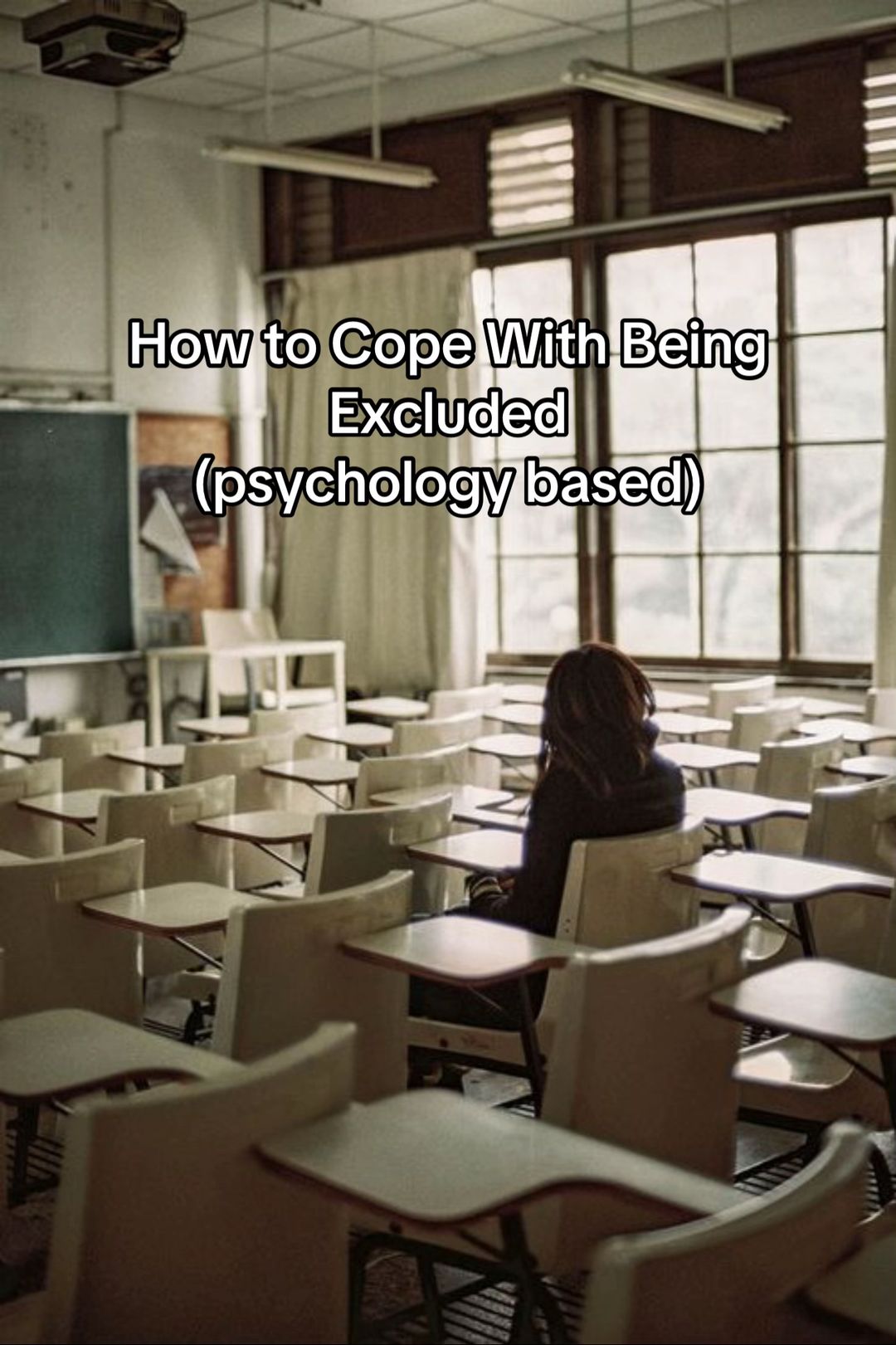
Slide Text
How to Cope With Being Excluded (psychology based)
Visual
A dimly lit, empty classroom with rows of desks, focusing on a single person sitting alone in the distance.
@cerebral.alchemy carousel breakdown
Cerebral Alchemy
#creatorsearchinsights #psychologyfacts #darkpsychology #psychology #darkpsychologyfacts
Effectiveness score
9/10
Views
533.7K
Likes
35.2K
Saves
22.9K
Engagement
11.2%
Hook
How to Cope With Being Excluded (psychology based)
Goal
educate
Offer
information
CTA
none
Caption
#creatorsearchinsights #psychologyfacts #darkpsychology #psychology #darkpsychologyfacts
Strategic Summary
This carousel viral mechanics rely on a massive bookmark anomaly (7.2x norm) driven by high-density utility. Slide 1 uses a cinematic, lonely aesthetic to trigger immediate emotional identification with exclusion. Slide 2 delivers a dense, save-worthy reference table that validates specific negative thoughts and offers actionable fixes, turning the post into a digital tool rather than just content.
The Winning Formula
Cinematic isolation hook + High-density reference table that validates specific painful thoughts.
What's working
- •Slide 1 image (empty classroom, single figure) visually encodes the feeling of exclusion before the user reads the text.
- •Slide 2 table format signals 'high value/reference material' immediately, triggering the save instinct.
- •The 'Feeling left out thought' column names specific insecurities ('They replaced me', 'I feel invisible'), creating instant 'that's me' recognition.
- •The 'Psychological root' column adds authority, framing emotional pain as a solvable cognitive bias.
- •The 2-slide structure minimizes friction—users get the hook and the payoff without swiping through 7+ slides of fluff.
What's not working
- •Some advice in Slide 2 ('build 1 real connection weekly') feels inaccessible to the most excluded audience, triggering frustration comments rather than pure gratitude.
- •Low comment-to-view ratio (0.02%) suggests people are saving silently rather than debating, which limits algorithmic comment-velocity signals.
Viral lesson
High-density reference tables (cheat sheets) drive saves more than inspirational quotes because they offer perceived utility for future use.
Can a small creator replicate this? Any creator can replicate this by swapping the emotional pain point (e.g., burnout, anxiety) and using a 3-column 'Symptom → Root → Fix' table format on Slide 2.
Structural Formula (steal-the-format)
Structure pattern
2-slide carousel: Slide 1 sets emotional mood with image + headline, Slide 2 provides dense tabular value.
Copy formula
Problem Identification → Psychological Label → Actionable Fix
What to swap (concrete remixes)
- •Swap 'Exclusion' for 'Burnout' for corporate audience (Symptom: Exhaustion → Root: Boundary Issues → Fix: Saying No).
- •Swap 'Exclusion' for 'Breakup Grief' for relationship niche (Symptom: Missing them → Root: Attachment Anxiety → Fix: No Contact).
- •Swap 'Exclusion' for 'Imposter Syndrome' for career niche (Symptom: I'm a fraud → Root: Perfectionism → Fix: Evidence Log).
What NOT to copy
Do not copy the specific advice (e.g., 'build 1 connection weekly') without understanding your audience's capability level; for deeply isolated users, this can feel dismissive.
Aesthetics
Moody cinematic photography paired with clean, clinical educational infographics.
Color palette
What it conveys: The aesthetic shifts from lonely and atmospheric to structured and hopeful, mirroring the journey from pain to solution.
Slide-by-slide forensics
1hooklifestyle shotlonelinessworks:yesgrab:90/100aesthetic:85/100How to Cope With Being Excluded (psychology based)
How to Cope With Being Excluded (psychology based)
Visual description
A moody, slightly grainy photo of an empty classroom with rows of desks. A single person with dark hair sits alone in the middle ground, facing away from the camera toward the windows. Lighting is natural but dim, evoking isolation.
Scene setting
empty classroom
Visible people
Visible objects
Predicted audience reaction
Immediate visceral recognition of the feeling of being the 'leftover' person in a group setting.
Verdict: The image does the heavy lifting emotionally before the text is even processed.
2payoffinfographicclarityworks:yesgrab:80/100aesthetic:70/100Feeling left out thought | Psychological root | What to do (fix)
'They don't like me.' | Mind-reading bias (assuming rejection without proof) | Ask for clarity OR test reality: 'What evidence do I actually have?'
'I'm not important.' | Low internal validation (self-worth needs outside proof) | Build daily 'self-proof': small wins, gym, skill-building, consistency
'Everyone has people but me.' | Social comparison wound | Cut digital triggers + build 1 real connection weekly (slow = strong)
'I don't belong anywhere.' | Identity insecurity | Choose a role: listener / planner / funny one → people remember roles
'Why didn't they invite me?' | Attachment trigger (fear of abandonment) | Don't chase. Initiate once. If pattern repeats, detach with dignity
'I feel invisible in groups.' | Low social presence (not low value) | Use the 2-step: ask 1 question + add 1 opinion (every hangout)
'I want to disappear.' | Rejection sensitivity + shame spiral | Regulate first: cold water, walk, breath. Don't think while emotional
'They replaced me.' | Scarcity mindset | Expand circle: 2 communities > 1 group. Never put all belonging in one place
Feeling left out thought | Psychological root | What to do (fix) 'They don't like me.' | Mind-reading bias (assuming rejection without proof) | Ask for clarity OR test reality: 'What evidence do I actually have?' 'I'm not important.' | Low internal validation (self-worth needs outside proof) | Build daily 'self-proof': small wins, gym, skill-building, consistency 'Everyone has people but me.' | Social comparison wound | Cut digital triggers + build 1 real connection weekly (slow = strong) 'I don't belong anywhere.' | Identity insecurity | Choose a role: listener / planner / funny one → people remember roles 'Why didn't they invite me?' | Attachment trigger (fear of abandonment) | Don't chase. Initiate once. If pattern repeats, detach with dignity 'I feel invisible in groups.' | Low social presence (not low value) | Use the 2-step: ask 1 question + add 1 opinion (every hangout) 'I want to disappear.' | Rejection sensitivity + shame spiral | Regulate first: cold water, walk, breath. Don't think while emotional 'They replaced me.' | Scarcity mindset | Expand circle: 2 communities > 1 group. Never put all belonging in one place
Visual description
A clean, structured table with a dark green header row and alternating light green/white row backgrounds. Text is black, sans-serif, dense but legible. Three distinct columns organize the information logically.
Scene setting
digital infographic
Visible objects
vs prior slide
Style: Shifts from moody cinematic photography to clean, clinical infographic design.
Story: Moves from the emotional problem (Slide 1) to the logical solution (Slide 2).
Predicted audience reaction
Users scan the first column to find their specific pain point, then read the fix, triggering a save action for later reference.
Comments reacting to this slide
- "@sketchiexx: "build 1 real connection weekly" bro, I've been trying to make a real connection since HIGH SCHOOL."
- "@el11sa2: I've done all the fixes and still the same."
- "@your_moms_tampon: i don't understand the choosing roles."
Verdict: This is the primary driver of the 7.2x bookmark rate; it functions as a cheat sheet.
Commerce intent
Comment ethnography
A community of 'outsiders' validating each other's pain; comments serve as a support group where users confess loneliness to strangers.
Comments that characterize the audience
- "@el11sa2: I've done all the fixes and still the same. I really just think I'm an unlikable person for some reason."
- "@sketchiexx: bro, I've been trying to make a real connection since HIGH SCHOOL."
- "@lotxnna: Unfortunately I do have strong evidence of all of these"
Pain points revealed
- •Feeling that exclusion is real/permanent, not just a perception bias
- •Exhaustion from trying to make connections for years without success
- •Feeling replaced or secondary in friendships
Aspirations revealed
- •To feel valued without having to perform a role
- •To detach from the pain of rejection
- •To find a community where they naturally belong
Top questions asked
- •so then how do we cope with being actually excluded?
- •why would someone want to be valued for being able to play a specific role
- •Is it a good trait [to not care about exclusion]?
Objections
- •Advice feels too hard for someone already isolated ('trying since high school')
- •Skepticism that cognitive reframing works on actual social rejection
Diagnostics
Hook deep-dive
How to Cope With Being Excluded (psychology based)
The parenthetical '(psychology based)' promises authority and logic rather than just platitudes, enticing users to see the 'proof'.
Engagement read
Bookmark rate is 7.2x the library norm, indicating this is treated as reference material rather than passive content.
Mechanics
High text density on Slide 2 forces users to pause and read specific rows to find their own symptom.
Brand & funnel
Buying-journey moment: The viewer is actively searching for a solution to emotional pain and recognizes their symptoms in the content.
Ideal Customer Profile
Individuals struggling with social anxiety, feelings of isolation, or interpersonal insecurity who seek logical, actionable frameworks to manage their emotions.
Age
18-24
Gender
neutral
Readability
simple
Interests
Pain Points
Aspirations
Emotional Profile
Primary Emotion
validationIntensity
Effectiveness
Emotions Evoked
Emotional Arc
curiosity → identification → relief → empowerment
Why It Lands
The content moves the viewer from a state of anxious questioning (the hook) to a state of calm understanding by naming their pain and providing a logical path forward.
Writing Analysis
Style
educational
Tone
authoritative
Hook Type
relatable observation
Quality
The writing is exceptionally concise. It strips away fluff, pairing a relatable thought with a clinical root and a concrete action item, making it highly skimmable and dense with value.
Effectiveness
Goal Achievement
The content is highly effective as an educational resource. The high bookmark count indicates it successfully achieved the goal of providing long-term value to the audience.
Why It Spread
high utility/saveability
addresses a universal, high-pain social experience
clean, readable infographic format that is easy to digest
Content DNA
There is no explicit CTA, which is a missed opportunity to drive followers, though it likely keeps the content feeling purely helpful and non-salesy.
Narrative Arc
The hook sets the emotional stakes, and the second slide provides the 'relief' or 'payoff' immediately, encouraging a bookmark.
Psychological Blueprint
Why It Spread
The post achieved a massive 22,923 bookmarks because it functions as a 'pocket therapist' tool that users want to save for future moments of social anxiety. By mapping common, painful social thoughts to specific psychological roots and actionable fixes, it provides immediate relief and a sense of control. The high bookmark-to-like ratio confirms it is seen as a high-utility resource rather than just entertainment.
Framework
PASPrimary Tactic
validationTactics Used
curiosity-gap on slide 1: 'How to cope' implies a solution to a painful problem
labeling on slide 2: giving names to abstract feelings (e.g., 'mind-reading bias') provides instant relief
actionable framework on slide 2: providing a specific 'fix' for every 'thought' creates high perceived value
Cognitive Biases
Barnum effect: the thoughts listed are broad enough to feel personal to almost anyone
Zeigarnik effect: the hook creates a tension that is only resolved by reading the full list on slide 2
Tribal Markers
Trust Signals
Slide Breakdown (2 analyzed)
Text
How to Cope With Being Excluded (psychology based)
Visual
A dimly lit, empty classroom with rows of desks, focusing on a single person sitting alone in the distance.
Visual Elements
Color Palette
Copy Analysis
Power Words
Open Loop: yes, the title promises a solution to a painful social situation
Visual Psychology
Attention: the text in the center
Emotional cue: the empty classroom evokes immediate feelings of isolation
Composition: the symmetry and emptiness create a sense of focused, quiet introspection
Text
Feeling left out thought | Psychological root | What to do (fix) ... [Table content]
Visual
A clean, green-and-white table layout presenting a structured list of thoughts, roots, and solutions.
Visual Elements
Color Palette
Copy Analysis
Power Words
Open Loop: no, this is the resolution
Visual Psychology
Attention: the table structure
Emotional cue: the organized layout provides a sense of order and control over chaotic emotions
Composition: the grid format is designed for maximum information density and ease of reference
Comment Intelligence
Sentiment
PositiveResonance
Intent
educate
Audience Vibe
The comments are sparse but reflect a high level of appreciation for the utility of the information.
Standout Quotes
“This is exactly what I needed to hear today.”
“Saving this for when I feel like I'm spiraling.”
“The 'mind-reading bias' part hit home.”
Top Comments
I’ve done all the fixes and still the same. I really just think I’m an unlikable person for some reason.
"build 1 real connection weekly" bro, I've been trying to make a real connection since HIGH SCHOOL. everyone already has their friends, and they apparently don't want anymore. from my experience, anyway.
Unfortunately I do have strong evidence of all of these
so then how do we cope with being actually excluded? not just perceived exclusion
avoid group events you'll always feel alone like that