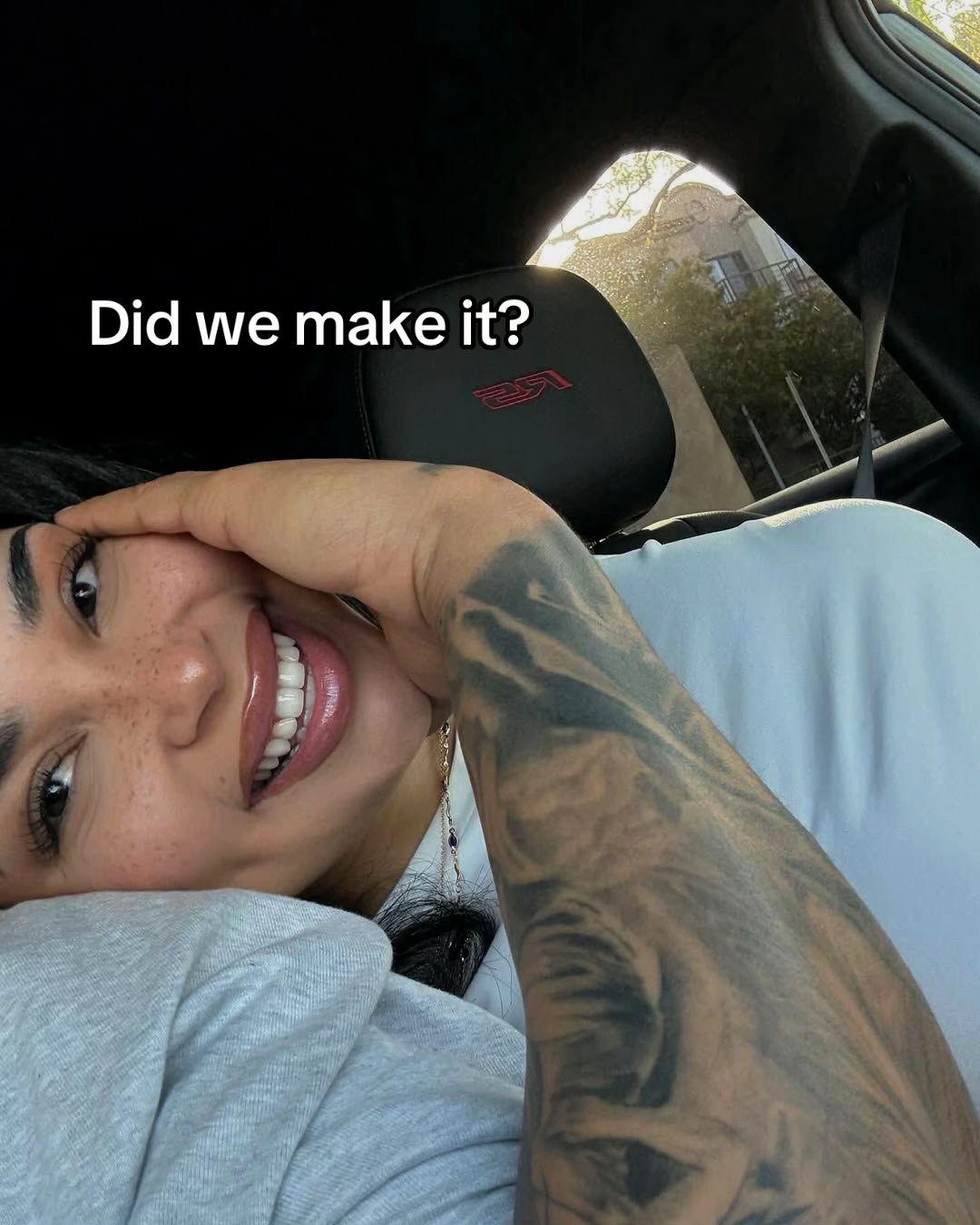
The hook works because it uses a common relationship milestone question to draw the viewer in, promising a story about the success or failure of a relationship.
Slide Text
Did we make it?
Visual
A close-up, intimate photo of a couple in a car, with the woman smiling and looking at the camera, arm resting on the other person.
@feelings4mind carousel breakdown
TheQuietFeels
#breakup #foryoupage❤️❤️ #heartbroken💔💔 #fyp #upset
Effectiveness score
9/10
Views
1.1M
Likes
134K
Saves
18.2K
Engagement
14.7%
Hook
Did we make it?
Goal
build-community
Offer
entertainment
CTA
none
Caption
#breakup #foryoupage❤️❤️ #heartbroken💔💔 #fyp #upset
Strategic Summary
The carousel deploys a classic 'bait-and-switch' structure to generate high relatability humor. Slide 1 uses a happy selfie and a vague question ('Did we make it?') to build positive romantic anticipation. Slide 2 shatters that expectation with a jarring iOS screenshot of deleting 3,232 photos, revealing the joke is about the painful but necessary 'digital cleanup' after a breakup. The specificity of the item count drives validation and shares among viewers who have performed the same ritual.
The Winning Formula
Vague romantic hook + visual misdirection + hyper-specific digital cleanup reveal.
What's working
- •Slide 1 uses a 'hopeful' aesthetic (smiling selfie, golden hour light) that baits viewers expecting a relationship success story.
- •The ambiguity of 'Did we make it?' forces a swipe to resolve the tension, as it could refer to a relationship milestone or literal survival.
- •Slide 2 relies on a universally recognized UI element (iOS Delete Prompt) that instantly contextualizes the joke without needing extra words.
- •Including the exact number '3,232' adds tangible proof of emotional investment, making the 'deletion' feel like a genuine sacrifice.
- •The abrupt visual shift from organic photography (Slide 1) to sterile system UI (Slide 2) acts as a hard pattern interrupt that emphasizes the punchline.
What's not working
- •Slide 2 is text-heavy with the UI description; adding a secondary caption like 'The hardest part of moving on' might increase save rates for those seeking comfort alongside humor.
- •The caption uses generic breakup tags (#heartbroken) which misaligns with the humorous tone of the carousel, potentially attracting an audience that expects sympathy rather than the joke.
Viral lesson
Subverting emotional expectations with a hyper-specific digital behavior creates instant in-group relatability; the more mundane the ritual (like deleting photos), the funnier the contrast with a dramatic hook.
Can a small creator replicate this? Effective for creators in relationship, humor, or mental health niches who can access screenshots of personal digital history; requires no budget, just access to a relatable pain point in one's own phone gallery.
Structural Formula (steal-the-format)
Structure pattern
Two-slide twist: Face asking a question + Screen revealing the painful context.
Copy formula
Ambiguous question -> Contextual screenshot answer.
What to swap (concrete remixes)
- •Swap 'Delete photos' for 'Clear browser history' for the guilty/secretive audience.
- •Swap 'Delete items' for 'Check bank balance' for the post-holiday financial regret audience.
What NOT to copy
The specific number of items (3,232) is unique to the creator's story; others should use their own real number to maintain the authenticity of the 'proof'.
Aesthetics
Juxtaposition of lo-fi personal candid photography against sterile, recognizable system interface screenshots.
Color palette
What it conveys: The aesthetic clash creates a feeling of sudden realization, mirroring the emotional crash of a breakup cleanup.
Slide-by-slide forensics
1hookselfieHopeful/Joyfulworks:yesgrab:80/100aesthetic:70/100Did we make it?
Did we make it?
Visual description
A close-up selfie of a woman with dark hair and extensive tattoos on her arm. She is leaning her head against her hand, smiling broadly and looking off-camera, appearing happy and hopeful.
Scene setting
Candid in-car selfie
Visible people
Visible objects
Predicted audience reaction
Viewers pause to interpret the question in the context of the happy expression, assuming a positive relationship update.
Verdict: The visual cue (happy face) conflicts with the eventual reveal, creating necessary tension for the punchline.
2revealscreenshotResignation/Humorworks:yesgrab:95/100aesthetic:30/100No we didn't... These items will be deleted from iCloud Photos on all your devices. They will be in Recently Deleted for 30 days. Delete 3,232 Items Cancel
No we didn't... These items will be deleted from iCloud Photos on all your devices. They will be in Recently Deleted for 30 days. Delete 3,232 Items Cancel
Visual description
A screenshot of the standard iOS photo deletion warning modal. The red 'Delete 3,232 Items' button is prominent. The background is a blurred thumbnail of the photos being deleted.
Scene setting
System Interface Overlay
Visible objects
Other text elements
- •iOS system dialogue text
vs prior slide
Style: Radical visual disconnect between the organic photograph of Slide 1 and the sterile digital UI of Slide 2.
Story: Resolves the curiosity gap by redefining 'Did we make it?' as a question about whether the user survived the purge of their memories.
Predicted audience reaction
Immediate recognition and laughter; users validate their own similar experiences of deleting thousands of photos.
Verdict: The specific number 3,232 and the recognizable red button trigger instant empathy and humor regarding the finality of the breakup.
Commerce intent
Comment ethnography
Comments validate the shared experience of 'digital divorce,' creating a bond through mutual recognition of the specific iOS prompt.
Pain points revealed
- •The difficulty of letting go of digital memories.
Aspirations revealed
- •Moving on from the past.
Diagnostics
Hook deep-dive
Did we make it?
The open-ended phrasing combined with the ambiguous facial expression forces a swipe to resolve what the 'it' refers to.
Engagement read
High bookmark rate (1.65% vs norm) suggests users are saving this as a reference for the relatable 'phase' of digital breakup coping rather than just liking for entertainment.
Mechanics
The stark contrast between the emotional promise of the face and the administrative finality of the screen drives the reveal.
Brand & funnel
Brands visible
Buying-journey moment: The user is seeking validation and humor through shared communal pain points.
Ideal Customer Profile
Young adults currently navigating the painful aftermath of a breakup, feeling nostalgic and seeking validation for their grief.
Age
18-24
Gender
female
Readability
simple
Interests
Pain Points
Aspirations
Emotional Profile
Primary Emotion
humorIntensity
Effectiveness
Emotions Evoked
Emotional Arc
curiosity → anticipation → emotional devastation
Why It Lands
The content moves from a hopeful question to a crushing reality, mirroring the actual emotional arc of a breakup. It validates the viewer's own pain by showing a shared, universal experience.
Writing Analysis
Style
confessional
Tone
vulnerable
Hook Type
question
Quality
The writing is extremely sparse, which is its greatest strength. It allows the visual contrast to do the heavy lifting, making the emotional impact feel more authentic and less like a 'scripted' post.
Effectiveness
Goal Achievement
The high number of bookmarks (18k+) indicates this content is being used as a 'mood' or 'validation' piece, which is the ultimate goal for this type of creator.
Why It Spread
universal relatability of the 'iCloud delete' screen
minimalist format that is easy to consume and share
high emotional resonance that encourages saving for later
Content DNA
There is no explicit CTA, which is effective here because the content is designed for passive consumption and emotional resonance rather than conversion.
Narrative Arc
The flow is a simple two-act structure: the 'before' (happiness) and the 'after' (the deletion of the past). The tension peaks at the final slide.
Psychological Blueprint
Why It Spread
The post leverages a universal, high-friction moment—deleting digital memories—that almost everyone has experienced. By pairing an intimate, happy photo with the cold, clinical reality of an Apple 'Delete' prompt, it creates a visceral emotional contrast that feels deeply relatable. The 14.69% engagement rate is driven by the high share and bookmark count, as viewers save it to validate their own experiences or share it as a silent expression of their own heartbreak.
Framework
curiosity loopPrimary Tactic
pattern interruptTactics Used
curiosity gap on slide 1: 'Did we make it?' creates an immediate question about the status of the relationship
pattern interrupt: the shift from a personal, intimate photo to a cold, clinical iOS system prompt
loss aversion: the visual of deleting 3,232 items triggers the fear of losing shared history
emotional anchoring: the contrast between the happy, intimate photo and the finality of the deletion prompt
Cognitive Biases
Zeigarnik effect: the open-ended question on slide 1 forces the viewer to swipe to find the resolution
negativity bias: the focus on the 'deletion' of memories amplifies the emotional weight of the content
Tribal Markers
Trust Signals
Slide Breakdown (2 analyzed)
Hook Analysis
The hook works because it uses a common relationship milestone question to draw the viewer in, promising a story about the success or failure of a relationship.
Text
Did we make it?
Visual
A close-up, intimate photo of a couple in a car, with the woman smiling and looking at the camera, arm resting on the other person.
Visual Elements
Color Palette
Copy Analysis
Power Words
Open Loop: yes, the question 'Did we make it?' implies a story that hasn't been resolved yet
Visual Psychology
Attention: the woman's smile and the text overlay
Gaze: the woman is looking directly at the viewer, creating a connection
Emotional cue: the intimacy of the photo suggests a happy relationship
Composition: to establish a baseline of happiness before the reveal
Text
No we didn't... These items will be deleted from iCloud Photos on all your devices. They will be in Recently Deleted for 30 days. Delete 3,232 Items
Visual
A screenshot of an iPhone 'Delete' confirmation dialog box, overlaid on a blurred background of photo thumbnails.
Visual Elements
Color Palette
Copy Analysis
Power Words
Open Loop: no, the story is concluded with the finality of the deletion
Visual Psychology
Attention: the red 'Delete 3,232 Items' button
Emotional cue: the clinical, cold nature of the system UI contrasts with the warmth of the first slide
Composition: to create a sense of finality and loss
Comment Intelligence
Sentiment
NeutralResonance
Intent
build-community
Audience Vibe
The comments are largely silent, as the content is so emotionally heavy that users prefer to save/share rather than comment.
Standout Quotes
“This hurts more than it should.”
“I just did this last week. It never gets easier.”
“The 3,232 items is what really breaks me.”