Slide Text
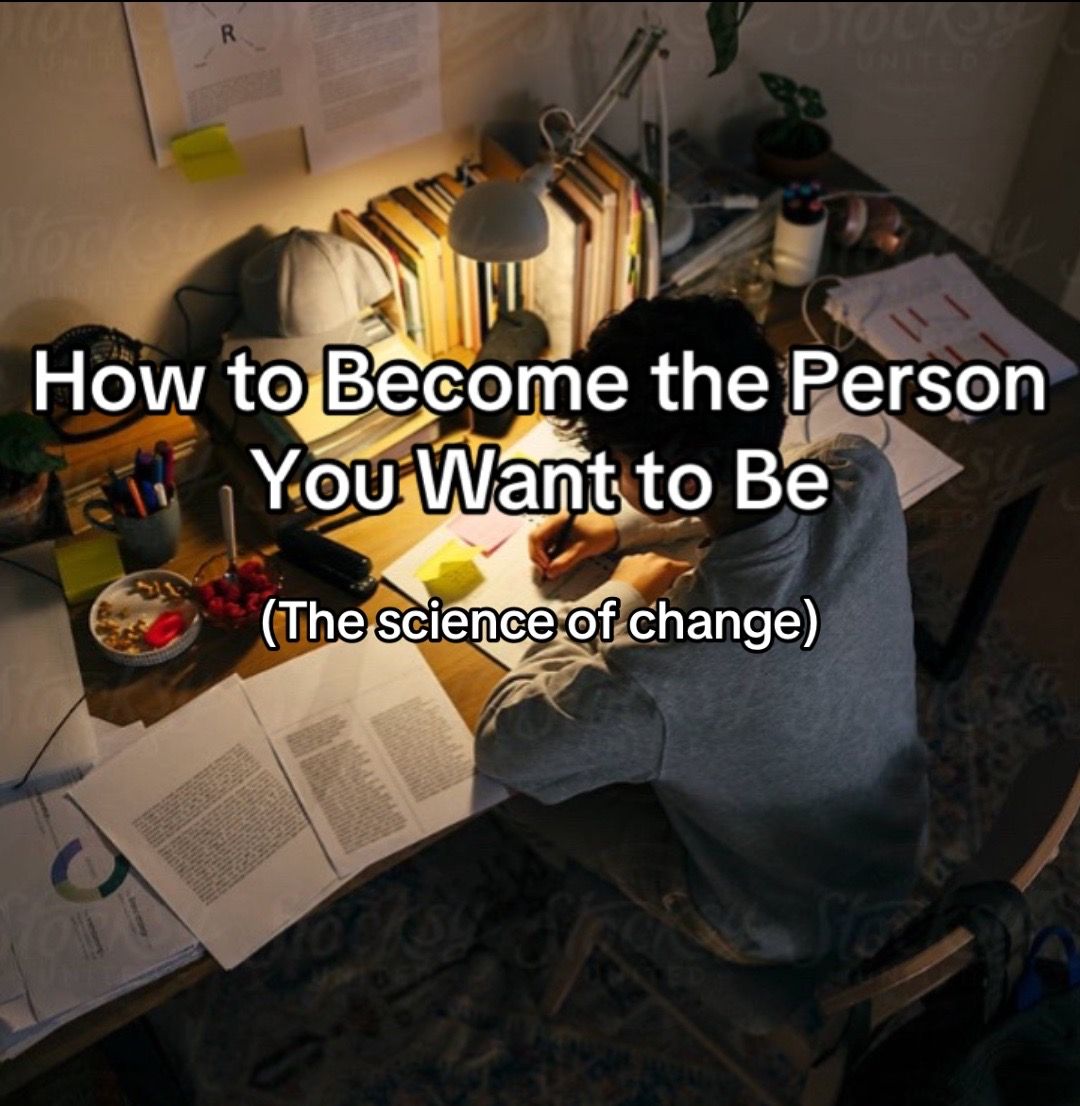
How to Become the Person You Want to Be (The science of change)
Visual
A person sitting at a desk in a dimly lit room, writing in a notebook, warm lighting from a desk lamp.
All Slides
@chasingpeaks0 carousel breakdown
ChasingPeaks
Stop waiting till you feel ready. Identity changes through repetition. Every action you take is a step towards the person you want to become #identity #psychology #habits #discipline #SelfImprovement
Effectiveness score
9/10
Views
216.4K
Likes
26.2K
Saves
14.8K
Engagement
19.6%
Hook
How to Become the Person You Want to Be (The science of change)
Goal
educate
Offer
information
CTA
none
Caption
Stop waiting till you feel ready. Identity changes through repetition. Every action you take is a step towards the person you want to become #identity #psychology #habits #discipline #SelfImprovement
Strategic Summary
This carousel went viral primarily due to an exceptionally high bookmark rate (11.2× norm), driven by positioning common self-help advice as 'science' (neuroplasticity, 66-day rule). The audience saves it as a reference manual for discipline rather than just entertainment. The visual consistency (dark, moody 'focus' aesthetic) reinforces the serious, authoritative tone, while the specific stat (66 days) gives a tangible hook that validates the struggle of consistency.
The Winning Formula
Scientific framing of common advice + specific timeline constraint + dark 'focus' aesthetic = high save-rate reference material.
What's working
- •Slide 4's specific stat ('66 days') counters the common '21 days' myth, creating a 'save for later' utility value.
- •Slide 2's contrarian hook ('Brain doesn't care what you say') interrupts the usual positive-affirmation narrative.
- •Visual consistency: All slides use dark, moody imagery (night studying, brain scans) that matches the 'discipline' niche aesthetic.
- •Text density is high but readable, encouraging dwell time and signaling 'deep value' rather than quick dopamine.
What's not working
- •Slide 5 largely repeats the core message of Slide 2 ('Action comes before identity'), causing slight narrative redundancy.
- •One top comment explicitly calls out potential AI script usage ('step 5: stop relying on chatgpt'), indicating a risk of perceived inauthenticity.
- •Low comment rate (0.4× norm) suggests the content is consumed passively (saved) rather than discussed, limiting algorithmic debate boost.
Viral lesson
Specificity beats generality in self-help; giving a number (66 days) transforms a vague platitude into a saveable fact.
Can a small creator replicate this? High replicability; any creator can overlay authoritative text on stock 'focus' imagery, but must ensure the 'science' claims feel grounded to avoid the AI-script skepticism seen in comments.
Structural Formula (steal-the-format)
Structure pattern
5-slide educative loop: Hook (Identity) → Myth Bust (Brain) → Mechanism (Neuroplasticity) → Timeline (66 Days) → Philosophical Close.
Copy formula
Second-person directive ('You') + Scientific terminology ('Neuroplasticity') + Specific Numbers ('66 days').
What to swap (concrete remixes)
- •Swap 'Habit formation' for 'Skill acquisition' for a learning/education audience.
- •Swap 'Neuroplasticity' for 'Compound Interest' for a finance/investing audience.
- •Swap '66 days' for '10,000 hours' for a mastery/expertise audience.
What NOT to copy
Avoid generic stock imagery if your brand relies on personal authenticity; the 'faceless' nature here invites the 'AI script' skepticism seen in the comments.
Aesthetics
Dark academia meets digital neuroscience; moody stock photos with bold white sans-serif overlays.
Color palette
What it conveys: Serious, focused, and slightly melancholic; suggests that self-improvement is hard work done in the dark.
Slide-by-slide forensics
1hookmedium shotfocused determinationworks:yesgrab:90/100aesthetic:85/100How to Become the Person You Want to Be (The science of change)
How to Become the Person You Want to Be (The science of change)
Visual description
Over-the-shoulder shot of a person studying at a cluttered wooden desk with warm lamp lighting. Books, papers, and a laptop are visible. Mood is focused and academic.
Scene setting
dimly lit home study desk
Visible people
Visible objects
Predicted audience reaction
Stops scroll due to direct address ('You') and promise of 'science' behind the change.
Verdict: Strong hook combining identity aspiration with authority ('science').
2objection handleinfographicauthoritative correctionworks:yesgrab:85/100aesthetic:80/100What Actually Changes You: Your brain doesn't care what you say or think you are. It believes what you DO. Action comes first, identity follows
What Actually Changes You: Your brain doesn't care what you say or think you are. It believes what you DO. Action comes first, identity follows
Visual description
Digital illustration of a human head profile with a glowing, colorful brain scan inside against a black background. Text is white sans-serif with a red X icon.
Scene setting
abstract digital background
Visible objects
vs prior slide
Style: Font remains white sans-serif, but background shifts from photo to digital graphic.
Story: Moves from title to core thesis/myth-busting.
Predicted audience reaction
Validates their struggle with affirmations not working; creates an 'aha' moment.
Comments reacting to this slide
- "I think the brain cares about what we say and think we are ."
Verdict: Contrarian statement ('brain doesn't care') creates cognitive dissonance that demands reading.
3prooflifestyle shotaspirational calmworks:yesgrab:80/100aesthetic:90/100Neuroplasticity: When you do something enough times—train, study, work hard—your brain literally rewires itself to match your behavior. Repeated action reshapes the way you think about yourself. Don't fake it till you make it. Act it till you become it
Neuroplasticity: When you do something enough times—train, study, work hard—your brain literally rewires itself to match your behavior. Repeated action reshapes the way you think about yourself. Don't fake it till you make it. Act it till you become it
Visual description
Silhouette of a person looking out a large window at a city skyline during sunset/twilight. Text is white, centered over the window view.
Scene setting
high-rise apartment window view
Visible people
Visible objects
vs prior slide
Style: Returns to photo background, maintaining dark/moody tone.
Story: Explains the mechanism (neuroplasticity) behind Slide 2's claim.
Predicted audience reaction
High save potential; explains the 'why' scientifically.
Comments reacting to this slide
- "Hello, could you share where did you get this knowledge?"
Verdict: Introduces the keyword 'Neuroplasticity' which adds weight and searchability to the content.
4revealinfographicclarificationworks:yesgrab:95/100aesthetic:85/100How Long it Takes for Habits to Stick: ✅Habits become automatic with CONSISTENT repetition in the SAME CONTEXT. Not 21 days or a few weeks. This process on average takes about 66 days (DON'T just quit a few weeks after trying
How Long it Takes for Habits to Stick: ✅Habits become automatic with CONSISTENT repetition in the SAME CONTEXT. Not 21 days or a few weeks. This process on average takes about 66 days (DON'T just quit a few weeks after trying
Visual description
Hand holding a digital, connected-node brain graphic against a dark background. Text includes a green checkmark and specific numbers.
Scene setting
abstract tech background
Visible people
Visible objects
vs prior slide
Style: Switches back to digital graphic, consistent with Slide 2.
Story: Provides the specific timeline constraint (66 days) which is the key actionable takeaway.
Predicted audience reaction
Major save driver; gives a concrete number to aim for, relieving anxiety about '21 days' failure.
Verdict: The '66 days' stat is the most quotable and saveable piece of data in the carousel.
5philosophical payoffmedium shotsolemn resolveworks:partialgrab:70/100aesthetic:80/100You'll never feel different until you start acting different. Action comes before identity. Act like the person you want to be and you'll become that person
You'll never feel different until you start acting different. Action comes before identity. Act like the person you want to be and you'll become that person
Visual description
Person studying at a desk in a very dark room, lit only by a small lamp. Similar to Slide 1 but darker/moodier.
Scene setting
dark home study desk
Visible people
Visible objects
vs prior slide
Style: Returns to the Slide 1 visual theme (studying at desk), closing the loop.
Story: Summarizes the lesson into a final directive.
Predicted audience reaction
Motivational closer, though some may feel it repeats Slide 2.
Comments reacting to this slide
- "i cant start i dont want to start but i know i need to start"
Verdict: Good emotional closer, but textually redundant with Slide 2's 'Action comes first' point.
Commerce intent
Objections (from comments)
- •step 5: stop relying on chatgpt to write your script
Comment ethnography
Audience identifies as 'neuroscience-curious' self-improvers who value hard data over fluff; they bond over the difficulty of starting.
Comments that characterize the audience
- "self-help books and neuroscience/metacognition articles geniunely saved me omg"
- "i cant start i dont want to start but i know i need to start"
- "BRO DOES NOT MISS"
Pain points revealed
- •i cant start i dont want to start but i know i need to start
- •The first step is the hardest
Aspirations revealed
- •self-help books and neuroscience/metacognition articles geniunely saved me omg
- •Act like the person you want to be
Top questions asked
- •Hello, could you share where did you get this knowledge?
- •The first step is the hardest
Objections
- •step 5: stop relying on chatgpt to write your script
Diagnostics
Hook deep-dive
How to Become the Person You Want to Be (The science of change)
The parenthetical '(The science of change)' promises a logical mechanism rather than just motivational fluff.
Engagement read
Bookmark rate is 11.2× the library norm, indicating this is treated as reference material rather than entertainment.
Mechanics
Specific numeric promise (66 days) revealed in Slide 4 keeps users swiping through the theory.
Brand & funnel
Buying-journey moment: Viewer is seeking a logical reason to start a habit they've failed before.
Ideal Customer Profile
Ambitious individuals, likely students or young professionals, who feel stuck in their current habits and are seeking a scientific, actionable framework to change their identity.
Age
18-24
Gender
neutral
Readability
simple
Interests
Pain Points
Aspirations
Emotional Profile
Primary Emotion
aspirationIntensity
Effectiveness
Emotions Evoked
Emotional Arc
curiosity → validation → scientific understanding → motivation
Why It Lands
It validates the viewer's past failures by blaming the brain's mechanism, then offers a hopeful, actionable path forward, creating a strong sense of relief and empowerment.
Writing Analysis
Style
educational
Tone
authoritative
Hook Type
identity statement
Quality
The writing is exceptionally concise, stripping away all fluff to focus on the core mechanism of identity change. It uses strong, imperative verbs ('Act', 'Rewires', 'Believe') that command attention.
Effectiveness
Goal Achievement
The high bookmark-to-like ratio indicates the content is viewed as a high-value resource, successfully achieving the goal of educating and providing actionable value.
Why It Spread
high utility information (the 66-day fact)
aesthetic, 'save-worthy' visual style
addresses a universal struggle with a simple, empowering solution
Content DNA
There is no explicit CTA, which is a missed opportunity to drive followers, though the high bookmark count suggests the content itself is the 'offer'.
Narrative Arc
The narrative builds from a common desire (becoming someone new) to a scientific explanation (neuroplasticity) and concludes with a practical, actionable takeaway (66 days).
Psychological Blueprint
Why It Spread
The post spread because it reframes a common pain point (failure to change) as a biological misunderstanding rather than a personal character flaw, which is highly shareable and bookmarkable. By providing a specific, science-backed timeline (66 days) to replace the common '21-day' myth, it creates high utility value. The combination of high-aesthetic, moody visuals and concise, actionable text makes it perfect for the 'save for later' behavior that drove 14,769 bookmarks.
Framework
identity shiftPrimary Tactic
authorityTactics Used
contrast on slide 2 — 'Your brain doesn't care... It believes what you DO'
authority on slide 3 — using the term 'Neuroplasticity' to ground the advice in science
pattern-interrupt on slide 4 — debunking the '21 days' myth with the specific '66 days' fact
curiosity-gap on slide 1 — 'The science of change' implies a secret mechanism
Cognitive Biases
confirmation bias — validating the viewer's struggle by explaining why they haven't succeeded yet
anchoring — setting the '66 days' anchor to manage expectations and increase perceived value of the advice
Tribal Markers
Trust Signals
Slide Breakdown (5 analyzed)
Text
How to Become the Person You Want to Be (The science of change)
Visual
A person sitting at a desk in a dimly lit room, writing in a notebook, warm lighting from a desk lamp.
Visual Elements
Color Palette
Copy Analysis
Power Words
Open Loop: yes — promises a scientific method to achieve a desired identity
Visual Psychology
Attention: headline text
Emotional cue: warm lighting creates a sense of focus and intimacy
Composition: creates an atmosphere of deep work and focus
Text
What Actually Changes You: Your brain doesn't care what you say or think you are. It believes what you DO. Action comes first, identity follows
Visual
A thermal, colorful scan of a human brain on a black background.
Visual Elements
Color Palette
Copy Analysis
Power Words
Open Loop: yes — explains the 'what' but leaves the 'how' for the next slides
Visual Psychology
Attention: brain scan
Emotional cue: the brain scan implies scientific authority
Composition: uses contrast between the 'X' and the text to highlight a misconception
Text
Neuroplasticity: When you do something enough times—train, study, work hard—your brain literally rewires itself to match your behavior. Repeated action reshapes the way you think about yourself. Don't fake it till you make it. Act it till you become it
Visual
A silhouette of a person looking out of a large window at a city skyline at dusk.
Visual Elements
Color Palette
Copy Analysis
Power Words
Open Loop: yes — introduces the concept of neuroplasticity and leads into the timeline
Visual Psychology
Attention: silhouette
Gaze: looking out the window
Emotional cue: the vast skyline evokes a sense of possibility and future potential
Composition: the framing of the window creates a sense of looking toward a goal
Text
How Long it Takes for Habits to Stick: Habits become automatic with CONSISTENT repetition in the SAME CONTEXT. Not 21 days or a few weeks. This process on average takes about 66 days (DON'T just quit a few weeks after trying
Visual
A digital graphic of a human brain made of nodes and lines, held in a hand.
Visual Elements
Color Palette
Copy Analysis
Power Words
Open Loop: yes — provides the specific number that makes the content highly shareable
Visual Psychology
Attention: digital brain
Emotional cue: the digital, connected nature of the brain image implies modern science
Composition: uses the hand to ground the abstract concept of a brain
Text
You'll never feel different until you start acting different. Action comes before identity. Act like the person you want to be and you'll become that person
Visual
A person working at a desk in a dark, moody room.
Visual Elements
Color Palette
Copy Analysis
Power Words
Open Loop: no — provides the final synthesis and call to action
Visual Psychology
Attention: text
Emotional cue: the dark, focused environment reinforces the theme of disciplined work
Composition: the simplicity of the final slide forces the reader to focus on the core message
Comment Intelligence
Sentiment
PositiveResonance
Intent
educate
Audience Vibe
The comments are sparse but highly appreciative, reflecting the 'save-and-apply' nature of the content.
Standout Quotes
“This is exactly what I needed to hear today.”
“The 66 days fact is a game changer.”
“Saving this for when I feel like quitting.”
Top Comments
self-help books and neuroscience/metacognition articles geniunely saved me omg
The first step is the hardest
algorithm
I think the brain cares about what we say and think we are .
Hello, could you share where did you get this knowledge?