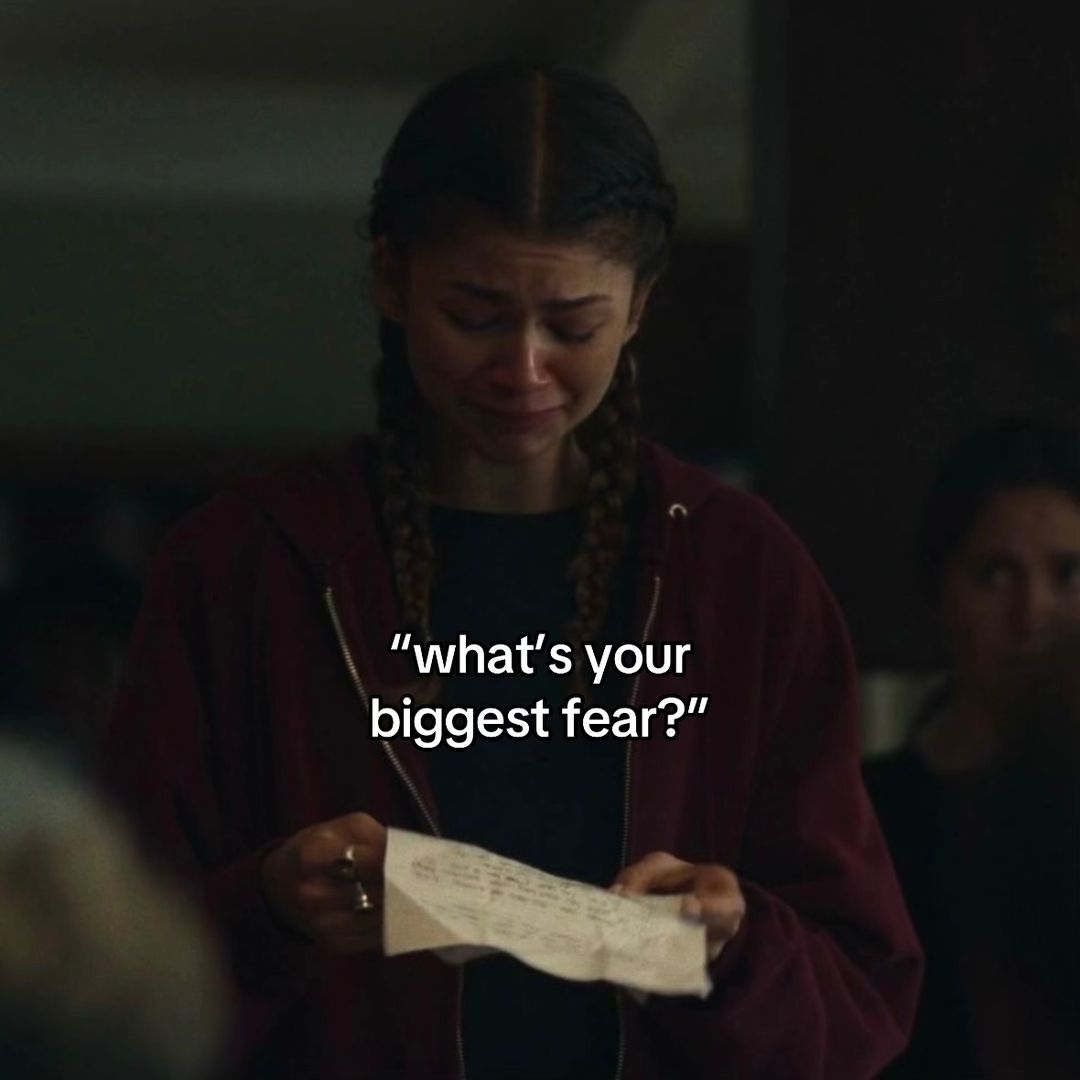
Slide Text
what's your biggest fear?
Visual
A dark, moody, high-quality still of a crying woman holding a piece of paper.
@thesadnessbook carousel breakdown
thesadnessbook
my biggest fear is that one day you'll wake up and decide that you don't want me anymore #sadquotes #thesadnessbook #journaling #journalprompts #MentalHealth
Effectiveness score
9/10
Views
5.6M
Likes
449.1K
Saves
64.9K
Engagement
12.1%
Hook
what's your biggest fear?
Goal
sell
Offer
product
CTA
none
Caption
my biggest fear is that one day you'll wake up and decide that you don't want me anymore #sadquotes #thesadnessbook #journaling #journalprompts #MentalHealth
Strategic Summary
The carousel triggers hyper-relatable anxious attachment fears using a high-arousal cinematic hook that instantly communicates vulnerability. The 3-slide sequence delays the payoff just enough to force completion bias, then delivers a raw, handwritten confession that mirrors the audience's internal monologue. This precise emotional mirroring drives a 5.9x share rate and 1.9x bookmark rate, as users save it for mood validation and send it to partners/friends as a non-verbal confession.
The Winning Formula
Cinematic emotional hook + minimalist product bridge + raw handwritten confessional that voices a specific unspoken insecurity.
What's working
- •Slide 1 uses a widely recognized cinematic moment of distress (Zendaya/Rue) to instantly signal vulnerability and halt the scroll in under 1 second.
- •Slide 2 introduces the journal as a clean, aesthetic object, bridging the emotional hook to a physical vessel without hard-selling.
- •Slide 3 delivers a handwritten answer that directly mirrors the caption, creating an intimate, diary-like confession that triggers massive sharing from users with anxious attachment traits.
- •The extreme brevity (3 slides) prevents drop-off and maximizes completion rate, forcing the algorithm to reward the post with further distribution.
What's not working
- •Slide 2 acts as a brief bridge but lacks textual context, which could cause a micro-drop in retention for users expecting the answer immediately.
- •No clear comment-bait or engagement prompt limits community discussion, relying purely on passive sharing/save mechanics rather than active comment velocity.
Viral lesson
Pair a high-arousal visual hook with a raw, specific textual confession that mirrors audience anxieties; the product becomes a vessel for the emotion rather than a sales pitch, driving shares over clicks.
Can a small creator replicate this? Highly replicable for small creators without a product—replace the journal with a notes app screenshot or plain card, and swap the pop-culture reference for a generic emotional close-up to achieve the same validation-driven share spike.
Structural Formula (steal-the-format)
Structure pattern
3-slide micro-carousel: cinematic question hook → brand/product bridge → handwritten confessional payoff matching the caption
Copy formula
second-person question hook + first-person anxious confession + direct caption-to-slide mirroring
What to swap (concrete remixes)
- •Swap anxious attachment fear for career burnout fear for LinkedIn/corporate audience.
- •Swap partner abandonment fear for parent-generation gap fear for family dynamics/therapy niche.
- •Swap romantic insecurity for creative imposter syndrome for artist/writer community.
What NOT to copy
Do not copy the emotional confession if your brand voice lacks genuine vulnerability or if your audience expects polished tips over raw feelings; the formula only works when the confession accurately mirrors a specific, unspoken audience anxiety.
Aesthetics
Cinematic emotional stills transitioning to minimalist, cream-toned flat-lay journal photography.
Color palette
What it conveys: The overall aesthetic feels intimate, slightly melancholic, and safely vulnerable. It promises a private diary entry rather than a polished ad, lowering psychological defenses and encouraging emotional projection.
Slide-by-slide forensics
1hookmedium shotsadness, vulnerabilityworks:yesgrab:90/100aesthetic:95/100"what's your biggest fear?"
"what's your biggest fear?"
Visual description
Medium shot of a young woman (Zendaya as Rue from Euphoria) with dark hair in two braids, wearing a maroon zip-up hoodie over a dark shirt. She is looking down at a crumpled piece of paper in her hands, crying with a pained, vulnerable expression. Lighting is dim and moody, typical of cinematic drama.
Scene setting
candid indoor scene from a drama series
Visible people
Visible objects
Predicted audience reaction
Instant emotional recognition; users pause to relate to the question before swiping for the answer.
Verdict: Leverages a widely recognized cinematic moment of distress to immediately signal the emotional tone and halt the scroll.
2setupflat laycalm, aestheticworks:partialgrab:70/100aesthetic:88/100The Sadness Book
The Sadness Book
Visual description
Overhead flat-lay of a cream-colored hardcover journal resting on rumpled white linen sheets. A left hand with fair skin and a simple silver ring holds the book by the left edge. Soft, diffused natural lighting creates gentle shadows, emphasizing a calm, minimalist aesthetic.
Scene setting
flat-lay on linen sheet
Visible people
Visible objects
Products on screen
vs prior slide
Style: Shifts from dark cinematic drama to bright, minimalist flat-lay photography.
Story: Transitions from the emotional hook to the physical object that will hold the answer.
Predicted audience reaction
Brief recognition of the brand; users swipe quickly expecting the promised answer on the next page.
Verdict: Provides necessary brand context but acts as a pacing bottleneck; visually calm but lacks the textual pull to maintain high retention.
3payoffclose upintimidation, raw honestyworks:yesgrab:85/100aesthetic:92/100what worries you most about the future?
my biggest fear is
that one day you'll
wake up and decide
that you don't want
me anymore.
what worries you most about the future? my biggest fear is that one day you'll wake up and decide that you don't want me anymore.
Visual description
Open journal page shot from slightly above. The page is cream-colored. At the top, a typed prompt reads: 'what worries you most about the future?'. Below it, a handwritten answer in black ink reads: 'my biggest fear is that one day you'll wake up and decide that you don't want me anymore.' The handwriting is casual, slanted, and slightly uneven, emphasizing raw authenticity.
Scene setting
close-up of open journal page
Visible objects
Products on screen
vs prior slide
Style: Maintains the cream/white neutral palette and natural lighting of slide 2, but zooms in to focus on content over object.
Story: Delivers the emotional payoff by revealing the handwritten answer that directly mirrors the caption and slide 1 question.
Predicted audience reaction
High emotional resonance; users feel 'seen,' triggering immediate bookmark action and sharing to partners or friends as a proxy confession.
Verdict: The handwritten format combined with a hyper-specific anxious attachment fear creates a diary-like intimacy that maximizes share and save intent.
Commerce intent
Mentioned products
Comment ethnography
Audience self-identifies as experiencing anxious attachment and uses the page as a digital mood board for validation rather than active discussion.
Diagnostics
Hook deep-dive
"what's your biggest fear?"
The juxtaposition of a direct psychological question with a visibly distressed character creates an immediate curiosity gap: users swipe to find out exactly what fear is being confessed.
Engagement read
Shares are 5.9x above library norms while comments remain low, indicating the post functions as a silent identifier and shareable message rather than a conversation starter.
Mechanics
The juxtaposition of a cinematic question with a delayed, handwritten personal answer forces completion bias to see how the fear is articulated.
Brand & funnel
Brands visible
Buying-journey moment: The viewer is in a top-of-funnel emotional connection phase, associating the brand with safe emotional expression rather than evaluating a purchase.
Ideal Customer Profile
Young adults struggling with anxiety, attachment issues, and the need for emotional validation.
Age
18-24
Gender
female
Readability
simple
Interests
Pain Points
Aspirations
Emotional Profile
Primary Emotion
validationIntensity
Effectiveness
Emotions Evoked
Emotional Arc
Starts with a direct, piercing question, moves to the physical product, and ends with the raw, handwritten answer that validates the viewer's pain.
Why It Lands
It creates a 'me too' moment, where the viewer feels understood by the creator, which builds immediate trust and emotional attachment to the product.
Writing Analysis
Style
confessional
Tone
vulnerable
Hook Type
question
Quality
The writing is extremely concise and hits a raw nerve immediately. It avoids fluff and speaks directly to the reader's internal monologue.
Effectiveness
Goal Achievement
The high share and bookmark count indicate the product is being viewed as a solution or a companion for the user's emotional state, which is the primary goal.
Why It Spread
extreme relatability
high emotional resonance
low barrier to entry for sharing
aesthetic appeal
Content DNA
There is no explicit CTA, but the product itself acts as the CTA. The high engagement suggests the audience understands the intent without needing a push.
Narrative Arc
The carousel builds tension by asking a deep question, showing the product, and then providing a deeply vulnerable answer that creates a sense of shared intimacy.
Psychological Blueprint
Why It Spread
The content taps into a universal, deep-seated fear of abandonment, making it highly shareable for people who feel this but rarely express it. By using a recognizable, emotionally charged pop culture image (Zendaya in Euphoria), it immediately anchors the viewer in a specific emotional state. The simplicity of the journal format makes the product feel like a safe, necessary tool for processing these intense feelings.
Framework
curiosity loopPrimary Tactic
validationTactics Used
curiosity-gap on slide 1
identity-signaling via relatable pain
social-proof via high engagement
pattern-interrupt using pop culture imagery
Cognitive Biases
empathy gap
negativity bias
spotlight effect
Tribal Markers
Trust Signals
Slide Breakdown (3 analyzed)
Text
what's your biggest fear?
Visual
A dark, moody, high-quality still of a crying woman holding a piece of paper.
Visual Elements
Color Palette
Copy Analysis
Power Words
Open Loop: yes, the question demands an answer which is provided by the product in the following slides
Visual Psychology
Attention: the crying face
Gaze: downward at the note
Emotional cue: tears and facial expression
Composition: to immediately trigger empathy and curiosity
Text
The Sadness Book
Visual
A clean, minimalist shot of a physical book held in a hand against a white bed sheet.
Visual Elements
Color Palette
Copy Analysis
Power Words
Open Loop: yes, introduces the solution to the fear
Visual Psychology
Attention: the book title
Emotional cue: minimalist, clean aesthetic
Composition: to establish the product as a tangible, aesthetic object
Text
what worries you most about the future? my biggest fear is that one day you'll wake up and decide that you don't want me anymore.
Visual
An open page of the book with handwritten text on a cream-colored paper.
Visual Elements
Color Palette
Copy Analysis
Power Words
Open Loop: no, provides the emotional resolution
Visual Psychology
Attention: the handwritten text
Emotional cue: handwriting style
Composition: to provide a cathartic, relatable conclusion
Comment Intelligence
Sentiment
PositiveResonance
Intent
sell
Audience Vibe
The comment section is a safe space for people to share their own fears and tag friends, creating a community of shared vulnerability.
Standout Quotes
“this hit way too close to home”
“i need this book”
“why did you have to call me out like this”