Slide Text
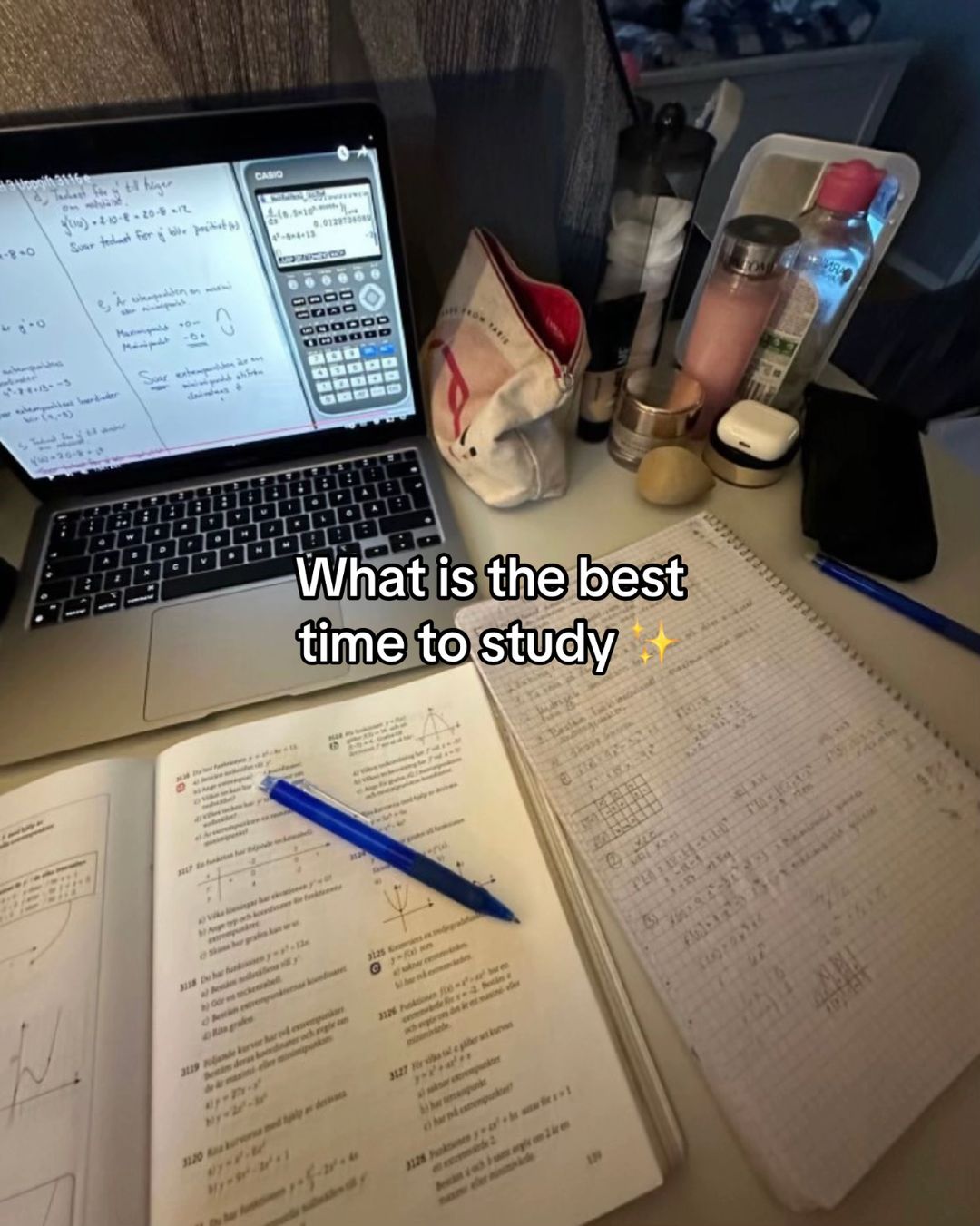
What is the best time to study ✨
Visual
A top-down view of a cluttered study desk with a laptop, notebook, and various study supplies.
All Slides
@brainysounds carousel breakdown
Brainy | Study Music
#studytok #StudyTips #studymotivation #studywithme #student
Effectiveness score
8/10
Views
3.9M
Likes
467.7K
Saves
185.9K
Engagement
17.4%
Hook
What is the best time to study ✨
Goal
grow-following
Offer
product
CTA
To stay focused during studying listen to Brainy 🧠 He makes study music based on 40 hz binaural beats that help you focus better and improve your memory 📚
Caption
#studytok #StudyTips #studymotivation #studywithme #student
Strategic Summary
This carousel went viral through a textbook curiosity-gap hook ('What is the best time to study') followed by a simple numbered listicle format (morning/afternoon/night) that promises actionable study optimization. The 7.9x bookmark rate reveals the dominant behavior—students saved this as a reference guide for exam prep rather than engaging in comments. The final slide converts this educational value into a funnel, directing viewers to a Spotify artist ('Brainy') producing binaural beats for study focus.
The Winning Formula
Universal academic question + simple 3-part time framework + subject-matching advice + CTA to focus-enhancing tool.
What's working
- •Slide 1 uses a universally relatable hook question ('What is the best time to study') that instantly taps into every student's core anxiety—am I studying at the right time?
- •The morning/afternoon/night structure (Slides 2-4) creates a satisfying, scannable listicle format that matches exactly how students actually plan their study sessions.
- •Each time block pairs a pseudo-scientific brain function percentage (100%/50%/20%) with specific subject recommendations—this gives the format perceived authority and makes it feel like a system rather than just tips.
- •Slide 5 executes a clean, native-looking Spotify artist profile screenshot that feels like a helpful resource recommendation rather than an aggressive ad pitch.
- •The blurred-background aesthetic for Slides 2-5 creates visual continuity—the consistent treatment signals these are part of one unified framework.
- •Low comment density (0.4x norm) is actually a feature here: this is a save-first post where the value is reference, not debate.
What's not working
- •The brain function percentages (100%, 50%, 20%) have no scientific citation—skeptical viewers in comments would likely flag this, though none appear captured here.
- •Slide 5 breaks the aesthetic consistency by inserting a Spotify UI screenshot among blurred study backgrounds—a slightly jarring transition that might cause some swipe-outs before the CTA.
- •The night-time slide claims 'brain function 20%' paired with 'essay writing' and 'art project'—this contradicts common knowledge that creative work often benefits from nighttime hours, potentially triggering skepticism.
Viral lesson
When your audience has a scheduling anxiety (when should I study, eat, work out), provide a simple time-block framework with specific task recommendations—they will save it as a reference tool.
Can a small creator replicate this? Any creator in self-optimization niches (fitness, productivity, diet) can replicate this: lead with a universal timing question, deliver 3 time blocks with task-match advice, close with a tool recommendation. Requires no production skill—just clean text overlays.
Structural Formula (steal-the-format)
Structure pattern
5-slide list: Hook question on authentic aesthetic background → 3 time-block slides with declining brain function percentages + subject/task matches → Spotify artist CTA with social proof metrics.
Copy formula
Question hook → Time window + brain function percentage + 'Good for' + subject checkbox list → CTA framing product as natural complement to framework.
What to swap (concrete remixes)
- •Swap 'best time to study' for 'best time to work out' + muscle group matching for fitness creators.
- •Swap study subjects for diet windows + meal types for nutrition/wellness creators.
- •Swap 'Brainy' binaural beats for any digital tool/app with verifiable metrics (subscriber counts, download numbers) for SaaS app reviewers.
What NOT to copy
Don't invent brain function percentages without any scientific basis—this carousel works because the audience doesn't immediately fact-check. Replicating pseudoscientific claims in health/fitness could trigger backlash.
Aesthetics
Authentic student desk flat-lay for hook slide, transitioning to blurred desk backgrounds with centered white bordered text overlays for informational slides, ending with a native Spotify artist profile screenshot.
Color palette
What it conveys: The warm lighting and authentic desk setup create a 'fellow student' intimacy—this feels like advice from someone who's in the trenches with you, not a polished corporate infographic.
Slide-by-slide forensics
1hookflat laycuriosityworks:yesgrab:72/100aesthetic:78/100What is the best time to study ✨
What is the best time to study ✨
Visual description
Real study desk flat-lay. A silver laptop (appears to be a MacBook) is open showing a math worksheet with handwritten Swedish annotations. A Casio calculator app is visible on the screen. To the right: a pink-capped water bottle, skincare/makeup products, a small white makeup sponge, a canvas pencil pouch with red accents. An open textbook with math problems lies in the foreground with a blue pen resting on it. A spiral notebook with handwritten notes sits to the right. The scene has warm, slightly dim lighting suggesting evening or indoor lamp light.
Scene setting
authentic student desk with warm indoor lighting
Visible objects
Products on screen
Other text elements
- •CASIO (calculator brand on screen)
- •Swedish textbook visible with math problems
Predicted audience reaction
Students will instantly self-identify—this hook directly names a universal study anxiety and the authentic desk aesthetic signals 'this creator is in my world.'
Verdict: The question hook + authentic study aesthetic instantly qualifies the audience and creates a personal relevance spike.
2step in listtext cardinformativeworks:yesgrab:65/100aesthetic:62/100⏰ In the morning 4AM to 11AM
brain function 100%
Good for complex subjects like:
☐ Maths
☐ Physics
⏰ In the morning 4AM to 11AM brain function 100% Good for complex subjects like: ☐ Maths ☐ Physics
Visual description
Blurred version of the Slide 1 desk scene—the laptop screen, textbook, and pen are faintly visible but heavily defocused. White sans-serif text with black outline is centered over the image. A red alarm clock emoji precedes the time header. Subject checkboxes appear as white squares before 'Maths' and 'Physics.'
Scene setting
blurred study desk background
vs prior slide
Style: The blurred background is the same desk from Slide 1, maintaining visual continuity but shifting from sharp detail to abstract texture—text becomes the hero.
Story: Moves from the hook question to the first answer block—morning time window with 100% brain function claim and STEM subject matches.
Predicted audience reaction
STEM students will immediately check if this matches their schedule; the 100% claim feels bold and share-worthy.
Verdict: Clean, scannable format with emoji and checkboxes makes it instantly readable—exactly how StudyTok content should look.
3step in listtext cardinformativeworks:yesgrab:60/100aesthetic:62/100📚 In the afternoon 3PM to 6PM
brain function 50%
Good for memorization and comprehension like:
☐ Biology
☐ English
📚 In the afternoon 3PM to 6PM brain function 50% Good for memorization and comprehension like: ☐ Biology ☐ English
Visual description
Same blurred desk background as Slide 2. White bordered text centered. Green stacked-books emoji precedes 'In the afternoon.' Time window 3PM-6PM, brain function claimed at 50%. Subject checkboxes for Biology and English.
Scene setting
blurred study desk background
vs prior slide
Style: Identical layout, font, emoji treatment, and blurred background as Slide 2—only the colors/subjects change (green book emoji instead of red clock).
Story: Second time block—afternoon with 50% brain function, shifting from analytical subjects to memorization/comprehension subjects.
Predicted audience reaction
Humanities students will feel seen—this slide validates their afternoon study window instead of treating it as inferior.
Verdict: Maintains the listicle momentum; the 50% framing is less dramatic than 100% but still feels systematic.
4step in listtext cardinformativeworks:partialgrab:58/100aesthetic:62/100✨ At night 7PM to 10PM
brain function 20%
Good for productive Problem solving like
☐ Essay writing
☐ Art project
✨ At night 7PM to 10PM brain function 20% Good for productive Problem solving like ☐ Essay writing ☐ Art project
Visual description
Same blurred desk background. White bordered text centered. Sparkle emoji precedes 'At night.' Time window 7PM-10PM, brain function claimed at 20% (lowest). Task-based recommendations: essay writing and art project.
Scene setting
blurred study desk background
vs prior slide
Style: Identical layout, font, and blurred background as Slides 2-3—consistent system.
Story: Final time block—night with lowest brain function (20%), pivoting to creative/productive tasks rather than subject-based recommendations.
Predicted audience reaction
Night owl students may feel the 20% claim is dismissive of their natural rhythm—potential friction point.
Verdict: The 20% brain function claim is the most likely to trigger skepticism, though the creative focus is a smart pivot from subject-based to task-based advice.
5ctatext cardpromotionalworks:yesgrab:52/100aesthetic:55/100To stay focused during studying listen to Brainy 🧠
He makes study music based on 40 hz binaural beats that help you focus better and improve your memory 📚
To stay focused during studying listen to Brainy 🧠 He makes study music based on 40 hz binaural beats that help you focus better and improve your memory 📚
Visual description
Same blurred desk background. White bordered text at top, then a centered Spotify artist profile screenshot below. The Spotify card shows a purple/black abstract head-silhouette with concentric brain waves as the album art, 'Brainy' as the artist name in large white type, 349.8K monthly listeners, a green play button, and the track '12 Hz High Level Cognition' with 671,296 plays under 'Popular.'
Scene setting
blurred study desk background with Spotify UI overlay
Visible objects
Products on screen
Other text elements
- •Brainy
- •349.8K monthly listeners
- •Following
- •You liked
- •1 song • 26 releases • Brainy
- •Popular
- •12 Hz High Level Cognition
- •671,296
vs prior slide
Style: Same blurred background and white text overlay style, but the Spotify screenshot is a distinct visual element that breaks the clean listicle flow.
Story: Shifts from informational framework to direct recommendation—the 'stay focused' language ties back to the study optimization theme, but the tone changes to promotional.
Predicted audience reaction
Students seeking study aids will save this; skeptical viewers may recognize the promotional intent, but the native Spotify screenshot format softens the sell.
Verdict: The Spotify profile screenshot with verified listener numbers (349.8K) and track plays (671K) provides implicit social proof that legitimizes the recommendation.
Commerce intent
Mentioned products
Comment ethnography
No comments captured, but StudyTok community shares inside language around 'grwm study,' 'study with me,' and gamification metrics (Pomodoro, streaks). The high bookmark rate suggests this audience treats carousels as downloadable reference material.
Diagnostics
Hook deep-dive
What is the best time to study ✨
The question directly names a universal student anxiety, and the authentic desk aesthetic signals the answer will be practical—the viewer swipes to get their answer before their next study session.
Engagement read
The bookmark rate (4.77%) is 7.9x the library norm, while comments are only 0.4x—this is a classic 'save-for-reference' post where utility dwarfs social engagement; students treat it as a downloadable study framework.
Mechanics
Each slide promises a specific time block + subject match—the viewer swipes to see if their subject/chrono-type is covered.
Brand & funnel
Brands visible
Buying-journey moment: The viewer is being introduced to a focus-enhancement tool (binaural beats) at the top of the funnel—this is soft awareness-building, not direct purchase intent.
Ideal Customer Profile
High school or university students struggling with productivity, procrastination, and academic overwhelm who are looking for 'hacks' to optimize their brain performance.
Age
18-24
Gender
neutral
Readability
simple
Interests
Pain Points
Aspirations
Emotional Profile
Primary Emotion
curiosityIntensity
Effectiveness
Emotions Evoked
Emotional Arc
curiosity → discovery → validation → call to action
Why It Lands
The content moves the viewer from a state of 'I'm struggling' to 'I have a plan,' providing a sense of control over their academic life.
Writing Analysis
Style
listicle
Tone
authoritative
Hook Type
question
Quality
The writing is extremely concise and punchy. It avoids fluff, focusing entirely on the 'what' and 'when,' which respects the viewer's time and encourages rapid consumption.
Effectiveness
Goal Achievement
The massive save-to-view ratio proves this content is highly effective at providing perceived value. It successfully bridges the gap between educational content and a direct brand promotion.
Why It Spread
high utility: viewers save it to use as a study schedule
low barrier to entry: the advice is free and easy to implement
aesthetic alignment: the visual style perfectly matches the 'studytok' subculture
Content DNA
The CTA is effective because it positions the product as the solution to the problem just identified (focusing), rather than a hard sell.
Narrative Arc
The carousel builds tension by categorizing the day into brain-function tiers, peaking at the final slide where the 'solution' is revealed.
Psychological Blueprint
Why It Spread
The content perfectly hits the 'study hack' sweet spot by providing a simple, actionable framework that promises an easy fix for a universal student pain point (focus). By framing the advice as 'brain optimization' rather than just 'study tips,' it taps into the high-intent audience of students desperate for an edge. The high save count (185K+) indicates that viewers are treating this as a utility to reference later, which is the ultimate driver for algorithm distribution.
Framework
thesis then evidencePrimary Tactic
curiosity gapTactics Used
curiosity gap on slide 1: 'What is the best time to study' forces a swipe to find the answer
authority bias: using specific time blocks and percentages to sound like scientific fact
pattern interrupt: the shift from a messy desk photo to structured, clean text overlays
social proof: showing the Spotify interface with '349.8K monthly listeners' on the final slide
Cognitive Biases
anchoring: the specific time ranges (4AM-11AM) anchor the viewer's belief that there is a 'correct' way to study
bandwagon effect: the high follower count and listener count on Spotify signal that this is the 'popular' way to study
framing effect: presenting study times as 'brain function percentages' makes the advice feel like a biological optimization
Tribal Markers
Trust Signals
Slide Breakdown (2 analyzed)
Text
What is the best time to study ✨
Visual
A top-down view of a cluttered study desk with a laptop, notebook, and various study supplies.
Visual Elements
Color Palette
Copy Analysis
Power Words
Open Loop: yes, it asks a question about a universal struggle that requires the next slide to answer.
Visual Psychology
Attention: The centered text overlay against the busy desk background.
Emotional cue: The 'aesthetic' desk setup triggers a desire for a productive study environment.
Composition: Creates a relatable, 'in-the-moment' feeling of a student actually working.
Text
⏰ In the morning 4AM to 11AM brain function 100% Good for complex subjects like: Maths Physics
Visual
Blurred background of the desk with clear, bold text centered.
Visual Elements
Color Palette
Copy Analysis
Power Words
Open Loop: yes, it creates a curiosity about the other times of day.
Visual Psychology
Attention: The bold text in the center.
Emotional cue: The clock emoji creates a sense of urgency.
Composition: The blur effect forces the viewer to focus entirely on the text.
Comment Intelligence
Sentiment
PositiveResonance
Intent
grow-following
Audience Vibe
The comments are largely focused on students tagging friends or expressing relief at finding a 'system' for their study habits.
Standout Quotes
“Finally a schedule that makes sense.”
“Saving this for finals week.”
“Does this actually work? I'm trying it tonight.”