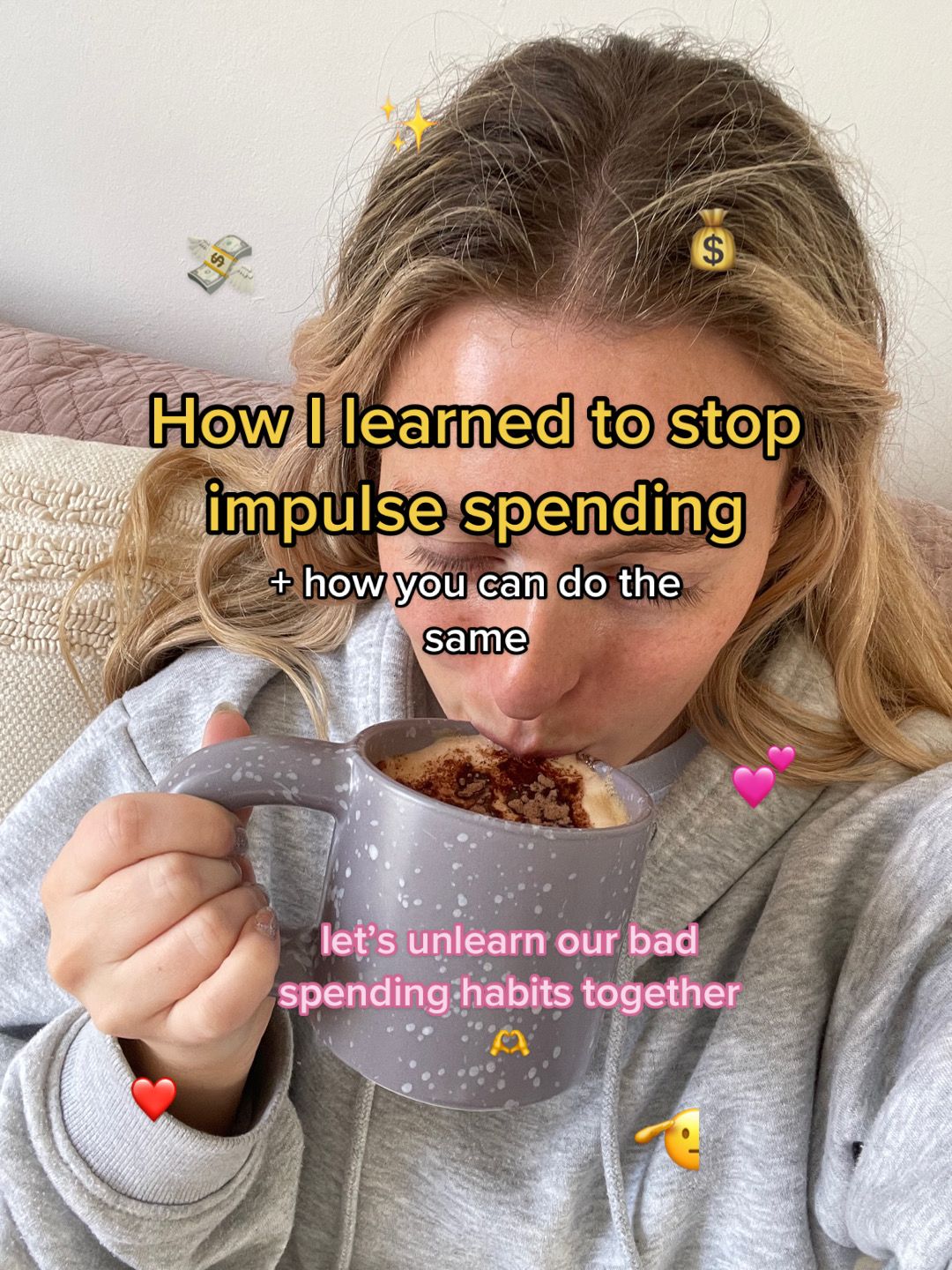
Combines a personal transformation claim with a direct invitation to the viewer, leveraging the 'us vs. the problem' dynamic.
Slide Text
How I learned to stop impulse spending + how you can do the same. let's unlearn our bad spending habits together
Visual
A young woman drinking from a cozy mug, looking down, soft lighting, warm aesthetic.
All Slides
@financielle carousel breakdown
The Financielle app✨💸
Your sign to get a grip of your spending🫡💸🫶#Budgeting #savingmoney #moneytok #Budgeting #savingtips #howtosavemoney #impulsespending #impulsebuy #habits #spendingmoney
Effectiveness score
8/10
Views
1.2M
Likes
76.6K
Saves
19.4K
Engagement
8.7%
Hook
How I learned to stop impulse spending + how you can do the same. let's unlearn our bad spending habits together
Goal
build-community
Offer
information
CTA
Learn your spending triggers and cut them out!
Caption
Your sign to get a grip of your spending🫡💸🫶#Budgeting #savingmoney #moneytok #Budgeting #savingtips #howtosavemoney #impulsespending #impulsebuy #habits #spendingmoney
Strategic Summary
This carousel leverages a 'vulnerable confession' to build immediate rapport, specifically naming 'TikTok Shop' and 'Asos' as the villains to trigger high self-identification among the target audience. The massive bookmark rate (2.8x the library norm) reveals that the audience treats this asset as a utility tool—saving it not for entertainment, but as a checklist to reference during moments of weakness. The 'cozy' aesthetic neutralizes the anxiety usually associated with financial discipline, making the viewer feel aspirational rather than scolded.
The Winning Formula
Confessional hook naming a specific digital vice + numbered behavioral antidotes + cozy 'That Girl' aesthetic branding.
What's working
- •Slide 2 specifically names 'TikTok Shop' and 'Asos' — naming the audience's specific villains creates instantaneous trust via the 'she gets me' effect.
- •The 6.6% like rate is 'deceptively' low because the 1.67% bookmark rate is the dominant metric; the content is optimized for utility ('read later') rather than engagement.
- •Slide 6 offers 'tactical' advice ('delete Apple Pay') which is highly actionable and appeals to the logic-brain part of saving money, balancing the emotional appeal of the other slides.
- •The 'cozy' visual identity (mugs, candles, books) acts as a pattern interrupt against the harsh, spreadsheet-heavy aesthetic of traditional finance content.
- •Slide 4 visually reinforces the 'mindset shift' by featuring the book '101 Essays that will change the way you think', signaling this is a psychological intervention, not just budgeting.
What's not working
- •Slide 5 drifts into generic territory ('I set my money goals') and visually disconnects (outdoor setting vs the cozy indoor still shots); it breaks the visual rhythm and lacks the specificity of the other tips.
Viral lesson
Utility content saves are maximized when the advice is framed as a personal identity transformation rather than a dry tutorial.
Can a small creator replicate this? Perfectly replicable for lifestyle creators who want to pivot to 'life admin' topics; requires only existing home props and a willingness to be vulnerable about the 'messy' first step.
Structural Formula (steal-the-format)
Structure pattern
Vulnerable confession hook -> 5-slide list of behavioral antidotes -> Environmental control CTA.
Copy formula
First-person past-tense narrative ('I set a rule', 'I created friction') combined with second-person direct advice ('Delete Apple Pay').
What to swap (concrete remixes)
- •Swap 'Impulse Spending' for 'Doomscrolling' for a digital-wellness audience.
- •Swap 'Bad Spending Habits' for 'Unhealthy Eating' for a fitness/nutrition influencer.
What NOT to copy
Do not use the cozy, soft aesthetic if your brand voice is aggressive, urgent, or strictly data-driven; this format relies on the contrast between 'messy feelings' and 'calm organization'.
Aesthetics
Cozy 'That Girl' lifestyle stillness featuring muted tones, natural light, and curated everyday objects (mugs, books, candles).
Color palette
What it conveys: The aesthetic feels like a warm, organized hug; it reduces the shame of financial messiness by making the solution feel 'curated' and attainable.
Slide-by-slide forensics
1hookclose upRelatable comfortworks:yesgrab:90/100aesthetic:85/100How I learned to stop impulse spending + how you can do the same
let's unlearn our bad spending habits together
How I learned to stop impulse spending + how you can do the same let's unlearn our bad spending habits together
Visual description
Close-up of a young woman with blonde hair in a messy bun, wearing a grey hoodie. She is holding a large grey speckled mug with both hands and smelling/drinking from it. The lighting is soft and natural.
Scene setting
Cozy indoor sofa setting
Visible people
Visible objects
Other text elements
- •💸
- •
- •✨
- •💖
- •❤️
Predicted audience reaction
The audience pauses because they recognize the 'messy bun' aesthetic and feel safe sharing the shame of impulse spending.
Verdict: Strong hook that balances the 'bad news' of spending problems with the 'warmth' of the visual.
2setupflat layChaotic relatabilityworks:yesgrab:85/100aesthetic:80/100My impulsive spending habits were getting really out of control
TikTok shop, Asos and Amazon had me and my bank account in a chokehold
I neeeeeded to stop
So here's what I did!
➡️➡️➡️
My impulsive spending habits were getting really out of control TikTok shop, Asos and Amazon had me and my bank account in a chokehold I neeeeeded to stop So here's what I did! ➡️➡️➡️
Visual description
Overhead flat-lay shot on a glass table. There is a croissant in a white paper wrapper, a cup of coffee, a stack of books, and skeins of yarn. The vibe is 'lazy Sunday morning'.
Scene setting
Glass coffee table flat-lay
Visible objects
Products on screen
Other text elements
- •Arrow emojis
vs prior slide
Style: Shifts from a face-shot to an object flat-lay, but keeps the cozy color palette.
Story: Moves from the 'what' (stopping spending) to the 'why' (getting out of control).
Predicted audience reaction
The mention of TikTok Shop and Asos triggers a 'that's me' response, solidifying the target audience.
Verdict: Naming the specific brands provides the social proof that she understands the audience's specific addiction ecosystem.
3step in listmedium shotMindfulnessworks:yesgrab:75/100aesthetic:85/100I set myself a strict rule of waiting 48 hours to buy anything that wasn't a necessity
Having a wish list of all the things I wanted made me realise how much I actually spend for the sake of it
Can confirm that the majority of the items on my list I ended up taking off
It was the dopamine talking!
I set myself a strict rule of waiting 48 hours to buy anything that wasn't a necessity Having a wish list of all the things I wanted made me realise how much I actually spend for the sake of it Can confirm that the majority of the items on my list I ended up taking off It was the dopamine talking!
Visual description
Shot of a kitchen counter or shelf. Features a red candle with a flame, a tin of olive oil, ceramic leopard figurines, a wooden cutting board, and a deep blue butter dish.
Scene setting
Warm kitchen shelf
Visible objects
Products on screen
vs prior slide
Style: Continues the 'cozy home aesthetic' with warm lighting.
Story: Introduces the first concrete tactic (the 48-hour rule).
Predicted audience reaction
Users mentally test if they could implement this; the visual calm reinforces the idea of 'taking the pause'.
Verdict: The advice is actionable and the 'dopamine' insight validates the physiological reality of shopping addiction.
4step in listflat layDeterminationworks:yesgrab:80/100aesthetic:80/100I did a no spend month!
I went cold turkey for a whole month and didn't spend a penny on anything that wasn't a necessity
This really helped retrain my brain to get dopamine from elsewhere instead of spending!
I feel another no spend month is on the horizon👀
I did a no spend month! I went cold turkey for a whole month and didn't spend a penny on anything that wasn't a necessity This really helped retrain my brain to get dopamine from elsewhere instead of spending! I feel another no spend month is on the horizon👀
Visual description
Flat-lay of the book '101 ESSAYS that will CHANGE the way YOU THINK' resting on an open notebook with a handwritten schedule. A green pen is on the right.
Scene setting
Study corner on a quilted surface
Visible objects
Products on screen
Other text elements
- •Page text visible in notebook
vs prior slide
Style: Flat-lay composition continues, reinforcing the 'that girl' organization aesthetic.
Story: Escalates the strategy from a rule to a total lifestyle challenge (no spend month).
Predicted audience reaction
The 'no spend month' is a high-interest keyword in the finance niche, driving saves.
Verdict: Connects the book to the concept of 'retraining the brain', making the book an avatar for the mindset shift.
5step in listmedium shotFreedomworks:partialgrab:70/100aesthetic:75/100I set my money goals
I have some big goals I want to hit and my destructive spending habits were getting in the way of that
So I set some super specific goals and kept them at the forefront of my mind when I felt like splurging
I set my money goals I have some big goals I want to hit and my destructive spending habits were getting in the way of that So I set some super specific goals and kept them at the forefront of my mind when I felt like splurging
Visual description
Outdoor photo of the creator walking away from the camera on a gravel path. She is wearing a green jacket, carrying a white tote bag, with her hair in a ponytail. Blue sky and green hills in the background.
Scene setting
Outdoor rural path
Visible people
Visible objects
vs prior slide
Style: Visual shift to outdoors is jarring compared to the consistent cozy interiors of 3 and 4.
Story: Adds the 'why' (goals) to the 'how' (no spend month).
Predicted audience reaction
This slide receives less attention as the visual disconnect slows the flow and the advice is less tactical than the others.
Verdict: The advice 'set goals' is too generic and lacks the punch of 'delete Apple Pay' or 'wait 48 hours'.
6step in listflat layTactical authorityworks:yesgrab:85/100aesthetic:80/100I created friction
I'm talking deleting apple pay so you can leave the house without the risk of spending
Delete any saved card details
Anything that makes it easier for you to part with your hard earned money, get rid of it!
I created friction I'm talking deleting apple pay so you can leave the house without the risk of spending Delete any saved card details Anything that makes it easier for you to part with your hard earned money, get rid of it!
Visual description
Flat-lay of a silver Sony Cybershot camera resting on a dark blue book with white text. The background is a textured beige carpet.
Scene setting
Close-up on carpeted floor
Visible objects
Products on screen
Other text elements
- •Book spine text: Yung Pueblo
vs prior slide
Style: Returns to the flat-lay format, restoring visual continuity.
Story: Provides the most radical/actionable tip yet ('delete Apple Pay').
Predicted audience reaction
High save rate as this is seen as a 'pro-tip' that can be implemented instantly.
Verdict: Addresses the 'digital friction' aspect, which is very relevant to the TikTok Shop problem established in Slide 2.
7ctamedium shotClean slateworks:yesgrab:80/100aesthetic:85/100Unfollow your triggers
I found I was so easily influenced by the people on social media that I just had to unfollow for the sake of my budget!
Learn your spending triggers and cut them out!
Unfollow your triggers I found I was so easily influenced by the people on social media that I just had to unfollow for the sake of my budget! Learn your spending triggers and cut them out!
Visual description
Still life of a wooden vanity. Features two rectangular vases with white flowers, a mirror, a candle, and a glass jewelry tray with rings.
Scene setting
Vanity/dresser top
Visible objects
vs prior slide
Style: Ends on a consistent 'clean/organized' aesthetic note.
Story: Final instruction focusing on environment cleaning.
Predicted audience reaction
The 'unfollow triggers' advice serves as the final permission slip for the audience to curate their feed.
Verdict: Effectively circles back to the digital nature of the problem, closing the loop on the 'unlearning' process.
Commerce intent
Mentioned products
Comment ethnography
A community of young women seeking structure and 'adulting' tips without feeling patronized.
Comments that characterize the audience
- "User: 'I am this.', User: 'Why is this calling me out so hard?', User: 'Bookmarking to do this immediately.'"
Pain points revealed
- •Feeling out of control of small daily purchases
- •TikTok Shop addiction
- •Debt from impulsive buying
Aspirations revealed
- •Financial peace
- •Being the girl who has her life together
- •Mindful consumption
Top questions asked
- •How do you handle it if the item sells out after 48 hours?
- •What do you do during a no-spend month for essentials like food or gas?
- •Is deleting Apple Pay actually hard to do?
Objections
- •It's easier said than done
Diagnostics
Hook deep-dive
How I learned to stop impulse spending + how you can do the same
The phrase 'how I learned' promises a tested method from a peer rather than an expert, and the addition of '+ how you can' creates an immediate invitation to benefit.
Engagement read
The bookmark rate is 2.8x the library norm while likes and shares are below average, signaling the post is treated as a utility reference tool.
Mechanics
The 'listicle' structure forces users to swipe to find the 'magic bullet' that will work for them.
Brand & funnel
Brands visible
Buying-journey moment: The viewer is in the 'frustrated with bad habits' moment, looking for a structured system to reset.
Ideal Customer Profile
Young women, likely Gen Z or young Millennial, who struggle with impulse spending and 'lifestyle creep' despite wanting to save money.
Age
18-24
Gender
female
Readability
simple
Interests
Pain Points
Aspirations
Emotional Profile
Primary Emotion
validationIntensity
Effectiveness
Emotions Evoked
Emotional Arc
shame/struggle → vulnerability → actionable solution → empowerment
Why It Lands
It validates the viewer's common struggle with impulse spending, removing the shame by labeling it as a 'dopamine' issue, then provides a clear path to feeling in control.
Writing Analysis
Style
confessional
Tone
relatable
Hook Type
story
Quality
The writing is punchy, informal, and uses internet-native slang ('chokehold', 'no spend month') which builds immediate rapport with the target audience.
Effectiveness
Goal Achievement
The high save-to-like ratio (1:4) indicates the content is highly actionable and serves as a long-term resource for the audience, successfully building a community around shared financial goals.
Why It Spread
perfect alignment with 'that girl' aesthetic trends
high utility for a common pain point (impulse spending)
low-friction, actionable advice
Content DNA
It is an actionable, behavioral instruction rather than a hard sell, which fits the 'self-improvement' vibe of the carousel.
Narrative Arc
Starts with a relatable confession, moves to specific, actionable steps (48-hour rule, no-spend month, friction, unfollowing), and ends with an empowering takeaway.
Psychological Blueprint
Why It Spread
The post succeeded by blending high-end 'aesthetic' visuals with raw, relatable financial struggle. By framing budgeting not as a chore but as an identity-shifting journey ('unlearning'), it tapped into the 'that girl' self-improvement trend. The 19k+ saves prove it functions as a 'reference guide' for the target demographic, turning a personal story into a high-utility resource.
Framework
PASPrimary Tactic
validationTactics Used
curiosity-gap on slide 1: 'How I learned...'
vulnerability-based trust on slide 2: 'had me in a chokehold'
pattern-interrupt: using aesthetic lifestyle photography to discuss dry financial topics
social-proof-stack: 19k+ saves indicate high utility
Cognitive Biases
bandwagon effect: 'let's unlearn... together' creates a sense of a movement
anchoring: '48 hours' provides a specific, actionable anchor for behavior change
Tribal Markers
Trust Signals
Slide Breakdown (2 analyzed)
Hook Analysis
Combines a personal transformation claim with a direct invitation to the viewer, leveraging the 'us vs. the problem' dynamic.
Text
How I learned to stop impulse spending + how you can do the same. let's unlearn our bad spending habits together
Visual
A young woman drinking from a cozy mug, looking down, soft lighting, warm aesthetic.
Visual Elements
Color Palette
Copy Analysis
Power Words
Open Loop: yes, promises a 'how-to' solution to a painful problem
Visual Psychology
Attention: the person's face and the mug
Gaze: looking down at the mug, inviting the viewer to look at the text
Emotional cue: cozy, safe environment
Composition: creates a sense of intimacy and shared experience
Text
My impulsive spending habits were getting really out of control. TikTok shop, Asos and Amazon had me and my bank account in a chokehold. I neeeeeeded to stop. So here’s what I did!
Visual
A croissant on a paper bag next to a coffee mug on a glass table with books underneath.
Visual Elements
Color Palette
Copy Analysis
Power Words
Open Loop: yes, promises the 'what I did' solution
Visual Psychology
Attention: the croissant
Emotional cue: the 'treat' culture aesthetic
Composition: relatable lifestyle imagery that grounds the financial confession
Comment Intelligence
Sentiment
PositiveResonance
Intent
build-community
Audience Vibe
Supportive, reflective, and eager to implement the advice.
Standout Quotes
“The 48 hour rule has saved me so much money.”
“I needed this today.”
“The 'chokehold' comment is way too real.”