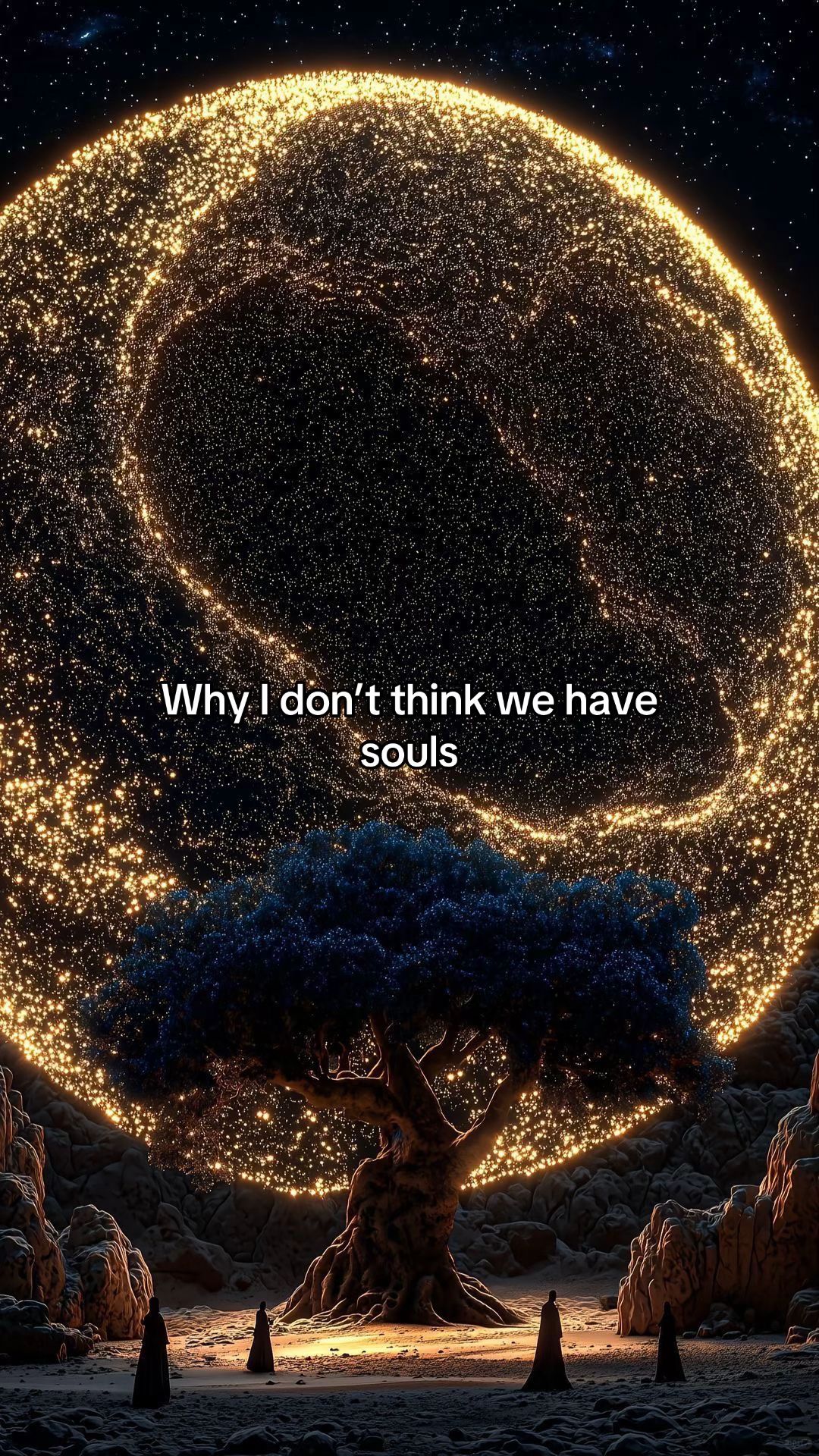
Slide Text
Why I don't think we have souls
Visual
A glowing, golden, swirling cosmic ring above a dark, stylized tree with figures standing below.
All Slides
@beyondduality_ carousel breakdown
Aries
#fyp #spirituality #philosophy #viral
Effectiveness score
9/10
Views
291K
Likes
20.3K
Saves
6.2K
Engagement
9.5%
Hook
Why I don't think we have souls
Goal
build-community
Offer
none
CTA
none
Caption
#fyp #spirituality #philosophy #viral
Strategic Summary
This carousel viralized by weaponizing a contrarian hook ('Why I don't think we have souls') within a pro-spirituality niche, creating immediate cognitive dissonance that demands resolution. The high save rate (3.5x norm) indicates viewers treat this as 'identity anchor' content—saving it to reaffirm their spiritual worldview later. The comment section (3.4x norm) exploded because the topic forces a binary choice: materialist vs. spiritualist, compelling users to defend their stance publicly.
The Winning Formula
Contrarian spiritual hook + AI-surreal aesthetic + Non-dualistic payoff that validates the seeker while challenging dogma.
What's working
- •Slide 1 creates immediate tension by challenging a core spiritual belief ('souls') in a niche that usually affirms them.
- •Visual consistency: All 7 slides use high-fidelity AI-generated cosmic/surreal art (dark mode, neon accents) which signals 'high value' and stops the scroll.
- •Slide 7's metaphor ('ping pong in single player mode') simplifies complex non-dual philosophy into a shareable, sticky soundbite.
- •The pacing moves from negation (Slide 1-2) to logical proof (Slide 3-4) to spiritual resolution (Slide 5-7), satisfying both skeptics and believers.
What's not working
- •Slide 5 is text-heavy compared to Slide 1 and 7; some users may skim the Buddhist reference without absorbing the nuance.
- •No explicit CTA (Call to Action) on Slide 7; it relies purely on emotional resonance to drive saves/shares, which works but leaves growth on the table.
Viral lesson
Controversy within a niche is more powerful than controversy against a niche; challenging your own tribe's dogma creates deeper engagement than attacking outsiders.
Can a small creator replicate this? Highly replicable for any philosophy/educational creator using AI art tools; requires only a strong contrarian thesis and consistent visual generation style.
Structural Formula (steal-the-format)
Structure pattern
7-slide philosophical essay, contrarian hook, logical escalation, metaphorical payoff.
Copy formula
First-person reflective ('I used to think') + Second-person directive ('You feel') + Metaphorical conclusion.
What to swap (concrete remixes)
- •Swap 'soul vs consciousness' for 'hustle vs flow' for productivity niche.
- •Swap 'death' for 'breakups' for relationship advice niche (e.g., 'Why I don't think love dies').
- •Swap 'Buddhism' for 'Stoicism' for a more masculine/self-improvement angle.
What NOT to copy
Do not copy the specific AI art style without ensuring it matches your brand; the text logic is the real asset, not just the pretty pictures.
Aesthetics
AI-generated cosmic surrealism with dark mode backgrounds and neon/glowing accents.
Color palette
What it conveys: The aesthetic creates a sense of vastness and mystery, priming the viewer for deep philosophical thought before they read a word.
Slide-by-slide forensics
1hookwide shotAwe + Intrigueworks:yesgrab:98/100aesthetic:95/100Why I don't think we have souls
Why I don't think we have souls
Visual description
A surreal cosmic scene featuring a large tree with blue leaves in the foreground. Behind it is a massive, glowing golden ring of stars/particles resembling a galaxy or portal against a dark starry sky. Four small robed figures stand at the base of the tree.
Scene setting
Cosmic surreal landscape
Visible people
Visible objects
vs prior slide
Style: N/A - First slide
Story: N/A - First slide
Predicted audience reaction
Immediate stop-scroll due to contrarian claim against spiritual norms.
Comments reacting to this slide
- "@the.forestnymph: Ur still proving there's a soul"
- "@pablogonzalezsan: When you die, you will cease to exist forever and ever..."
Verdict: Perfect hook: challenges the audience's core identity (spiritual people who believe in souls) forcing a swipe.
2setupclose upMysteryworks:yesgrab:85/100aesthetic:90/100I used to think we had souls
Until I realized I looked at it
the wrong way
Let me explain
I used to think we had souls Until I realized I looked at it the wrong way Let me explain
Visual description
Close-up of a glowing pink/purple jellyfish against a deep blue black background. Bioluminescent tendrils hang down. Bubbles float nearby.
Scene setting
Deep ocean bioluminescence
Visible objects
vs prior slide
Style: Maintains dark background + glowing neon subject matter (AI art style).
Story: Moves from the hook claim to a personal narrative setup ('I used to think').
Predicted audience reaction
Relief that an explanation is coming; curiosity peaks.
Verdict: Bridge slide that validates the user's confusion before offering the new perspective.
3step in listwide shotContemplativeworks:yesgrab:80/100aesthetic:88/100When we die, the only thing
we know actually dies
Is the physical body
We don't know what
happens to the mind
The subconscious mind is not
of this world- so naturally it's
safe to assume that it doesn't
die
When we die, the only thing we know actually dies Is the physical body We don't know what happens to the mind The subconscious mind is not of this world- so naturally it's safe to assume that it doesn't die
Visual description
Starry night landscape with a path leading through purple flower fields. A bright cross-shaped star burst dominates the sky. Van Gogh-esque brushstroke texture.
Scene setting
Starry night field
Visible objects
vs prior slide
Style: Dark mode + glowing stars + surreal landscape continues.
Story: First logical argument: Body dies, mind status unknown.
Predicted audience reaction
Nodding in agreement; feels logical.
Comments reacting to this slide
- "@liltricksta720: consciousness is just a by product of the brain..."
Verdict: Provides the first 'proof' point that bridges science and spirituality.
4step in listwide shotExpansionworks:yesgrab:85/100aesthetic:92/100In life, there's a general
pattern:
As we age, our bodies decay,
while our minds expand
If our bodies decay, we know
they're moving toward death
And our minds therefore are
moving towards expansion
In life, there's a general pattern: As we age, our bodies decay, while our minds expand If our bodies decay, we know they're moving toward death And our minds therefore are moving towards expansion
Visual description
A swirling vortex of blue clouds and stars forming a tunnel or eye shape over a dark landscape. Ethereal and cosmic.
Scene setting
Cosmic vortex
Visible objects
vs prior slide
Style: Continues the blue/black cosmic palette.
Story: Second argument: Inverse relationship between body decay and mind expansion.
Predicted audience reaction
Intellectual stimulation; feels like a profound insight.
Verdict: Reframes aging not as decline but as mental expansion, offering comfort.
5proofwide shotWisdomworks:partialgrab:80/100aesthetic:90/100Another way to look at this is
that death is only physical,
not mental
The things that die are our
physical bodies
And our ego; the illusion of a
false self
But the Buddhists have found
a way to silence the ego
Those who are enlightened
often say the same things
One such thing is that death
is only of the body; the spirit
is immortal
Another way to look at this is that death is only physical, not mental The things that die are our physical bodies And our ego; the illusion of a false self But the Buddhists have found a way to silence the ego Those who are enlightened often say the same things One such thing is that death is only of the body; the spirit is immortal
Visual description
A dark planet or sphere surrounded by swirling blue nebula clouds and a starry river flowing through mountains below.
Scene setting
Space landscape
Visible objects
vs prior slide
Style: Consistent blue/black cosmic theme.
Story: Introduces external authority (Buddhism) to validate the claim.
Predicted audience reaction
Validation for those familiar with Buddhism; introduction for those who aren't.
Comments reacting to this slide
- "@samadhi.06: I suggest you look at hindu "
Verdict: Text density is high here; some users might skim, but it adds necessary authority.
6Enlightenment involves the
end of the false self, the
Enlightenment involves the end of the false self, the
6Enlightenment involves the
end of the false self, the
Enlightenment involves the end of the false self, the
6Enlightenment involves the
end of the false self, the
Enlightenment involves the end of the false self, the
6Enlightenment involves the
end of the false self, the
Enlightenment involves the end of the false self, the
6Enlightenment involves the
end of the false self, the
Enlightenment involves the end of the false self, the
6Enlightenment involves the
end of the false self, the
Enlightenment involves the end of the false self, the
6Enlightenment involves the
end of the false self, the
Enlightenment involves the end of the false self, the
6escalationwide shotTranscendenceworks:yesgrab:88/100aesthetic:94/100Enlightenment involves the
end of the false self, the "I"
or "me" we convince
ourselves is real
And when you get a glimpse
of enlightenment...
You feel like everyone is you
but in a different costume
You wake up in the dream
and realize you're the
dreamer
You stop believing the dream
is real, and everything feels
like a side quest
The infinite trapped within a
finite vessel
Enlightenment involves the end of the false self, the "I" or "me" we convince ourselves is real And when you get a glimpse of enlightenment... You feel like everyone is you but in a different costume You wake up in the dream and realize you're the dreamer You stop believing the dream is real, and everything feels like a side quest The infinite trapped within a finite vessel
Visual description
A lush green cliffside or tree covered in leaves on the right, transitioning into a starry black sky on the left. Butterflies are visible near the bottom. Golden sparkles fall like rain.
Scene setting
Nature meets cosmos
Visible objects
vs prior slide
Style: Introduces green color but maintains starry background aesthetic.
Story: Describes the *feeling* of the philosophy, moving from logic to experience.
Predicted audience reaction
Emotional resonance; 'side quest' line is highly relatable to gamers/Gen Z.
Verdict: The 'side quest' metaphor modernizes ancient philosophy, making it sticky.
7revealmedium shotUnity + Peaceworks:yesgrab:90/100aesthetic:96/100Death is like letting a bird out
of a glass cage
It feels like there is no soul,
only one consciousness
expressed in multiple forms
There is no soul to be judged,
for how can you judge
yourself?
If there's only one
consciousness, what you
give is what you receive
It's like playing ping pong in
single player mode
Death is like letting a bird out of a glass cage It feels like there is no soul, only one consciousness expressed in multiple forms There is no soul to be judged, for how can you judge yourself? If there's only one consciousness, what you give is what you receive It's like playing ping pong in single player mode
Visual description
A silhouette of a human head/upper body made of swirling white light/stars against a dark blue background. Light beams shoot from the hand.
Scene setting
Abstract cosmic portrait
Visible people
Visible objects
vs prior slide
Style: Returns to human silhouette form, tying back to the 'self' discussion.
Story: Final synthesis: Non-duality explained through simple metaphors (bird, ping pong).
Predicted audience reaction
Save for later; share to signal identity.
Comments reacting to this slide
- "@deckwhisper303: You removed the idea of a personal soul, but replaced it with a cosmic one."
Verdict: The 'ping pong' analogy is the viral soundbite that simplifies the entire carousel.
Commerce intent
Comment ethnography
The audience is split between 'hard materialists' (consciousness dies with brain) and 'spiritual idealists' (consciousness expands); the creator bridges them by redefining terms.
Comments that characterize the audience
- "@thehealingofvenus_: I once meditated on this question, and the answer was that we definitely have a soul..."
- "@pablogonzalezsan: When you die, you will cease to exist forever and ever, definitively and eternally."
- "@lexi_o_lexi: We don't have souls…we are, souls…what we have are these bodies."
Pain points revealed
- •Fear of absolute nothingness after death
- •Confusion between 'soul' and 'consciousness' terminology
- •Desire for scientific/quantum validation of spiritual beliefs
Aspirations revealed
- •To be 'enlightened' or aware of the 'dream'
- •To believe death is not the end
- •To feel interconnected with others (quantum level)
Top questions asked
- •How does it feel to be dead?
- •Do you know you are sleeping when you are asleep?
- •What if life is just making our minds stronger?
Objections
- •Consciousness is just a byproduct of the brain
- •You can't make claims about existence until death occurs
- •There is no consciousness that survives brain death
Diagnostics
Hook deep-dive
Why I don't think we have souls
The claim contradicts the typical spiritual narrative, creating an 'open loop' the viewer must close by swiping.
Engagement read
Bookmark rate is 3.5x the library norm, indicating this is being used as a 'spiritual anchor' or reference text rather than just entertainment.
Mechanics
Cognitive dissonance resolution—users swipe to find out why the creator claims 'no souls' despite being in a spiritual niche.
Brand & funnel
Buying-journey moment: Viewer is in an existential questioning phase, looking for frameworks to understand death and consciousness.
Ideal Customer Profile
Individuals exploring existential questions, non-dual philosophy, and consciousness, often feeling alienated by traditional religious or materialist frameworks.
Age
18-34
Gender
neutral
Readability
simple
Interests
Pain Points
Aspirations
Emotional Profile
Primary Emotion
curiosityIntensity
Effectiveness
Emotions Evoked
Emotional Arc
curiosity → intellectual challenge → validation → peaceful resolution
Why It Lands
The content moves the viewer from a state of shock (challenging the soul) to a state of comfort (reframing death as expansion), creating a satisfying emotional journey.
Writing Analysis
Style
educational
Tone
aspirational
Hook Type
bold claim
Quality
The writing is concise and rhythmic, using short, punchy sentences that mirror the meditative nature of the topic. It avoids overly academic jargon, making complex metaphysical concepts accessible.
Effectiveness
Goal Achievement
The high bookmark-to-like ratio indicates the content successfully built a community of people who value the creator's perspective as a resource for their own spiritual journey.
Why It Spread
the hook directly attacks a core dogma, forcing a reaction
the visual aesthetic is highly shareable and 'aesthetic'
the content provides a sense of intellectual superiority/insight to the reader
Content DNA
The creator relies on the content's inherent value to drive engagement rather than an explicit CTA, which works well for this niche as it feels more authentic and less 'salesy'.
Narrative Arc
The tension starts high with the hook, remains steady through the philosophical explanation, and resolves into a peaceful, reflective conclusion.
Psychological Blueprint
Why It Spread
The post leverages a high-stakes, controversial hook that challenges a fundamental human belief about the afterlife. By pairing this with visually arresting, high-quality AI art, it creates a 'stop-the-scroll' aesthetic that signals high-value content. The 9.51% engagement rate is driven by the high bookmark count (6,159), suggesting the content is perceived as 'philosophical wisdom' worth saving for later reflection.
Framework
curiosity loopPrimary Tactic
controversyTactics Used
curiosity-gap on slide 1: 'Why I don't think we have souls' challenges a deeply held belief
pattern-interrupt: the use of AI-generated ethereal, cosmic imagery to stop the scroll
authority-borrowing: referencing 'the Buddhists' on slide 5 to add weight to the argument
reframing: shifting the perspective of death from an end to a 'side quest' or 'letting a bird out of a cage'
Cognitive Biases
confirmation bias: appeals to those already questioning traditional soul concepts
Zeigarnik effect: the hook creates a tension that can only be resolved by reading the full carousel
Tribal Markers
Trust Signals
Slide Breakdown (2 analyzed)
Text
Why I don't think we have souls
Visual
A glowing, golden, swirling cosmic ring above a dark, stylized tree with figures standing below.
Visual Elements
Color Palette
Copy Analysis
Power Words
Open Loop: yes, it forces the viewer to swipe to understand the reasoning behind a controversial claim.
Visual Psychology
Attention: the glowing golden ring
Emotional cue: the cosmic scale evokes awe and mystery
Composition: centered symmetry creates a sense of cosmic importance
Text
I used to think we had souls Until I realized I looked at it the wrong way Let me explain
Visual
Vibrant pink jellyfish floating in deep space-like water.
Visual Elements
Color Palette
Copy Analysis
Power Words
Open Loop: yes, promises an explanation for the shift in belief.
Visual Psychology
Attention: vibrant pink jellyfish
Emotional cue: the alien, ethereal nature of the jellyfish mirrors the 'otherworldly' topic
Composition: the contrast between the neon pink and dark background draws focus to the center
Comment Intelligence
Sentiment
PositiveResonance
Intent
build-community
Audience Vibe
The comments are deeply reflective, with users sharing their own spiritual experiences and validating the creator's perspective.
Standout Quotes
“This perspective on the 'false self' changed how I view my daily struggles.”
“I've always felt this but never had the words to describe it.”
“The ping pong analogy in single player mode is genius.”
Top Comments
I asked my teacher a philosophical question. How does it feel to be dead? And he told me, "do you remember what it felt like before you were born?".
I once meditated on this question, and the answer was that we definitely have a soul, and each soul has its own individual experience. But because we are all interconnected on a quantum level, we also have access, on a quantum level, to the knowledge that each individual soul has gathered in its own lifetime. This doesn’t mean, however, that we don’t have our own individual soul and experiences. Y
Ur still proving there’s a soul
When you die, you will cease to exist forever and ever, definitively and eternally. No soul, no spirit, no consciousness. It will be absolute nothingness.
We don’t have souls…we are, souls…what we have are these bodies. 👍