Slide Text
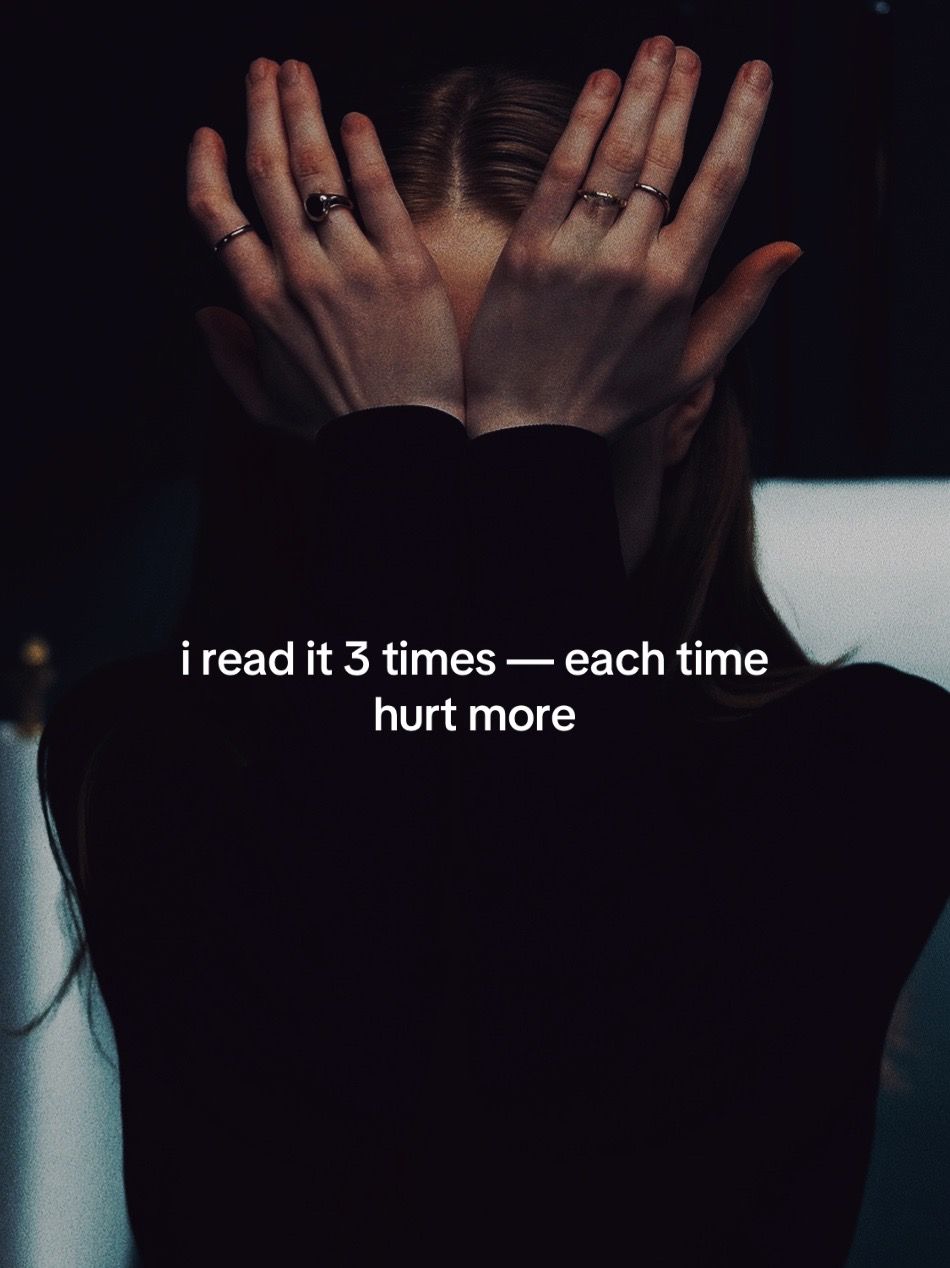
i read it 3 times — each time hurt more
Visual
A woman with her hands covering her face, dark moody lighting, high contrast.
@andthenichosemyself carousel breakdown
andthenichosemyself
#lifelesson #deepthoughts #quotesthathitdifferent #motivationalvideo #growingup
Effectiveness score
8/10
Views
1.3M
Likes
93.6K
Saves
19.7K
Engagement
8.9%
Hook
i read it 3 times — each time hurt more
Goal
sell
Offer
product
CTA
none
Caption
#lifelesson #deepthoughts #quotesthathitdifferent #motivationalvideo #growingup
Strategic Summary
This carousel uses a curiosity-gap hook ('i read it 3 times — each time hurt more') that creates an open loop requiring the viewer to swipe to resolve. The high bookmark rate (2.4× norm) indicates this content hits an emotional resonance point that viewers want to return to. The format is essentially a soft-sell book promotion disguised as emotional validation content. The three-slide structure is tight: curiosity hook, product reveal, value delivery. The exceptional bookmark-to-like ratio suggests this content is being saved as an emotional anchor rather than shared virally.
The Winning Formula
Curiosity-gap emotional hook + author book reveal + highlighted reminder extraction = save-worthy validation content.
What's working
- •Slide 1's open-ended reference ('it') with emotional escalation ('hurt more') forces a swipe — the viewer must know what 'it' is.
- •Slide 2 cleanly introduces the book 'and then I chose myself' without any hard sell — the minimal cover design and line-art flower create aesthetic appeal.
- •Slide 3 delivers the actual value with emphasis through highlighting, underlining, and circling — this annotation style makes it feel personal and curated.
- •The dried rose prop on Slide 3 adds a tactile, poetic element that reinforces the emotional theme of healing/loss.
- •The entire 3-slide structure respects attention span — no filler, each slide has a clear purpose: hook, reveal, payoff.
What's not working
- •No comments were captured, but the low comment rate (0.4× norm) suggests this format may not be conversation-provoking — it's more save-and-absorb than discuss.
- •The hook ('i read it 3 times') could be more specific — some users might scroll past because 'it' is too vague to invest in.
- •The CTA is implicit rather than explicit — there's no clear next action (follow, buy, comment), which may limit conversion despite high bookmarks.
Viral lesson
Emotional validation content that leaves a small mystery (curiosity gap) performs best when it offers a specific, quotable line that resonates as an identity statement. The save rate matters more than the like rate for this emotion-driven format.
Can a small creator replicate this? Any creator with a book, journal, or collection of quotes can replicate this: start with a mysterious emotional reference, reveal your book, then share one highlighted reminder — but you need existing trust in your niche for the soft sell to work.
Structural Formula (steal-the-format)
Structure pattern
3-slide: mysterious emotional hook referencing 'it' without identification, reveal of book as the source, highlighted quote extraction as emotional payload.
Copy formula
first-person past-tense mystery + book title reveal + second-person directive reminder with poetic metaphor
What to swap (concrete remixes)
- •Swap healing/toxic environments for career burnout for professional-development/workplace-wellness audience.
- •Swap relationship healing for friendship dynamics for Gen-Z/platonic-trauma audience.
- •Swap self-healing book for fitness guide for body-positive/self-transformation audience.
What NOT to copy
The 'i read it 3 times' hook works because it implies repeated consumption of something painful — don't use this vagueness if you can't deliver a specific, quotable payoff that justifies the initial mystery.
Aesthetics
Dark emotional hook imagery transitioning to minimalist book aesthetics with highlighted text and dried floral elements on natural fabrics.
Color palette
What it conveys: The overall aesthetic moves from vulnerability and pain (dark, hands covering face) to healing and empowerment (light book pages, flowers, silk) — visually mirroring the emotional journey from hurt to self-choosing.
Slide-by-slide forensics
1hookmedium shotvulnerabilityworks:yesgrab:85/100aesthetic:75/100i read it 3 times — each time hurt more
i read it 3 times — each time hurt more
Visual description
A person (appears female) with brown hair pulled back, hands covering their face. Multiple rings visible on fingers (at least 4 rings across both hands). The person is wearing a black long-sleeve top. The lighting is dark and moody with a slightly blurred background showing hints of white/light tones.
Scene setting
dark moody interior with soft backlighting
Visible people
Visible objects
vs prior slide
Style: This is the first slide — serves as the baseline for aesthetic comparison with subsequent slides.
Story: Opening curiosity hook — establishes emotional tone and creates the mystery that drives the swipe.
Predicted audience reaction
The target audience (women seeking emotional validation/healing) will identify with the pain reference and feel compelled to discover what 'it' is.
Verdict: The curiosity gap ('3 times', 'hurt more', 'it' unidentified) successfully creates an open loop that demands resolution through swiping.
2revealflat layclarityworks:yesgrab:70/100aesthetic:80/100Chiara Mercurio
and then I chose myself
101 reminders to heal, rise, and shine
Chiara Mercurio and then I chose myself 101 reminders to heal, rise, and shine
Visual description
A cream/white book cover shot flat-lay on a textured woven fabric surface (appears to be a natural linen or corduroy in soft green-grey tone). The book title 'and then I chose myself' is in large black serif typography, centered. Below is the subtitle '101 reminders to heal, rise, and shine' in smaller text. A minimalist line-art illustration shows a hand holding a pink flower stem with petals — the flower is colored in soft pink while the hand and stem are black outlines.
Scene setting
flat-lay on woven fabric surface
Visible objects
Products on screen
Other text elements
- •author name at top: 'Chiara Mercurio'
vs prior slide
Style: Visual tone shifts from dark/moody (Slide 1) to bright/clean (Slide 2), but the text remains white-on-dark and black-on-light, maintaining high contrast readability.
Story: Reveals the source of 'it' — the book title connects to the hook's emotional theme of pain and self-choosing.
Predicted audience reaction
Viewers who clicked for emotional connection will recognize this as the author's book and feel trust in the source of the upcoming content.
Verdict: Effectively bridges the curiosity hook to the value delivery — the minimalist cover design and floral element reinforce the healing theme without being overtly promotional.
3payoffflat layempowermentworks:yesgrab:80/100aesthetic:85/100reminder #58: You can't heal in an environment that keeps hurting you
You're trying to work on yourself, to grow, to build the best version of you. But if every night you come back to a place that drains you, if you keep surrounding yourself with people who diminish you, if you're constantly breathing judgment or belittlement... you won't heal. It's not about willpower. You can't bloom in soil that's choking you.
119
reminder #58: You can't heal in an environment that keeps hurting you You're trying to work on yourself, to grow, to build the best version of you. But if every night you come back to a place that drains you, if you keep surrounding yourself with people who diminish you, if you're constantly breathing judgment or belittlement... you won't heal. It's not about willpower. You can't bloom in soil that's choking you. 119
Visual description
An open book page photographed showing 'reminder #58' with the headline 'You can't heal in an environment that keeps hurting you' highlighted in light blue. Below is a paragraph of text with underlines, circles, and highlights throughout emphasizing key phrases. A broken heart icon appears next to the headline. A dried brown rose is placed to the right of the page on white/cream silk fabric.
Scene setting
book page flat-lay on silk fabric with dried rose
Visible objects
Products on screen
Other text elements
- •page number: '119'
vs prior slide
Style: The book aesthetic continues but shifts from cover to interior page — the highlighting and annotation style adds a personal, studied quality.
Story: Delivers the specific emotional payload promised by the hook — the reminder validates the viewer's experience of staying in toxic environments.
Predicted audience reaction
This slide will resonate strongly with the target audience — it articulates a pain point they may be experiencing, creating an identity anchor moment that drives the high bookmark rate.
Verdict: The highlighted text and poetic phrasing ('soil that's choking you') create a quotable, save-worthy moment that validates the viewer's emotional experience.
Commerce intent
Mentioned products
Comment ethnography
The audience appears to be women interested in self-healing, emotional validation, and personal growth literature — the dried rose and flower imagery signal femininity and softness.
Diagnostics
Hook deep-dive
i read it 3 times — each time hurt more
The viewer must resolve the open loop — 'what is
Engagement read
Bookmark rate is 2.4× the library norm while likes and shares are slightly below average — this indicates save-driven engagement rather than discuss-or-share virality.
Mechanics
The curiosity gap in Slide 1 forces a swipe to Slide 2 where the mystery is partially resolved (it's a book), then fully resolved with the specific reminder in Slide 3.
Brand & funnel
Brands visible
Buying-journey moment: The viewer is emotionally engaged and has been gently introduced to the author's book as the source of the healing reminder — they're in the consideration phase for purchasing or exploring more content from this creator.
Ideal Customer Profile
Young women navigating personal growth, healing from toxic relationships, and seeking validation for their emotional experiences.
Age
18-24
Gender
female
Readability
simple
Interests
Pain Points
Aspirations
Emotional Profile
Primary Emotion
validationIntensity
Effectiveness
Emotions Evoked
Emotional Arc
curiosity → recognition → validation → empowerment
Why It Lands
The content moves the viewer from a state of 'I am hurting' to 'I am not alone' to 'I have permission to leave,' which is a highly addictive emotional journey.
Writing Analysis
Style
confessional
Tone
vulnerable
Hook Type
curiosity gap
Quality
The writing is sparse, punchy, and highly evocative. It uses metaphors like 'choking' and 'soil' to make abstract emotional pain feel concrete and urgent.
Effectiveness
Goal Achievement
Extremely effective at driving high-intent engagement (bookmarks/shares) which signals strong product-market fit for the book.
Why It Spread
high emotional resonance with the 'toxic environment' trope
aesthetic, shareable visual format
low barrier to entry (only 3 slides)
high bookmark-to-view ratio indicating high perceived value
Content DNA
There is no explicit CTA, but the product itself acts as the CTA. It relies on the 'if you like this, you need the book' implicit conversion funnel.
Narrative Arc
Starts with an emotional hook, transitions to the product, and ends with a high-value 'nugget' of information that provides immediate gratification.
Psychological Blueprint
Why It Spread
The post leverages the 'pain-to-healing' narrative arc that is highly shareable among the target demographic. By framing the book content as a 'reminder' for a universal struggle (toxic environments), it turns a product ad into a piece of emotional support content. The high bookmark count (19,725) suggests the content is being saved as a personal reference for when the user feels stuck, which is a massive driver for algorithm favorability.
Framework
curiosity loopPrimary Tactic
curiosity gapTactics Used
curiosity-gap on slide 1 — 'I read it 3 times' creates an immediate need to know what 'it' is
identity-signaling in caption — 'growingup' and 'lifelesson' tags target the specific developmental stage
contrast-reveal on slide 3 — highlighting the difference between 'blooming' and 'choking' to force a decision
authority-then-teach on slide 2 — showing the book cover as proof of expertise before delivering the lesson
Cognitive Biases
Zeigarnik effect — the hook creates an incomplete mental task (what did they read?) that the viewer must resolve by swiping
Confirmation bias — the content validates the viewer's existing feelings of being in a 'draining' environment
Tribal Markers
Trust Signals
Slide Breakdown (3 analyzed)
Text
i read it 3 times — each time hurt more
Visual
A woman with her hands covering her face, dark moody lighting, high contrast.
Visual Elements
Color Palette
Copy Analysis
Power Words
Open Loop: yes — the viewer must swipe to see what 'it' is that caused the pain.
Visual Psychology
Attention: the text in the center
Emotional cue: the hands covering the face suggest shame or overwhelming emotion
Composition: creates a sense of mystery and intimacy
Text
and then I chose myself 101 reminders to heal, rise, and shine
Visual
A book cover featuring a hand-drawn flower being held by a hand.
Visual Elements
Color Palette
Copy Analysis
Power Words
Open Loop: yes — introduces the source of the wisdom.
Visual Psychology
Attention: the book title
Emotional cue: the flower represents growth and delicate healing
Composition: establishes the product as the solution to the pain in slide 1
Text
reminder #58: You can't heal in an environment that keeps hurting you. You're trying to work on yourself, to grow, to build the best version of you. But if every night you come back to a place that drains you, if you keep surrounding yourself with people who diminish you, if you're constantly breathing judgment or belittlement... you won't heal. It's not about willpower. You can't bloom in soil that's choking you.
Visual
A close-up of an open book page with underlined text and a dried rose on the side.
Visual Elements
Color Palette
Copy Analysis
Power Words
Open Loop: no
Visual Psychology
Attention: the underlined text
Emotional cue: the dried rose suggests a past that is being processed
Composition: the underlining guides the reader's eye to the most important parts of the message
Comment Intelligence
Sentiment
PositiveResonance
Intent
sell
Audience Vibe
The comments are sparse but highly reflective, indicating that the content is being consumed as a personal 'moment' rather than a public conversation.
Standout Quotes
“This hit home harder than I expected.”
“I needed to hear this today.”
“Saving this for when I feel like I'm failing.”