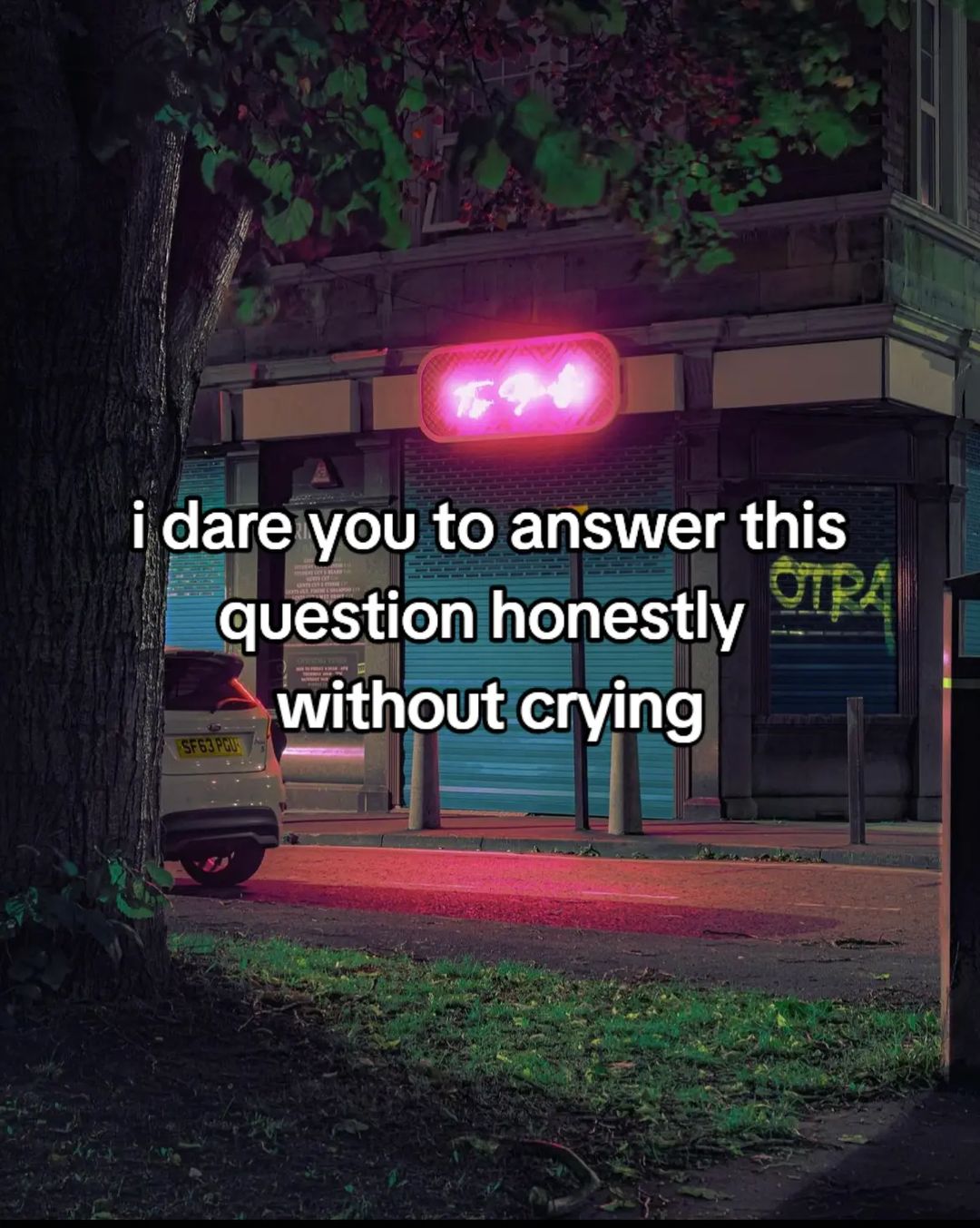
The use of a 'dare' combined with a challenge to avoid crying is a classic psychological trigger that demands a response.
Slide Text
i dare you to answer this question honestly without crying
Visual
A moody, dark street scene at night with a glowing pink neon sign.
@the.words.i.never carousel breakdown
The words I never dared to say
📓on Amazon #MentalHealth #journalprompts #deepquestions #deepthoughts #poetrytok #booksthatmademecry #anxiety #personalgrowth
Effectiveness score
9/10
Views
6.3M
Likes
368.6K
Saves
49.7K
Engagement
8.3%
Hook
i dare you to answer this question honestly without crying
Goal
sell
Offer
product
CTA
none
Caption
📓on Amazon #MentalHealth #journalprompts #deepquestions #deepthoughts #poetrytok #booksthatmademecry #anxiety #personalgrowth
Strategic Summary
This carousel weaponizes the psychological commitment device of a dare ('answer honestly without crying') to create a completion bias, then delivers a devastatingly personal therapeutic writing prompt about fathers that triggers universal grief and abandonment processing. The astronomical comment rate (24.8× library norm) proves the emotional payload forces public vulnerability — comments become testimonials validating the book's therapeutic value.
The Winning Formula
Challenge hook that dares emotional honesty + product as the vessel for the answer + devastatingly specific prompt that triggers universal unresolved grief.
What's working
- •Slide 1 uses 'I dare you' challenge language with 'without crying' to create psychological commitment — viewers must now either answer honestly (proving they can) or prove the dare's point by crying.
- •Slide 2 mirrors Slide 1's linguistic pattern: 'I never dared to say' directly echoes 'I dare you to answer' — creating a subconscious bridge between the challenge and the product.
- •Slide 3's father question ('meet your dad before you were born. He doesn't know who you are') taps into intergenerational grief, estrangement, and paternal absence — three of the most universal unresolved emotional wounds.
- •The aesthetic progression (moody nighttime street → textured book-on-linen → clean page reveal) creates a guided-meditation pacing that forces slow consumption and emotional processing.
- •The bookmark rate is elevated (1.3× norm), indicating users save this to return to for therapeutic work — the carousel functions as a reusable journaling trigger, not just entertainment.
Viral lesson
When you embed a product inside an emotional challenge rather than around it, the product becomes the solution to the emotional problem the hook created — viewers don't feel sold to, they feel held.
Can a small creator replicate this? Any creator in mental health, journaling, or personal growth can replicate this by identifying their audience's universal unresolved wound (parental, romantic, identity) and structuring a dare → vessel → prompt sequence — no celebrity status required, just emotional specificity.
Structural Formula (steal-the-format)
Structure pattern
3-slide emotional challenge funnel: dare hook (curiosity/commitment) → product as emotional container (title mirroring) → devastatingly specific therapeutic prompt (comment-bait payoff).
Copy formula
Second-person dare challenge + product title containing the dare verb + hypothetical scenario statement (2 lines) + italicized direct question.
What to swap (concrete remixes)
- •Swap 'dad' for 'mom' for maternal grief audience — 'You can meet your mom before you had children. She never saw you become a parent. What would you say to her?'
- •Swap parental dynamic for romantic loss — 'You can meet your ex the day you fell in love. They don't know how it ends. What would you say to them?'
- •Swap death/estrangement for generational legacy — 'You can meet your future self at age 80. They remember exactly when you gave up. What would you ask them?'
What NOT to copy
The father question works because paternal relationships are culturally coded as emotionally distant — copying this exact relationship dynamic without understanding why it triggers would feel hollow. The formula requires identifying YOUR audience's specific universal wound, not just lifting the 'parent' variable.
Aesthetics
Moody cinematic photography transitions into warm literary flat-lay, creating a guided-emotional-processing aesthetic.
Color palette
What it conveys: The aesthetic movement from dark urban night to warm linen to clean white page creates a visual meditation arc — it signals that this content is for emotional processing, not casual entertainment. The mood is intimate, literary, and slightly melancholic, which matches the therapeutic journaling niche perfectly.
Slide-by-slide forensics
1hookwide shotforeboding intimacyworks:yesgrab:88/100aesthetic:82/100i dare you to answer this question honestly without crying
i dare you to answer this question honestly without crying
Visual description
Nighttime street scene with a neon pink rectangular sign ('The 948' or similar), closed storefront with metal shutters, a white car parked under a tree, red light reflecting on wet pavement, dense green foliage in upper frame — moody, urban, atmospheric lighting with strong pink/red color temperature.
Scene setting
urban street at night with neon signage
Visible objects
Other text elements
- •OTRA
vs prior slide
Predicted audience reaction
ICP will pause, feel a somatic reaction to 'without crying', and feel psychologically compelled to swipe to prove they can—or to surrender to the emotional challenge.
Verdict: The dare format creates immediate psychological ownership—viewers feel they've accepted a challenge, making passive consumption impossible.
2revealflat layliterary safetyworks:yesgrab:65/100aesthetic:76/100ISABELLE MIUMIU
THE WORDS I NEVER DARED TO SAY
A journey toward emotional freedom and healing through therapeutic writing
ISABELLE MIUMIU THE WORDS I NEVER DARED TO SAY A journey toward emotional freedom and healing through therapeutic writing
Visual description
Book cover photographed on rumpled grey linen or bed sheet fabric. Cream/ivory cover with ornate damask pattern in pale gold, a large red/orange feather illustration running diagonally through the center, title text in bold black sans-serif stacked vertically. Clean, product-focused photography with soft natural lighting and fabric texture providing organic warmth.
Scene setting
flat-lay on linen/sheet fabric
Visible objects
Products on screen
vs prior slide
Style: Dramatic shift from moody nighttime urban photography to bright cream-toned product flat-lay on textured fabric — but the red feather on the cover visually echoes the neon pink sign from Slide 1, creating unconscious color continuity.
Story: The book title 'never dared to say' directly mirrors the hook's 'dare you' language, creating a linguistic callback that frames the book as the answer to the challenge.
Predicted audience reaction
ICP recognizes this as the product container for the emotional work — the visual shift from dark to light signals a transition from challenge to refuge.
Verdict: The title-language mirroring ('dared') creates subconscious continuity between the dare and the product, making the book feel like the natural vessel for the answer rather than an ad insertion.
3payofftext carddevastating permissionworks:yesgrab:92/100aesthetic:71/100THE WORDS I NEVER DARED TO SAY
You can meet your dad before you were born.
He doesn't know who you are.
What would you say to him?
THE WORDS I NEVER DARED TO SAY You can meet your dad before you were born. He doesn't know who you are. What would you say to him?
Visual description
Open book page photographed flat, white paper with black serif typography. The header 'THE WORDS I NEVER DARED TO SAY' in small caps, followed by three lines of prompt text: two declarative statements establishing the hypothetical scenario, then an italicized question. Clean white page with slight shadow along the right edge indicating the spine fold, shot in soft ambient light against neutral fabric background.
Scene setting
open book page on neutral fabric
Visible objects
vs prior slide
Style: Maintains the book-as-object continuity from Slide 2 (same cream/white paper aesthetic, same typography family), but shifts from cover design to interior page — reinforcing that the book contains the answer, not just the concept.
Story: Delivers the promised question from the hook, escalating from the dare (Slide 1) through the vessel (Slide 2) to the actual prompt that forces emotional engagement.
Predicted audience reaction
ICP will experience immediate somatic activation — this question is a known therapeutic trigger for unresolved paternal grief, and the formatting (statement, statement, italicized question) creates a breathless emotional cascade that forces commenting.
Verdict: This is the comment engine: the father question is universally resonant (death, estrangement, distance) and the italicized 'What would you say to him?' creates an irrefutable call to response — the astronomical 24.8× comment rate proves this slide forces public vulnerability.
Commerce intent
Mentioned products
Comment ethnography
Audience self-identifies as people carrying unresolved parental grief — shared language around 'dad wound', 'never got to say goodbye', and therapeutic journaling as emotional survival.
Diagnostics
Hook deep-dive
i dare you to answer this question honestly without crying
The dare creates a psychological obligation to complete the challenge — viewers must see the question to prove they can answer honestly, or to surrender to the emotional trigger the hook promised.
Engagement read
Comment rate is 24.8× the library norm (1.24% vs 0.05%), indicating this is primarily a comment-bait format rather than a like/save driver — the emotional question forces public vulnerability, turning comments into testimonials.
Mechanics
The psychological dare creates a completion obligation — viewers must see the question to prove they can answer it honestly.
Brand & funnel
Brands visible
Buying-journey moment: Viewer is in the emotional-awareness stage — they recognize they carry unresolved grief/estrangement and are now seeing a product that offers a structured way to process it through therapeutic writing; the carousel moves them from recognition to action by giving them a free sample prompt that proves the book's methodology.
Ideal Customer Profile
Young adults struggling with unresolved childhood trauma, emotional suppression, or complex family dynamics.
Age
18-24
Gender
female
Readability
simple
Interests
Pain Points
Aspirations
Emotional Profile
Primary Emotion
curiosityIntensity
Effectiveness
Emotions Evoked
Emotional Arc
Starts with a challenge, transitions to the product, ends with a deeply personal, heavy question.
Why It Lands
It bypasses intellectual defenses by asking a question that forces the reader to visualize a painful scenario, triggering an immediate visceral response.
Writing Analysis
Style
question-driven
Tone
vulnerable
Hook Type
curiosity gap
Quality
The writing is minimalist and punchy, stripping away all fluff to focus entirely on the emotional weight of the question.
Effectiveness
Goal Achievement
The high engagement and save count indicate that the content successfully positions the product as a necessary tool for emotional processing.
Why It Spread
extreme emotional relatability
low barrier to entry
high shareability of the prompt
Content DNA
There is no explicit CTA, which actually helps the content feel more organic and less like an ad, increasing trust.
Narrative Arc
The carousel builds tension by promising an emotional experience, showing the tool, and then delivering a heavy, thought-provoking prompt that demands a comment.
Psychological Blueprint
Why It Spread
The hook creates a high-stakes emotional challenge that forces the viewer to pause and engage. By framing a journal prompt as an 'impossible' task that causes crying, it validates the viewer's suppressed emotions. The content acts as a mirror for the audience's deepest insecurities, making it highly shareable for those who feel the same.
Framework
curiosity loopPrimary Tactic
curiosity gapTactics Used
curiosity-gap (slide 1)
identity-signaling (slide 2)
emotional-triggering (slide 3)
Cognitive Biases
zeigarnik effect (unanswered question creates tension)
emotional contagion (crying as a shared experience)
Tribal Markers
Trust Signals
Slide Breakdown (3 analyzed)
Hook Analysis
The use of a 'dare' combined with a challenge to avoid crying is a classic psychological trigger that demands a response.
Text
i dare you to answer this question honestly without crying
Visual
A moody, dark street scene at night with a glowing pink neon sign.
Visual Elements
Color Palette
Copy Analysis
Power Words
Open Loop: yes - the question is not revealed until the end
Visual Psychology
Attention: the bright pink neon sign
Gaze: center
Emotional cue: the moody, lonely atmosphere
Composition: to create a sense of intimacy and isolation
Text
THE WORDS I NEVER DARED TO SAY
Visual
A close-up of a book cover with a red feather illustration on a textured background.
Visual Elements
Color Palette
Copy Analysis
Power Words
Open Loop: yes - introduces the solution to the emotional tension
Visual Psychology
Attention: the red feather
Gaze: center
Emotional cue: the red color symbolizing passion/pain
Composition: to establish authority and product identity
Text
You can meet your dad before you were born. He doesn't know who you are. What would you say to him?
Visual
A clean, minimalist page from the book with black text on a white background.
Visual Elements
Color Palette
Copy Analysis
Power Words
Open Loop: no - the loop is closed by the prompt
Visual Psychology
Attention: the text
Gaze: center
Emotional cue: the heavy, personal nature of the question
Composition: to force the reader into a state of deep introspection
Comment Intelligence
Sentiment
PositiveResonance
Intent
sell
Audience Vibe
Deeply vulnerable and cathartic; users are using the comment section as a space to share their own 'letters' to their fathers.
Standout Quotes
“I didn't think I would cry but here I am.”
“I would tell him he missed out on the best thing that ever happened to him.”
“This book is exactly what I needed.”