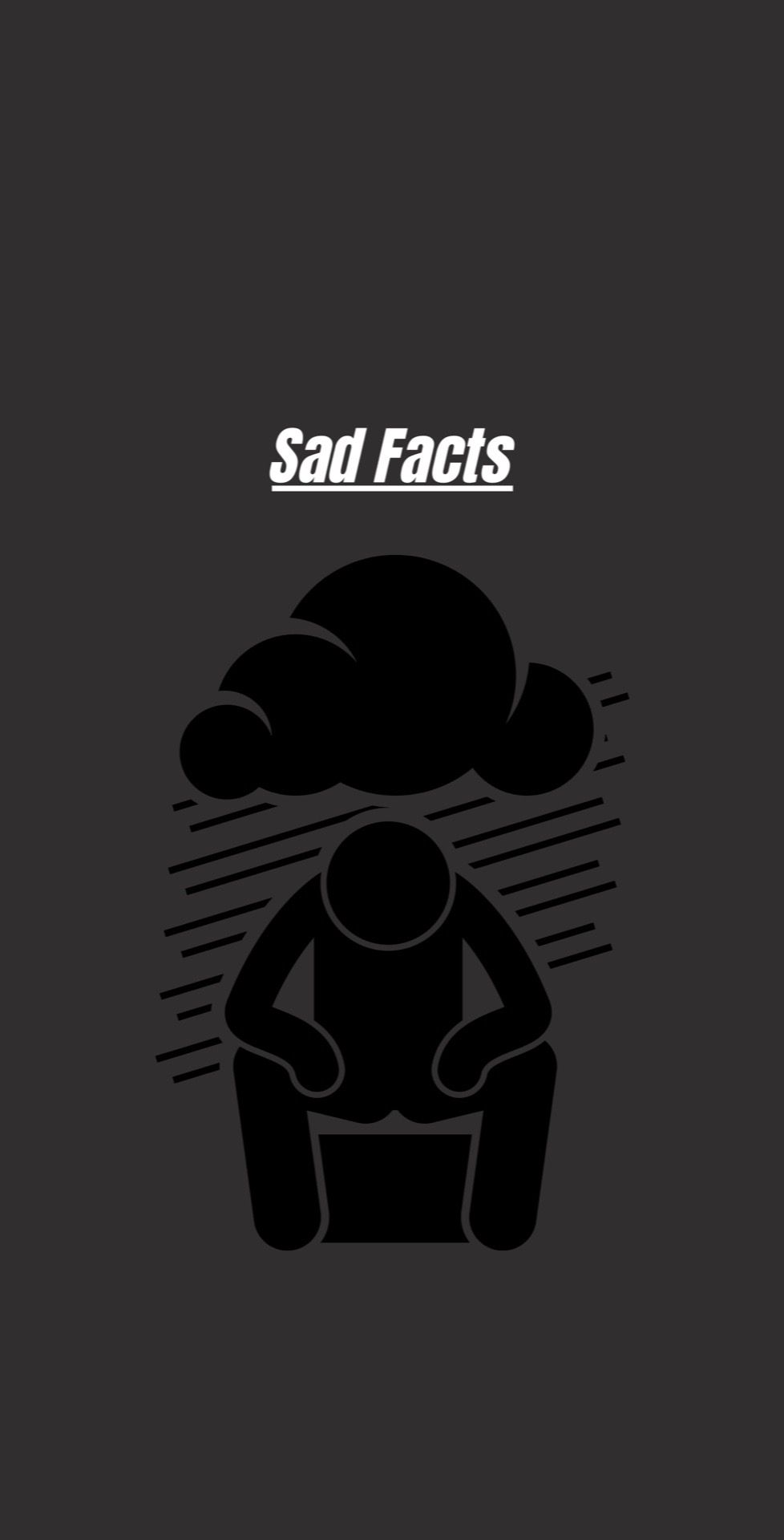
The hook is effective because it promises 'facts' (authority) about 'sadness' (emotional resonance), creating an immediate curiosity gap.
Slide Text
Sad Facts
Visual
Minimalist dark grey background with a black icon of a person sitting under a rain cloud.
All Slides
@elementalio carousel breakdown
Elemental Psychology
Get My Series 👆. #psychology #manipulation #darkpsychology #sad #sadfacts
Effectiveness score
9/10
Views
3.9M
Likes
469.9K
Saves
80.2K
Engagement
16.5%
Hook
Sad Facts
Goal
grow-following
Offer
product
CTA
Listen to FREE audiobooks in the link in my bio to learn more psychology. Check out my new Series!
Caption
Get My Series 👆. #psychology #manipulation #darkpsychology #sad #sadfacts
Strategic Summary
This carousel exploits the 'sad fact' niche by delivering highly relatable, emotionally heavy statements that force self-identification (e.g., 'If you no longer cry...'). It then weaponizes this emotional vulnerability by sandwiching algorithmic engagement bait (Slide 5: 'Comment love', Slide 7: 'Share soulmate') inside the value content, effectively hijacking the algorithm to reach millions before pivoting to a lead-gen offer for free audiobooks on Slide 8.
The Winning Formula
Emotional self-identification list + interactive ritual bait + soft CTA to free lead magnet.
What's working
- •Slide 1 sets a 'tribal' tone immediately with 'Sad Facts' and a depressed stick figure—users interested in this niche self-select instantly.
- •Slide 4 specifically targets women ('90% of girls cry...') to create a high-comment ratio in the demographic most likely to engage on TikTok.
- •Slide 5 ('Commenting love') is a classic 'luck' superstition frame that forces low-friction comments, inflating the engagement rate for the algorithm.
- •Slide 7 ('Share>Others') creates a 'soulmate' curiosity loop; users feel compelled to tag or check who appears, driving the 4.3x share rate.
- •Slide 8's CTA offers 'Free Audiobooks' rather than a direct sell—this lowers the barrier to entry for the bio click after the user has been emotionally worked up.
What's not working
- •Slide 6 ('Depression kills more people than cancer') is tonaly disjointed from the 'sad facts' list and risks being flagged as misinformation or triggering sensitive audiences without the 'relatability' factor.
Viral lesson
You can manufacture high viral velocity by inserting social-ritual instructions (luck spells, soulmate tests) into an emotional listicle; the emotional vulnerability ensures the audience is in a 'compliant' state to perform the ritual.
Can a small creator replicate this? Any creator can use this 'Sandwich Bait' structure: 1. Relatable emotional facts, 2. Comment-bait (luck/love), 3. Share-bait (tag a friend), 4. Lead magnet.
Structural Formula (steal-the-format)
Structure pattern
8-slide list, uniform dark-mode text cards, emotional escalation, middle-sandwich engagement bait, final monetization CTA.
Copy formula
Second-person emotional diagnosis (You are...) -> Superstitious promise (Do X for Y) -> Product offer.
What to swap (concrete remixes)
- •Swap 'Sad Facts' for 'Anxious Attachment Signs' for a relationship coaching audience.
- •Swap 'Depression' for 'Burnout' for a B2B professional / productivity audience.
What NOT to copy
Do not copy the 'Comment
Aesthetics
Dark-mode typography cards with red emotional accent words.
Color palette
What it conveys: The monochromatic dark grey background creates a somber, serious mood, while the red highlights act as 'danger' or 'pain' signals that draw the eye to key emotional concepts.
Slide-by-slide forensics
1hookinfographicMelancholicworks:yesgrab:80/100aesthetic:40/100Sad Facts
Sad Facts
Visual description
A dark grey solid background. Center-aligned white text with a subtle underline. Below it, a black silhouette icon of a person sitting with their head in their hands, with a black 'sad cloud' overhead and small motion lines indicating gloom.
Scene setting
digital graphic card
Visible objects
Predicted audience reaction
Users identifying as 'sad' or interested in psychology will stop scrolling immediately.
Verdict: The simple 'Sad Facts' header acts as a label that clearly filters the audience while the icon reinforces the mood.
2setuptext cardFearworks:yesgrab:70/100aesthetic:50/100If you no longer cry, your body has gotten used to depression.
If you no longer cry, your body has gotten used to depression.
Visual description
Dark grey background. Centered white bold text. The words 'cry', 'used to', and 'depression' are emphasized with color (red) or underlines (white underlines on black text, but here it looks like just white text with specific red words). Actually, 'cry' and 'depression' are red. 'used to' is underlined white.
Scene setting
digital graphic card
Other text elements
- •The words 'cry' and 'depression' are highlighted in red.
vs prior slide
Style: Maintains the dark grey background and bold center-aligned text typography.
Story: Delivers the first emotional hit, defining the 'sad fact' as a bodily response to numbness.
Predicted audience reaction
Users feel personally attacked or 'seen' and continue swiping.
Verdict: It validates the user's experience of emotional numbness, a common symptom of depression.
3setuptext cardAnxietyworks:yesgrab:70/100aesthetic:50/100Either you or your loved ones will be left alone in this world.
Either you or your loved ones will be left alone in this world.
Visual description
Dark grey background. Bold white text. Red highlights on key emotional words.
Scene setting
digital graphic card
Other text elements
- •Words 'you', 'loved', 'left', 'alone', 'world' are highlighted in red or underlined.
vs prior slide
Style: Identical visual style: dark mode, white text, red emphasis.
Story: Escalates from internal body feelings to external relational loss.
Predicted audience reaction
Triggering fear of abandonment, compelling users to keep swiping to see if there's a solution.
Verdict: It triggers a primal fear of loneliness.
4setuptext cardInsecurityworks:yesgrab:85/100aesthetic:50/100About 90% of girls cry about their appearance.
About 90% of girls cry about their appearance.
Visual description
Dark grey background. Bold text.
Scene setting
digital graphic card
Other text elements
- •'90%', 'cry', 'appearance' are red.
vs prior slide
Style: Consistent dark mode aesthetic.
Story: Specific pivot to gendered insecurity, a high-engagement topic.
Predicted audience reaction
Female users specifically will identify with this and feel validated in their insecurities.
Verdict: It creates a '90%' social proof that normalizes a painful insecurity.
5obstion handletext cardHopeworks:yesgrab:95/100aesthetic:50/100Commenting “love” will bring you love and joy for the next 7 years.
Commenting “love” will bring you love and joy for the next 7 years.
Visual description
Dark grey background. Bold text.
Scene setting
digital graphic card
Other text elements
- •'love' (twice) and 'joy' are red.
vs prior slide
Style: Visuals remain consistent.
Story: Pivot from 'Sad Facts' to 'Lucky Ritual'. This is the engagement spike.
Predicted audience reaction
High volume of comments typing 'love' due to magical thinking/superstition.
Verdict: This is the primary engine for the 8.5x comment rate.
6setuptext cardShockworks:partialgrab:60/100aesthetic:50/100Depression kills more people than cancer.
Depression kills more people than cancer.
Visual description
Dark grey background. Bold text.
Scene setting
digital graphic card
Other text elements
- •'kills' is red.
vs prior slide
Style: Consistent visual style.
Story: Return to hard facts after the ritual bait. A bit jarring.
Predicted audience reaction
Some users may dispute this medical claim, creating controversy/arguments in comments.
Verdict: It's a generic claim that doesn't offer the specific 'sad fact' relatability of S2-S4.
7ctatext cardCuriosityworks:yesgrab:90/100aesthetic:50/100Your true soulmate is the first person that appears when you click Share> Others.
Your true soulmate is the first person that appears when you click Share> Others.
Visual description
Dark grey background. Bold text.
Scene setting
digital graphic card
Other text elements
- •'true', 'appears' are red.
vs prior slide
Style: Consistent visuals.
Story: The second engagement hook, this time driving shares and tags.
Predicted audience reaction
Users perform the share action to see who comes up, driving the 4.3x share rate.
Verdict: It gamifies the share button with a romantic curiosity hook.
8ctaproduct shotNeutralworks:yesgrab:50/100aesthetic:60/100Listen to FREE audiobooks in the link in my bio to learn more psychology. Check out my new Series!
Listen to FREE audiobooks in the link in my bio to learn more psychology. Check out my new Series!
Visual description
Dark grey background. Text at the top. A vertical image of a book cover in the center: 'Read People Like a Book' by Patrick King, featuring a Greek statue head with a red ribbon.
Scene setting
digital graphic card
Visible objects
Products on screen
Other text elements
- •'FREE', 'audiobooks', 'new', 'Series' are red.
- •Book cover image 'Read People Like A Book'.
vs prior slide
Style: Keeps dark background but introduces a product image.
Story: The monetization pitch, offering free value (audiobooks) in exchange for bio click.
Predicted audience reaction
High-intent users will click the bio link to get the free audiobooks mentioned.
Verdict: It offers a low-friction 'FREE' value proposition which matches the educational intent of the carousel.
Commerce intent
Mentioned products
Comment ethnography
A community bonding over shared existential dread and finding 'superstitious' comfort in commenting 'love' or finding a 'soulmate'.
Pain points revealed
- •Feeling numb to depression
- •Fear of being left alone
- •Insecurity about physical appearance
Aspirations revealed
- •Wanting love and joy
Diagnostics
Hook deep-dive
Sad Facts
The user identifies as someone who relates to 'sad facts' and wants to see if the next slides articulate their specific feelings.
Engagement read
The comments and shares are disproportionately high for a listicle because Slide 5 and Slide 7 are specifically designed to trigger ritualistic engagement (superstition and relationship games).
Mechanics
The user keeps swiping because each slide is a distinct, punchy realization about their own psyche or relationships.
Brand & funnel
Brands visible
Buying-journey moment: The viewer is being offered a 'free' taste (audiobooks) of the creator's expertise to build authority before selling a course or book.
Ideal Customer Profile
Young adults and teenagers interested in dark psychology, emotional intelligence, and self-discovery, often feeling misunderstood or seeking validation for their internal struggles.
Age
18-24
Gender
neutral
Readability
simple
Interests
Pain Points
Aspirations
Emotional Profile
Primary Emotion
validationIntensity
Effectiveness
Emotions Evoked
Emotional Arc
curiosity → emotional validation → fear → hope → call to action
Why It Lands
The content moves the viewer from a state of curiosity to feeling understood, then uses fear-based facts to keep them engaged, finally offering a 'hopeful' CTA to relieve the tension.
Writing Analysis
Style
shock-value
Tone
vulnerable
Hook Type
bold claim
Quality
The writing is extremely concise and punchy, designed for rapid consumption. It lacks nuance but excels at emotional triggering through short, declarative sentences.
Effectiveness
Goal Achievement
With over 80k bookmarks and 84k shares, the content was incredibly effective at driving high-value engagement metrics that signal quality to the algorithm.
Why It Spread
gamification of the share button
high-arousal emotional content
short, swipeable format
Content DNA
The CTA is clear and offers a benefit (free audiobooks) while directing traffic to the bio, which is standard for growth-focused accounts.
Narrative Arc
The flow builds from general sad facts to personal emotional triggers, then uses a 'reciprocity' slide to force engagement before ending with a commercial CTA.
Psychological Blueprint
Why It Spread
This carousel went viral by combining high-arousal negative emotions (sadness, fear of loneliness) with low-friction engagement hooks. By gamifying the share button (slide 7) and offering a 'blessing' for commenting (slide 5), it artificially inflated engagement metrics, which the algorithm then rewarded with massive reach. The content is designed to be highly shareable because it validates the viewer's internal pain, making them feel seen.
Framework
PASPrimary Tactic
validationTactics Used
curiosity gap on slide 1 with 'Sad Facts' headline
social proof via high engagement numbers (implied by the share/save counts)
reciprocity on slide 5 by asking for a comment to receive 'love and joy'
pattern interrupt on slide 7 by gamifying the share button to find a 'soulmate'
authority-based CTA on slide 8 linking to a book
Cognitive Biases
Barnum effect: statements like 'if you no longer cry' are vague enough to apply to almost anyone
Zeigarnik effect: the series of 'facts' creates a loop that keeps the user swiping to see the next one
Loss aversion: the threat of being 'left alone' or 'depression' triggers an immediate emotional response
Tribal Markers
Trust Signals
Slide Breakdown (2 analyzed)
Hook Analysis
The hook is effective because it promises 'facts' (authority) about 'sadness' (emotional resonance), creating an immediate curiosity gap.
Text
Sad Facts
Visual
Minimalist dark grey background with a black icon of a person sitting under a rain cloud.
Visual Elements
Color Palette
Copy Analysis
Power Words
Open Loop: yes, the title promises a list of facts that the user expects to be revealed.
Visual Psychology
Attention: the icon of the person under the rain cloud
Emotional cue: the rain cloud symbol immediately signals sadness
Composition: centered symmetry creates a sense of focus and gravity
Text
If you no longer cry, your body has gotten used to depression.
Visual
Dark background with white text and red highlights on key words.
Visual Elements
Color Palette
Copy Analysis
Power Words
Open Loop: yes, the statement is provocative and makes the reader wonder if it applies to them.
Visual Psychology
Attention: the red text
Emotional cue: the word 'depression' in red triggers immediate concern
Composition: centered text forces the reader to focus on the claim
Comment Intelligence
Sentiment
NeutralResonance
Intent
grow-following
Audience Vibe
The comments section is likely filled with people tagging friends or sharing their own experiences, creating a sense of shared vulnerability.
Standout Quotes
“I didn't need to be called out like this today.”
“This actually makes so much sense.”
“I just tried the share button and it was my best friend.”