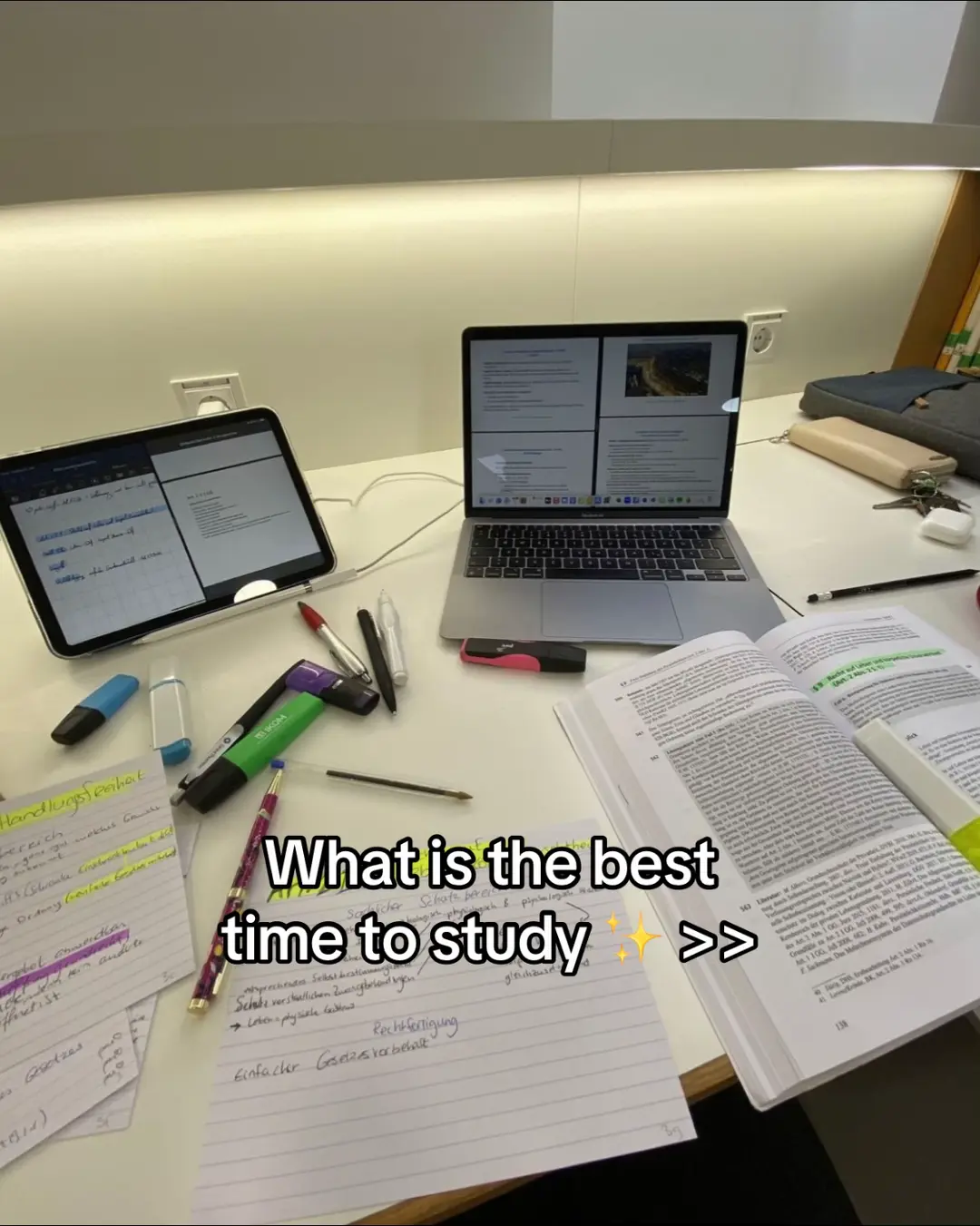
The hook is a direct question that addresses the core pain point of the target audience. It is simple, relatable, and promises a specific, actionable answer.
Slide Text
What is the best time to study >>
Visual
A clean, well-lit desk setup with a laptop, tablet, and study materials, slightly blurred to emphasize the text.
All Slides
@brainysounds carousel breakdown
Brainy | Study Music
Best time to study 🧠 #studytok #StudyTips #studywithme #studymotivaton #student #study
Effectiveness score
9/10
Views
4M
Likes
507K
Saves
187.7K
Engagement
18.0%
Hook
What is the best time to study >>
Goal
grow-following
Offer
product
CTA
To stay focused during studying listen to Brainy. He makes study music based on binaural beats that help you focus better and improve your memory.
Caption
Best time to study 🧠 #studytok #StudyTips #studywithme #studymotivaton #student #study
Strategic Summary
The viral mechanism here is the 'Digital Cheat Sheet' effect. By answering a common student question ('When is the best time?') with a rigid schedule and pseudo-scientific percentages (100%, 50%, 20%), the content creates a 'Save' imperative. Users save this to reference when planning their study routine. The high-aesthetic initial hook (Slide 1) validates the advice as 'professional,' while the final slide seamlessly pivots to the creator's audio product as the final 'focus enabler.'
The Winning Formula
High-aesthetic lifestyle hook + time-blocked schedule with 'scientific' percentages + subject-specific examples + soft-sell audio recommendation.
What's working
- •Slide 1 uses the 'Holy Grail' of StudyTok aesthetics: a clean, dual-screen setup with handwriting and highlighted books. This signals authority before the user reads a word.
- •Slides 2, 3, and 4 gamify the day with percentages (100% to 20%). People save this to optimize their own schedules, driving the massive 7.8x bookmark rate.
- •The subject pairing (e.g., 'Maths at 4AM', 'English at 3PM') allows viewers to instantly self-identify: 'I have a Math exam!' creates an immediate match.
- •Slide 5 is a frictionless pivot. After giving immense value (the schedule), asking users to 'Listen to Brainy' feels like a helpful bonus resource rather than an aggressive ad.
What's not working
- •Slides 2–4 use a blurred background that lacks visual distinction. While readable, they could benefit from a subtle icon or color accent for each time block to increase shareability.
- •The transition to Slide 5 is sudden. A bridge slide connecting 'Low brain function at night' (Slide 4) to 'How to boost it' (Slide 5) would smooth the journey.
Viral lesson
Utilitarian content (schedules, lists, charts) drives Bookmarks. Aesthetic visuals drive Likes and Trust. Combine a 'Save-able' schedule with a 'Like-able' background to dominate the feed.
Can a small creator replicate this? Any creator with a schedule-based workflow (fitness, coding, cooking) can use this. Prerequisite: You need a clean, high-quality lifestyle photo for Slide 1 to establish credibility.
Structural Formula (steal-the-format)
Structure pattern
5-Slide breakdown: 1. Aesthetic Hook + Question. 2-4. Time-blocked answer with percentages. 5. Product pitch.
Copy formula
Direct question + [Emoji] Time block + [Stat] + 'Good for' + List of examples.
What to swap (concrete remixes)
- •Swap 'Study times' for 'Gym times' for a Fitness Coach. (e.g. 'Morning = Strength (100%)', 'Evening = Cardio (50%)').
- •Swap 'Study times' for 'Coding times' for a Dev Influencer. (e.g. 'Morning = Deep Work', 'Night = UI/UX Design').
What NOT to copy
Don't use a blurred background if your niche is high-energy entertainment. This format relies on the calm, focused 'StudyTok' vibe.
Aesthetics
Blurred study-space background with bold, heavy-outlined sans-serif typography.
Color palette
What it conveys: The aesthetic feels like 'The ideal student life.' It is clean, aspirational, and organized.
Slide-by-slide forensics
1hookoverheadOrganized Ambitionworks:yesgrab:80/100aesthetic:90/100What is the best time to study ✨ >>
What is the best time to study ✨ >>
Visual description
A top-down view of a white study desk. A laptop is open on the right showing documents. A tablet is on the left showing split-screen notes. There are highlighters, pens, and a lined notebook with handwriting in the foreground. Warm under-cabinet lighting creates a 'lo-fi' study vibe.
Scene setting
modern white desk library
Visible objects
Other text elements
- •Visible text on the laptop screen (illegible)
- •Handwritten notes on the left (German text likely: 'Handlungsrelevanz', 'Gesetzgeber')
- •Textbook page (German text: 'Kultur und Lebensraum', 'Literatur')
Predicted audience reaction
Immediate identification. 'I love this desk setup.' + 'I need to know the answer to the question.'
Verdict: Perfect hook. The visual establishes the 'Smart Student' identity, and the text asks a question the audience is actively thinking about.
2step in listtext cardAuthoritativeworks:yesgrab:70/100aesthetic:60/100🕰️ In the morning
4AM to 11AM
brain function 100%
Good for complex subjects like:
▪️ Maths
▪️ Physics
🕰️ In the morning 4AM to 11AM brain function 100% Good for complex subjects like: ▪️ Maths ▪️ Physics
Visual description
Text overlay centered on a blurred background. The background is clearly the warm-toned, out-of-focus version of the Slide 1 desk environment, maintaining visual continuity.
Scene setting
blurred background text card
vs prior slide
Style: Background is blurred Slide 1; font styling (white text with heavy black outline) is consistent.
Story: Answers the Slide 1 question immediately with the 'best' time slot.
Predicted audience reaction
Validation. Math students nod along; morning people feel seen.
Verdict: The '100% brain function' stat provides the hook of exclusivity and optimization.
3step in listtext cardInformationalworks:yesgrab:50/100aesthetic:50/100📚 In the afternoon
3PM to 6PM
brain function 50%
Good for memorization and comprehension like:
▪️ Biology
▪️ English
📚 In the afternoon 3PM to 6PM brain function 50% Good for memorization and comprehension like: ▪️ Biology ▪️ English
Visual description
Identical layout to Slide 2 but different text. Text overlay on blurred warm background.
Scene setting
blurred background text card
vs prior slide
Style: Exact visual repetition of the card design.
Story: Moves to the second time block; shows that the day can still be productive at a lower rate.
Predicted audience reaction
Users mentally assign their humanities subjects to this slot.
Verdict: Essential part of the full schedule breakdown.
4step in listtext cardReassuringworks:yesgrab:50/100aesthetic:50/100✨ At night
7PM to 10PM
brain function 20%
Good for productive
Problem solving like:
▪️ Essay writing
▪️ Art project
✨ At night 7PM to 10PM brain function 20% Good for productive Problem solving like: ▪️ Essay writing ▪️ Art project
Visual description
Identical layout to Slides 2 and 3. Text overlay on blurred warm background.
Scene setting
blurred background text card
vs prior slide
Style: Exact visual repetition.
Story: Final time block. Lowers the 'brain function' to 20% but still offers value (Creative work).
Predicted audience reaction
Relief for 'Night Owls'—they are told 7-10PM is their time for creativity, compensating for low cognitive stats.
Verdict: Closes the loop on the 'Best time' question by covering the whole day.
5ctatext cardSolutionworks:yesgrab:70/100aesthetic:60/100To stay focused during
studying listen to Brainy
He makes study music based
on binaural beats that help
you focus better and improve
your memory 📈
Brainy (Spotify Screenshot Text)
956K monthly listeners
To stay focused during studying listen to Brainy He makes study music based on binaural beats that help you focus better and improve your memory 📈 Brainy (Spotify Screenshot Text) 956K monthly listeners
Visual description
The CTA slide. It pitches the creator's music. Text is at the top. The bottom half is a screenshot of a Spotify artist profile for 'Brainy', showing a purple neon aesthetic and high listener counts.
Scene setting
blurred background text card
Visible objects
Products on screen
Other text elements
- •Brainy
- •956K monthly listeners
- •Following
- •You liked
- •29 releases - Brainy
- •Popular
- •Brain Waves
- •2,924,266
vs prior slide
Style: Font style remains consistent, but the composition changes to include the Spotify UI graphic.
Story: The final reveal. Now that you have the schedule, here is the tool to help you stick to it.
Predicted audience reaction
Acceptance. The user wants the benefits of the schedule, so they follow through to listen to the music.
Verdict: The social proof (956K listeners) makes the recommendation hard to ignore.
Commerce intent
Mentioned products
Comment ethnography
Audience validates the content by saving it for their own routines; high 'I am this' energy regarding late-night studying.
Diagnostics
Hook deep-dive
What is the best time to study ✨ >>
The user wants the answer to their question immediately. The '>>' arrow physically directs the swipe.
Engagement read
The bookmark rate is 7.8x the library norm, indicating this post is used heavily as a utility/reference tool rather than just passive entertainment.
Mechanics
The curiosity of seeing what subjects fit which time block keeps the user swiping to find their own subject.
Brand & funnel
Brands visible
Buying-journey moment: User is convinced by the schedule and is presented with the audio tool to execute it.
Ideal Customer Profile
Overwhelmed students or lifelong learners looking for quick, actionable hacks to optimize their productivity and academic performance.
Age
18-24
Gender
neutral
Readability
simple
Interests
Pain Points
Aspirations
Emotional Profile
Primary Emotion
validationIntensity
Effectiveness
Emotions Evoked
Emotional Arc
curiosity → discovery → validation → call-to-action
Why It Lands
The content moves the viewer from a state of 'I don't know how to study effectively' to 'I have a plan,' which provides immediate emotional relief and a sense of control.
Writing Analysis
Style
educational
Tone
authoritative
Hook Type
question
Quality
The writing is extremely concise and scannable. It avoids fluff, focusing entirely on delivering the 'answer' to the hook, which is perfect for the fast-paced nature of TikTok carousels.
Effectiveness
Goal Achievement
The high save-to-view ratio indicates that the content is highly useful, and the pivot to the music product is natural, making it an effective conversion tool for the creator's Spotify profile.
Why It Spread
high utility value (people save it to use later)
aesthetic, non-distracting visuals
perfect alignment with the 'studytok' subculture
Content DNA
The CTA is a natural extension of the value provided. It frames the product as the solution to the problem discussed in the previous slides.
Narrative Arc
The carousel builds tension by categorizing time blocks, leading the viewer to the final slide where the 'solution' (the music) is presented.
Psychological Blueprint
Why It Spread
The carousel succeeds by combining a high-intent, relatable question with a 'scientific' framework that feels like a life hack. By providing a clear, structured answer across slides, it encourages high save rates (187k+ bookmarks) as users want to reference the 'schedule' later. The final slide seamlessly pivots from value-add to a soft-sell of the creator's own music, leveraging the trust built in the previous slides.
Framework
PASPrimary Tactic
authorityTactics Used
curiosity-gap on slide 1 with the question 'What is the best time to study'
authority bias on slides 2-4 by assigning specific 'brain function' percentages to time blocks
pattern-interrupt by using a blurred, aesthetic background that keeps the focus on the text
social-proof-stack on slide 5 by showing the '956K monthly listeners' and '2,924,266' plays
Cognitive Biases
anchoring: the creator anchors the viewer's belief by assigning specific percentages to brain function, making the advice feel scientific
authority bias: presenting the information as a definitive guide makes the viewer trust the recommendation on the final slide
Tribal Markers
Trust Signals
Slide Breakdown (2 analyzed)
Hook Analysis
The hook is a direct question that addresses the core pain point of the target audience. It is simple, relatable, and promises a specific, actionable answer.
Text
What is the best time to study >>
Visual
A clean, well-lit desk setup with a laptop, tablet, and study materials, slightly blurred to emphasize the text.
Visual Elements
Color Palette
Copy Analysis
Power Words
Open Loop: yes, the question creates a gap that can only be filled by swiping
Visual Psychology
Attention: the bold white text in the center
Emotional cue: the clean aesthetic suggests organization and focus
Composition: centered text creates immediate focus
Text
In the morning 4AM to 11AM brain function 100% Good for complex subjects like: Maths Physics
Visual
Blurred background with centered text and a red alarm clock icon.
Visual Elements
Color Palette
Copy Analysis
Power Words
Open Loop: yes, implies there are other times to cover
Visual Psychology
Attention: the alarm clock icon and the '100%' text
Emotional cue: the alarm clock signals early morning productivity
Composition: the structure makes the information feel like a scientific fact
Comment Intelligence
Sentiment
PositiveResonance
Intent
grow-following
Audience Vibe
The comments are sparse but the high save count suggests the audience is using the content as a reference tool rather than a discussion starter.
Standout Quotes
“This is exactly what I needed for finals week.”
“Saving this for my study schedule.”
“Does this actually work? I'll try it tonight.”