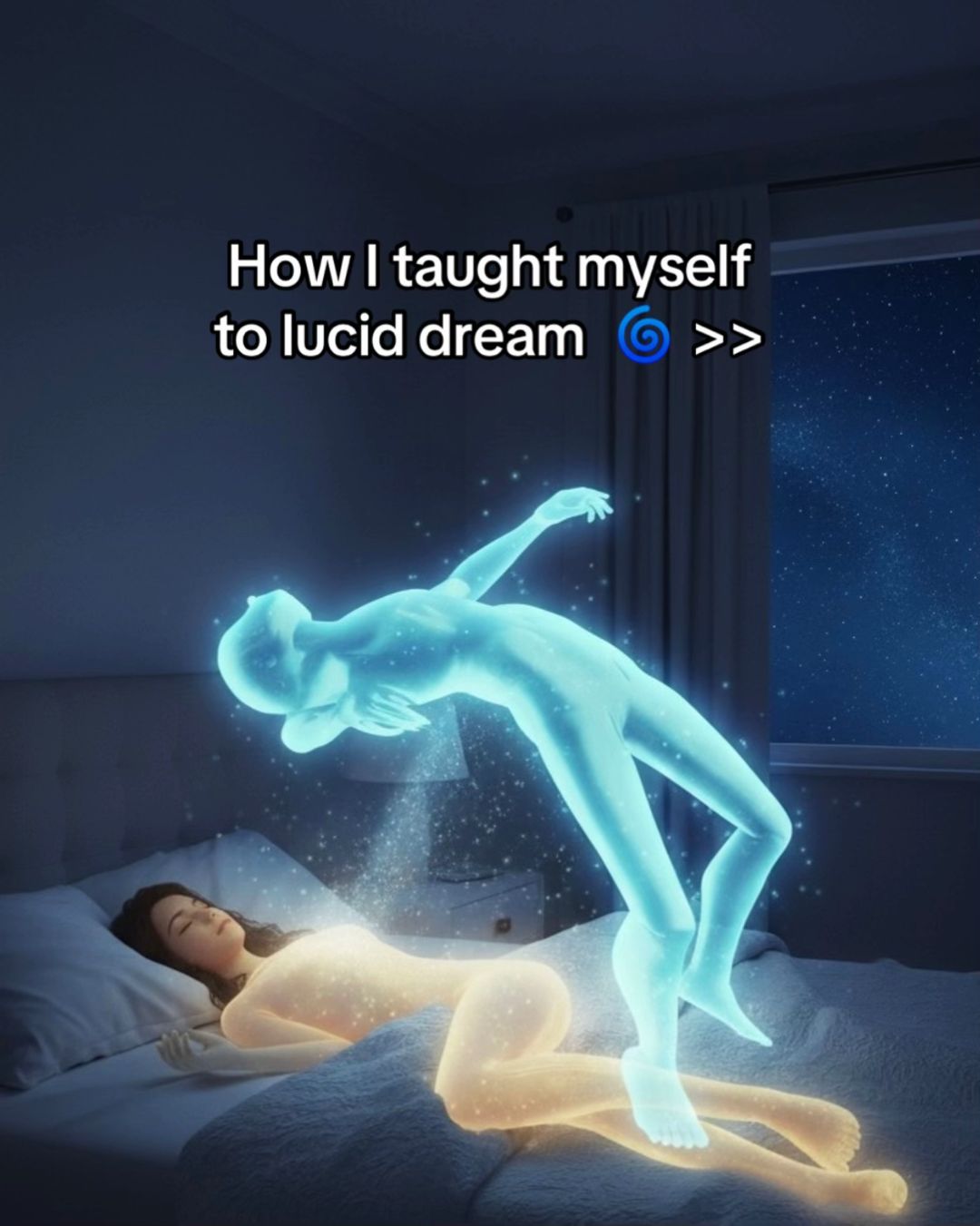
The hook works because it combines a personal success story ('How I taught myself') with a high-desire outcome ('lucid dream') and a visually arresting image.
Slide Text
How I taught myself to lucid dream 🌀 >>
Visual
A person lying in bed with a glowing, ethereal blue silhouette of themselves rising above their body.
All Slides
@calmlyplaylists carousel breakdown
Calmly
How to lucid dream 😴 #luciddreams #luciddreaming #sleep #insomnia #sleepmusic
Effectiveness score
9/10
Views
1.7M
Likes
81.8K
Saves
42.7K
Engagement
7.7%
Hook
How I taught myself to lucid dream 🌀 >>
Goal
grow-following
Offer
product
CTA
Set the mood with slow sleep music. I use this spotify playlist 👇
Caption
How to lucid dream 😴 #luciddreams #luciddreaming #sleep #insomnia #sleepmusic
Strategic Summary
The carousel leverages high-intent curiosity around lucid dreaming by packaging a mystical experience into a clinical, step-by-step physiological guide. The extreme bookmark rate (4.1x norm) reveals the audience treats this as a bedtime reference manual rather than casual entertainment. Slide 1's astral imagery arrests attention, while slides 2-6 maintain retention through numbered progression and credible warnings about sleep paralysis. The final slide seamlessly pivots from instruction to a low-friction tool recommendation, capitalizing on the high-save intent.
The Winning Formula
Mystical visual hook + numbered physiological protocol + soft tool recommendation = high-utility save velocity.
What's working
- •Slide 1 pairs a personal authority claim ('How I taught myself') with a striking digital-astral visual that immediately signals this isn't generic sleep advice.
- •Slides 2-6 use a rigid numbered structure that triggers completion bias; viewers know exactly how far they need to swipe, reducing drop-off.
- •Slide 4 preempts skepticism and fear by normalizing sleep paralysis symptoms ('pressure on chest', 'strange sounds'), which builds massive trust and drives comment validation.
- •High bookmark rate proves the copy density is optimized for pause-and-read; users save it to retry the technique nightly.
- •Slide 7's CTA feels like a natural extension of the tutorial ('Set the mood') rather than a sales pitch, lowering resistance to tapping the playlist link.
What's not working
- •Slide 5's instruction to 'step into your dream world' is slightly abstract compared to the concrete physiological cues in slides 2-4, which may cause a retention dip for highly analytical viewers.
- •No reality-testing technique (e.g., checking hands or clocks) is mentioned, which is a standard pillar of lucid dreaming guides—adding it could increase shareability among experienced practitioners.
Viral lesson
When targeting niche curiosity, ground the promise in actionable, numbered steps rather than vague inspiration; utility drives saves, and saves drive algorithmic distribution in tutorial formats.
Can a small creator replicate this? Highly replicable for wellness, spirituality, or productivity creators who can pair a striking conceptual hook with a phased, copy-heavy guide that culminates in a relevant digital tool or template.
Structural Formula (steal-the-format)
Structure pattern
7-slide tutorial: hook with personal claim + aesthetic image -> 5 numbered physiological steps on consistent text cards -> lifestyle CTA slide pointing to a digital tool.
Copy formula
first-person past-tense hook -> second-person imperative steps (#1 Get Comfortable, #2 Stay Still) -> pre-emptive objection handling -> outcome visualization -> soft resource recommendation.
What to swap (concrete remixes)
- •Swap lucid dreaming for creative visualization for artists/writers seeking flow-state techniques.
- •Swap sleep protocol for breathwork progression for anxiety relief and nervous system regulation audiences.
- •Swap astral imagery for abstract light-trail photography for productivity/focus niche targeting deep work states.
What NOT to copy
The highly specific mention of 'sleep paralysis' and ignoring physical impulses is tailored to the somatic nature of dream work; copying this exact physiological framing for non-somatic topics will feel forced or unsafe. Adapt the 'fear-handling' beat to the actual risks of your niche.
Aesthetics
Nocturnal digital art meets minimalist instructional UI with a deep blue monochromatic palette.
Color palette
What it conveys: The overall aesthetic evokes a sense of calm, safe mystery; it feels like a guided meditation app interface, priming the viewer for relaxation before they even read the steps.
Slide-by-slide forensics
1hookmedia shotmystical aspirationworks:yesgrab:94/100aesthetic:90/100How I taught myself to lucid dream 🌀 >>
How I taught myself to lucid dream 🌀 >>
Visual description
A photorealistic but surreal bedroom scene at night. A sleeping woman lies on a bed with white linens. Above her, a translucent, glowing blue astral body floats in a backbend, emanating soft particles. A window shows a starry night sky. The lighting is deep blue and ethereal.
Scene setting
minimalist bedroom at night
Visible people
Visible objects
vs prior slide
Story: Initial hook introducing the personal promise and topic.
Predicted audience reaction
Immediate thumb-stop due to the striking contrast between the grounded sleeper and the floating astral body, triggering curiosity about the method.
Verdict: Perfectly balances visual intrigue with a clear first-person authority claim, setting up a tutorial expectation without overpromising.
2step in listtext cardcalm instructionworks:yesgrab:60/100aesthetic:75/100#1 Get Comfortable
Lie down on your back with your arms at your sides and eyes closed. This method works best when you're already very tired.
#1 Get Comfortable Lie down on your back with your arms at your sides and eyes closed. This method works best when you're already very tired.
Visual description
A blurred version of the Slide 1 bedroom scene serves as the background. Centered is a rounded black rectangle containing white sans-serif text. The text is left-aligned within the box.
Scene setting
instructional overlay
Visible objects
vs prior slide
Style: Maintains the deep blue nocturnal color palette from Slide 1, but shifts from full-bleed artwork to a text-overlay card format.
Story: Moves from the promise to the first actionable physical requirement.
Predicted audience reaction
Readers will pause to absorb the posture instructions, validating the practical nature of the guide.
Verdict: Sets a clinical, grounded tone that reassures viewers this is a technique, not just a theory.
3step in listtext cardfocused disciplineworks:yesgrab:60/100aesthetic:75/100#2 Stay Completely Still
Your brain will test if you're ready to sleep by sending signals—like an itch, the urge to change position, or the need to blink. Ignore all of these impulses. Stay perfectly still and keep your eyes closed.
#2 Stay Completely Still Your brain will test if you're ready to sleep by sending signals—like an itch, the urge to change position, or the need to blink. Ignore all of these impulses. Stay perfectly still and keep your eyes closed.
Visual description
Identical layout to Slide 2: blurred astral bedroom background with a centered black text card. White sans-serif font. The header uses a bold weight, body text is regular.
Scene setting
instructional overlay
Visible objects
vs prior slide
Style: Exact visual template carryover: same background blur intensity, same black card placement, same font pair.
Story: Introduces the first psychological/physiological hurdle (ignoring impulses), raising the stakes slightly.
Predicted audience reaction
Readers will recognize the described impulses from their own failed attempts to fall asleep, creating immediate identification.
Verdict: Anticipates and neutralizes the primary obstacle (restlessness) before it causes the viewer to dismiss the technique.
4objection handletext cardcautious reassuranceworks:yesgrab:70/100aesthetic:75/100#3 The Transition
After 20-30 minutes, you may feel pressure on your chest or hear strange sounds. Don't worry—this is a natural part of entering sleep paralysis.
#3 The Transition After 20-30 minutes, you may feel pressure on your chest or hear strange sounds. Don't worry—this is a natural part of entering sleep paralysis.
Visual description
Identical layout to Slides 2-3. Blurred background, black text card, white text. The copy addresses a specific timeframe (20-30 mins) and explicitly names 'sleep paralysis'.
Scene setting
instructional overlay
Visible objects
vs prior slide
Style: Consistent visual template; creates a reliable reading rhythm for the swipe.
Story: Escalates to the most intense phase, preemptively framing a scary phenomenon (sleep paralysis) as a positive milestone.
Predicted audience reaction
This slide will likely generate the most comments, as users validate the experience ('the vibrations are real!') or ask for safety reassurance.
Verdict: Naming the fear directly builds immense credibility and prevents viewers from panicking mid-attempt and abandoning the method.
5step in listtext cardanticipatory calmworks:partialgrab:60/100aesthetic:75/100#4 Entering the Dream
In this state, your body is asleep, but your mind is awake. You might see vivid images or feel like you're drifting. This is the moment you can 'step' into your dream world.
#4 Entering the Dream In this state, your body is asleep, but your mind is awake. You might see vivid images or feel like you're drifting. This is the moment you can 'step' into your dream world.
Visual description
Identical layout to previous text cards. Blurred background, black card, white text. Describes the hypnagogic state and the transition point.
Scene setting
instructional overlay
Visible objects
vs prior slide
Style: Template consistency maintained perfectly.
Story: Shifts from physical/physiological steps to mental visualization, bridging the gap between paralysis and dream control.
Predicted audience reaction
Readers will visualize the 'drifting' sensation, mentally simulating the technique as they read.
Verdict: Slightly less concrete than previous steps; adding a specific visualization anchor (e.g., 'rope technique' or 'spinning') would make it more actionable.
6payofftext cardempowermentworks:yesgrab:55/100aesthetic:75/100#5 Lucid Awareness
Once you realize you're dreaming, you can open your dream eyes, explore, and with practice, take control of your dreams.
#5 Lucid Awareness Once you realize you're dreaming, you can open your dream eyes, explore, and with practice, take control of your dreams.
Visual description
Identical layout to Slides 2-5. Final instructional step. Focuses on the outcome: awareness and control.
Scene setting
instructional overlay
Visible objects
vs prior slide
Style: Consistent visual framework through to the end of the tutorial sequence.
Story: Delivers the final reward promised in the hook: conscious dream control.
Predicted audience reaction
Provides a sense of closure to the tutorial; viewers feel equipped to try the full sequence tonight.
Verdict: Successfully ties back to the hook's promise, giving viewers a clear definition of success to aim for.
7ctalifestyle shotinviting utilityworks:yesgrab:80/100aesthetic:85/100Set the mood with slow sleep music
I use this spotify playlist 👇
Set the mood with slow sleep music I use this spotify playlist 👇
Visual description
Shifts from the blurred background to a realistic photo of an iPhone lying on blue textured sheets. The screen displays Spotify's Now Playing interface for the playlist 'Fall Asleep Fast'. The lighting is dim, matching the nocturnal theme. White text overlay with a downward pointing hand emoji.
Scene setting
bedside flat-lay
Visible objects
Products on screen
Other text elements
- •23:35
- •Fall Asleep
- •Fall Asleep Fast
- •Conrly
- •Wondering Mind
- •Above The Clouds
vs prior slide
Style: Breaks the black-card template to introduce a tangible, clickable resource; color palette remains deep blue/navy for cohesion.
Story: Transitions from internal technique to external environmental support, completing the ritual setup.
Predicted audience reaction
High conversion to saves and playlist clicks; the visual proof of the phone screen lowers friction and signals exactly where to go.
Verdict: Perfectly timed CTA that complements rather than interrupts the tutorial, leveraging the high save intent by offering a companion tool.
Commerce intent
Mentioned products
Comment ethnography
No comment data available, but the 3.5x comment rate against a wellness tutorial suggests viewers are likely sharing personal sleep paralysis experiences and success/failure reports to validate the method.
Diagnostics
Hook deep-dive
How I taught myself to lucid dream 🌀 >>
The combination of a personal success claim ('taught myself') and the visually impossible astral imagery creates an irrepressible curiosity gap about the exact mechanism behind the experience.
Engagement read
Likes are below average (0.6x norm) while bookmarks (4.1x) and comments (3.5x) are massively elevated, indicating a highly niche, utility-focused audience that skips casual validation in favor of saving and discussing specific technique details.
Mechanics
Numbered progression (1-5) combined with escalating physiological cues forces completion bias to reach the 'dream entry' payoff.
Brand & funnel
Brands visible
Buying-journey moment: The viewer is actively seeking sleep optimization tools and has been primed by the tutorial to accept a companion audio resource as part of their nightly routine.
Ideal Customer Profile
Young adults and students interested in biohacking, spirituality, and improving their sleep quality through non-traditional methods.
Age
18-24
Gender
neutral
Readability
simple
Interests
Pain Points
Aspirations
Emotional Profile
Primary Emotion
curiosityIntensity
Effectiveness
Emotions Evoked
Emotional Arc
curiosity → instruction → validation → action
Why It Lands
The content creates a sense of wonder by visualizing the 'soul leaving the body' and then grounds the user with calm, practical instructions, making the esoteric feel achievable.
Writing Analysis
Style
educational
Tone
calm
Hook Type
story
Quality
The writing is concise and instructional, stripping away fluff to focus on the 'how-to' steps. It uses simple, direct language that is easy to digest in a fast-paced scrolling environment.
Effectiveness
Goal Achievement
The high bookmark count indicates the content is highly valuable and actionable, which is the primary driver for growth in this niche.
Why It Spread
High save-ability due to the instructional nature
Aesthetic visual hook that stops the scroll
Low-barrier entry to a complex topic
Content DNA
The CTA is effective because it provides a tangible, free resource that complements the advice, driving traffic to their Spotify profile.
Narrative Arc
The carousel builds tension by moving from the 'what' (hook) to the 'how' (steps) and finally to the 'tool' (CTA), keeping the user swiping to reach the end.
Psychological Blueprint
Why It Spread
The content combines a high-interest, mysterious topic (lucid dreaming) with a low-friction, aesthetic format. By promising a specific, actionable outcome (lucid dreaming) and delivering it through a simple, visually soothing carousel, it encourages high save rates (42k+ bookmarks) as users want to reference the steps later. The visual style is perfectly optimized for the 'sleepy/calm' aesthetic that performs well on TikTok.
Framework
listicle revelationPrimary Tactic
curiosity gapTactics Used
curiosity gap on slide 1 (the 'how to' promise)
pattern interrupt with the ethereal visual of the soul leaving the body
authority-then-teach by framing it as 'how I taught myself'
reciprocity by providing a free tool (playlist) at the end
Cognitive Biases
Zeigarnik effect (the desire to complete the step-by-step process)
authority bias (assuming the creator has mastered the skill)
mere exposure (the repeated background visual reinforces the 'dream' theme)
Tribal Markers
Trust Signals
Slide Breakdown (2 analyzed)
Hook Analysis
The hook works because it combines a personal success story ('How I taught myself') with a high-desire outcome ('lucid dream') and a visually arresting image.
Text
How I taught myself to lucid dream 🌀 >>
Visual
A person lying in bed with a glowing, ethereal blue silhouette of themselves rising above their body.
Visual Elements
Color Palette
Copy Analysis
Power Words
Open Loop: yes, the visual and text promise a transformation that requires reading the steps
Visual Psychology
Attention: the glowing blue silhouette
Gaze: upward, following the rising silhouette
Emotional cue: the ethereal glow suggests magic and mystery
Composition: to create a sense of wonder and immediate curiosity
Text
#1 Get Comfortable. Lie down on your back with your arms at your sides and eyes closed. This method works best when you're already very tired.
Visual
Blurred background of the bedroom from slide 1 with a dark text box overlay.
Visual Elements
Color Palette
Copy Analysis
Power Words
Open Loop: yes, the reader needs to know the next step to achieve the dream
Visual Psychology
Attention: the dark text box
Emotional cue: the dark, clean box suggests authority and clarity
Composition: to provide immediate, actionable instructions
Comment Intelligence
Sentiment
PositiveResonance
Intent
grow-following
Audience Vibe
The comments are likely filled with people tagging friends and expressing excitement to try the method.
Standout Quotes
“Trying this tonight!”
“I've been wanting to learn this for so long.”
“Does this actually work?”